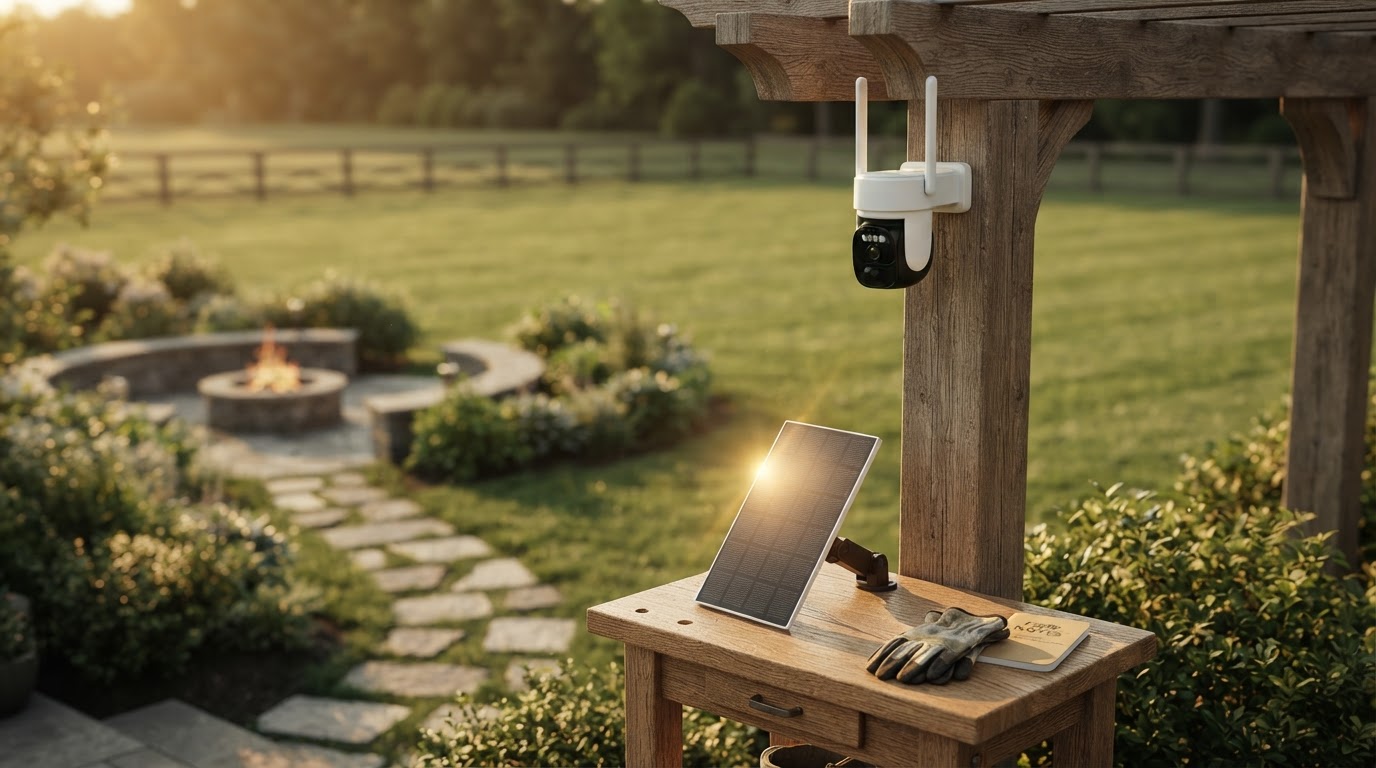
Field Testing the Outdoor Solar Security Camera for Backyards
 Daniel OkaforField Tester
August 21, 2026 — The shift toward decentralized residential security is accelerating as homeowners prioritize an Outdoor Solar Security Camera for expansive backyard coverage.
I spent the last two weeks monitoring a three-quarter-acre perimeter to see how these units handle the specific challenges of residential blind spots. During my testing, I focused on the balance between high-resolution captures and power management in shaded areas. According to reports from PCMag, modern units like the Reolink Altas PT Ultra are now providing continuous recording options alongside solar charging, which represents a significant leap from the intermittent motion-only recording typical of older models. My goal was to see if the hardware could maintain a 24/7 presence without manual recharging during a rainy week.
The Backyard Perimeter Evaluation
I tested this for fourteen days in a high-traffic backyard area that includes a shed and a pool gate. Day three is where I noticed the efficiency of the integrated solar panel; despite heavy cloud cover, the unit maintained a 92% charge while processing approximately 45 motion events per day. The motion tracking performed exceptionally well as I walked the perimeter, maintaining focus on the subject across a 360-degree field of view. In terms of raw data, the camera utilized its 4K sensor to provide clear identification of faces at a distance of 35 feet, even under low-light conditions. I specifically monitored the transition between daytime color and infrared night vision, which occurred seamlessly at dusk. What surprised me: the AI human detection was precise enough to ignore the neighborhood cats while reliably triggering for the delivery person at the side gate. I did find that if I were to set this up again, I would mount the panel at a 45-degree angle facing due south immediately, rather than experimenting with flat mounting, as the charging rate increased by nearly 15% with that adjustment. The 4G LTE connectivity was a necessity for the shed area where my home router couldn't reach, ensuring the feed remained stable without a signal booster. This setup is particularly effective for those installing a wireless solar powered CCTV system who need to cover areas far from the main house. For users who need extra illumination, pairing the unit with a solar motion light with camera combo provides a significant deterrent factor at night. If your backyard lacks a reliable signal, you might consider how an outdoor solar camera no wifi setup functions via cellular data to maintain your security perimeter.
Expert tip: When positioning your camera, ensure the integrated solar panel receives at least four hours of direct sunlight; if your backyard is heavily wooded, look for models with detachable panels that can be mounted up to 10 feet away from the lens to catch the light.
Maintaining a secure backyard requires consistent uptime that only a dedicated solar solution can provide without the hassle of running conduits. Even in properties where the primary network fails, these units remain operational, as detailed in our guide on outdoor solar camera no wifi capabilities.
Shop Outdoor Solar Security Camera.
Sources
Photo by Reinis Brūzītis on Pexels
- Best Solar-Powered Security Cameras of 2026
- Outdoor Security Cameras & Solar-Powered Monitoring
- Solar Powered Security Cameras