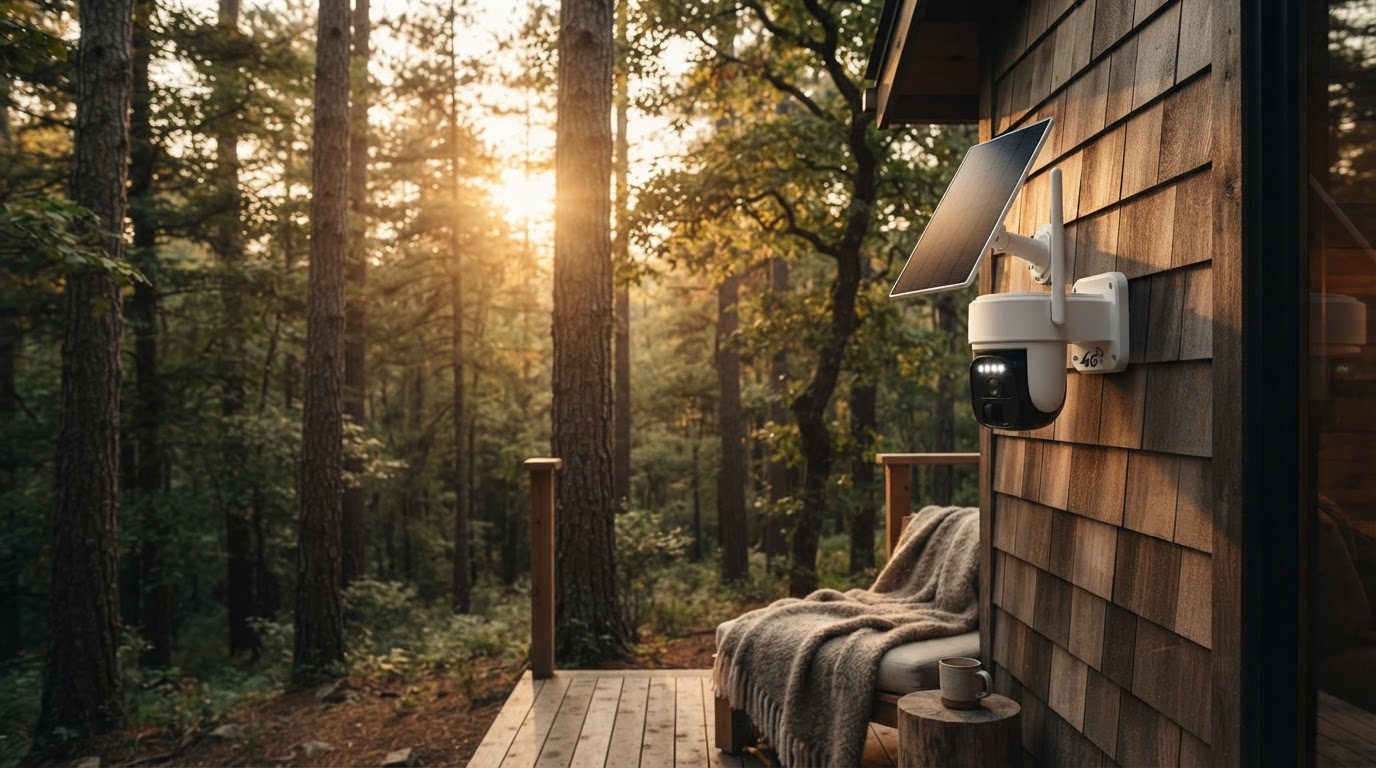
Can an Outdoor Solar Security Camera work without WiFi?
 Jordan HaleStaff Writer
August 19, 2026 — An Outdoor Solar Security Camera can operate entirely without a local WiFi network by utilizing 4G LTE cellular connectivity or recording directly to an onboard microSD card.
The first thing I noticed was the absolute silence of the deep woods, a place where signal bars usually go to die and routers are non-existent. For homeowners with remote acreage or construction sites, the absence of a digital backbone makes traditional smart home gear useless. It turns out that the evolution of cellular-integrated optics has bridged this gap, allowing high-definition monitoring in places where the only power source is the sun.
How do 4G LTE solar cameras function without a router?
These devices function by swapping a WiFi chip for a cellular modem that connects to national data networks, much like a smartphone. According to Xega, their 4G LTE cellular security cameras are designed specifically for off-grid areas and can operate anywhere within nationwide 4G coverage using a pre-installed SIM card. When I handled one of these units, the weight of the internal battery and the texture of the weather-sealed SIM slot suggested a build meant for the elements, not just a cozy backyard. Because they rely on cellular towers rather than a home router, they maintain a live link for push notifications and remote viewing even in the middle of a clearing miles from the nearest cable line. This makes them a primary choice for those who have already mastered installing a wireless solar powered CCTV system and now need to push their coverage boundaries further into the wild.
Can solar cameras record if there is no internet at all?

Photo by Jan van der Wolf on Pexels
Solar cameras can record footage locally to an internal storage drive even in environments with zero internet or cellular connectivity. Reolink notes that for flexible outdoor monitoring, battery-powered or solar-powered cameras with local storage are the most reliable offline solution. I keep coming back to the simplicity of the SD card loop; the camera wakes up on motion, writes the file to the physical card, and goes back to sleep to conserve its solar-harvested energy. While you lose the ability to check a live feed from your phone, the evidence remains safely tucked inside the device's chassis. This setup is particularly effective when you are looking for the best solar security camera for backyard applications where WiFi might be spotty at the fence line, or when paired with a solar motion light with camera combo to deter intruders even when the cloud is out of reach.
Quick answers
Q: Do I need a monthly subscription for a no-WiFi solar camera? A: While local recording to an SD card is free, using the 4G LTE features typically requires a data plan from providers like Verizon, AT&T, or T-Mobile. Xega cameras, for instance, often include a trial SIM card but require a paid data top-up to maintain remote access.
Q: Which brands are recommended for off-grid 4G use? A: Industry discussions, including those documented by Hikvision and Uniden users, frequently recommend these brands for their robust 4G connectivity modules that bypass the need for traditional internet. These units are specifically engineered to handle the handshake between cellular towers and mobile apps without a middleman router.
Q: How does winter weather affect a cellular solar camera? A: Cold temperatures can reduce battery efficiency, but high-capacity lithium-ion cells paired with a high-wattage solar panel generally keep the 4G modem active. In low-light months, the camera may prioritize local recording over high-bandwidth cloud uploads to ensure it doesn't lose power during the night.
Learn more about Outdoor Solar Security Camera at https://solarsafetycameras.com.
Sources

Photo by Ala J Graczyk on Pexels
- Xega 4G LTE Cellular Security Cameras Wireless Outdoor ...
- What are reliable solar security cameras without WiFi for off ...
- Security Cameras Without WiFi | No Internet Cameras