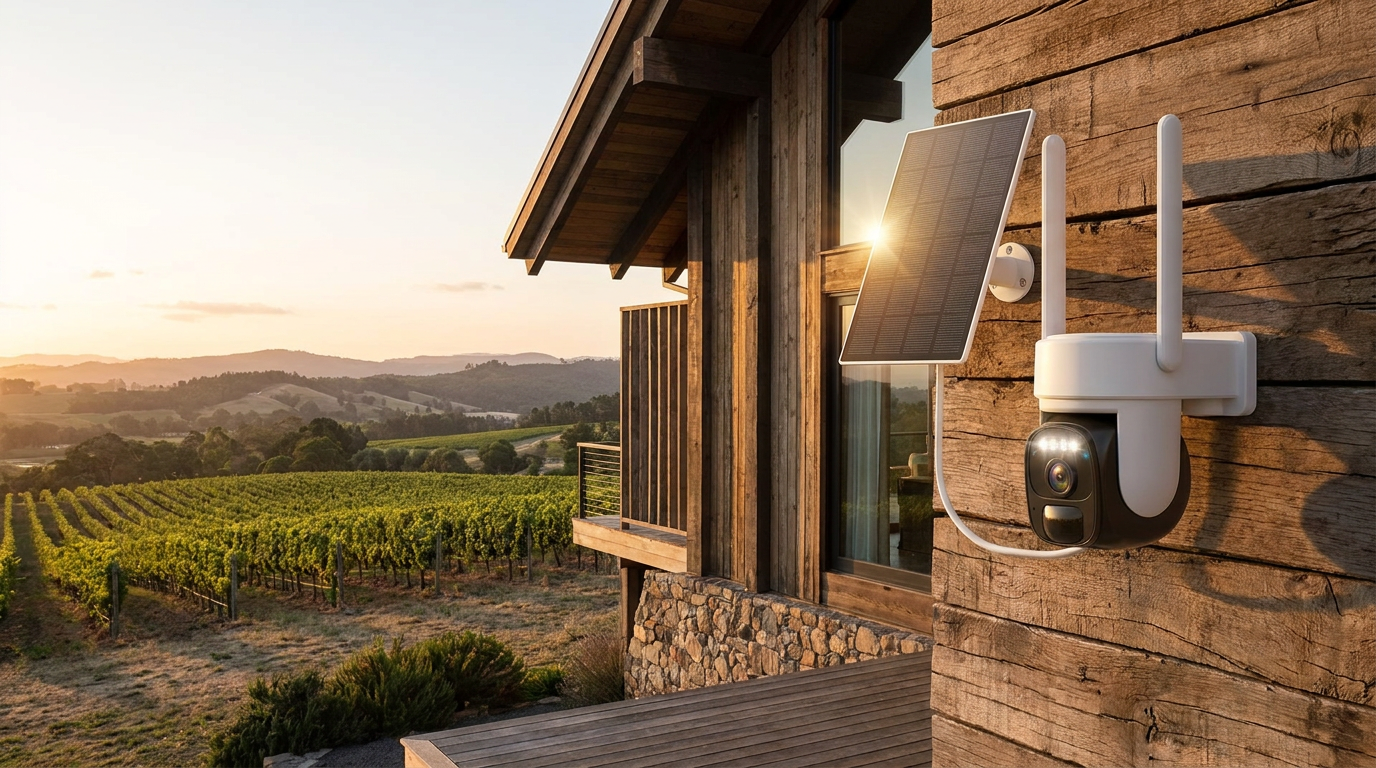
4G LTE Framework for Outdoor Solar Security Camera Success
 Maya ChenContributing Editor
July 22, 2026 — The expansion of cellular network coverage into rural regions has sparked a surge in demand for the Outdoor Solar Security Camera equipped with 4G LTE capabilities. While the conventional wisdom says that Wi-Fi is the standard for home safety, the emergence of the solar CCTV camera with SIM card suggests that the most critical security needs exist where routers cannot reach.
Industry data highlights that these devices are no longer niche tools for construction sites, but are increasingly adopted for residential perimeters. According to Secureye, a solar CCTV camera with SIM card is uniquely suited for areas lacking both electricity and Wi-Fi, providing uninterrupted monitoring through dedicated cellular data streams. This shift toward independent connectivity allows for a truly Outdoor Solar Security Camera deployment that remains functional during local network outages or intentional wire cuts. However, the reliance on cellular bands introduces new variables in data management and signal stability that most marketing materials gloss over.
The Off-Grid Connectivity Protocol
Here’s the part nobody talks about: a solar CCTV camera with SIM card is only as reliable as the local carrier's uplink speed, regardless of how much sun the panel receives. Run the math: a standard 1080p stream requires approximately 1.5 to 2 Mbps of consistent upload bandwidth to avoid frame drops. In remote areas, this often necessitates high-gain antennas that are rarely included in the base package. When integrating a Wireless Solar Powered Security Camera System, users must account for the specific 4G LTE bands supported by the hardware. Eufy notes that these cameras utilize standard SIM card slots compatible with major carriers, but data consumption can exceed 2GB per month even with conservative motion-trigger settings. For those managing a Outdoor Motion Sensor Solar Camera WiFi setup, the transition to cellular requires a hardware-level shift to internal modems. The hardware must be rated at least IP65 for weatherproofing to protect the sensitive SIM slot from moisture ingress. Furthermore, while integrated solar panels can provide indefinite runtime in optimal conditions, a sustained lack of sunlight combined with high cellular ping rates will deplete a 10,000mAh battery in less than five days. Unlike a Wireless Solar Powered Surveillance Camera on a local network, a cellular unit must constantly negotiate with a tower, a process that consumes significantly more power than a standard Wi-Fi handshake.
Expert tip: Always disable continuous recording on cellular solar cameras; instead, use 15-second event-based clips to prevent your data plan from being throttled and your battery from reaching a critical low state during overcast weeks.
I'll change my mind about the superiority of Wi-Fi when cellular data plans for security hardware become truly unlimited and the latency drops below 50ms in rural zones. Until then, the SIM card remains a necessary compromise for remote monitoring rather than a universal upgrade.
Shop Outdoor Solar Security Camera.
Sources
- Best Cellular Security Camera | 4G LTE CCTV Solutions
- 4G LTE Solar Powered Security Camera Review | Camzeb
- The Ultimate Buying Guide to 4G Solar Cellular Security Camera