
Securing Off-Grid Property With Outdoor Solar Security Camera
 Priya RamanSenior Analyst
June 8, 2026. This analysis evaluates the technical requirements for maintaining persistent surveillance on properties lacking traditional utility infrastructure. It provides a deployment framework for landowners, agricultural managers, and remote site operators seeking reliable site visibility.
To effectively secure a remote perimeter, think of it as a matrix of power availability and data transmission. Two axes matter here: the reliability of solar harvesting and the method of backhaul communication. When grid power is absent, the primary challenge is not the camera itself, but the ecosystem that keeps it alive and connected. According to CCTV Security Pros, professional systems now utilize a Wireless Solar Security Camera | 4G LTE Off-Grid Camera specifically because these units do not require local Wi-Fi to function, making them ideal for remote gates and construction sites. The decision rule for off-grid success depends on balancing these two variables: if a property has high solar exposure but no internet, a cellular-enabled unit is the only viable path. Conversely, for secondary structures like a wireless solar camera for shed, a local Wi-Fi bridge might suffice if the main house is within range. Without this structural understanding, many property owners invest in hardware that becomes a paperweight the moment the first cloud cover arrives or the local router resets.
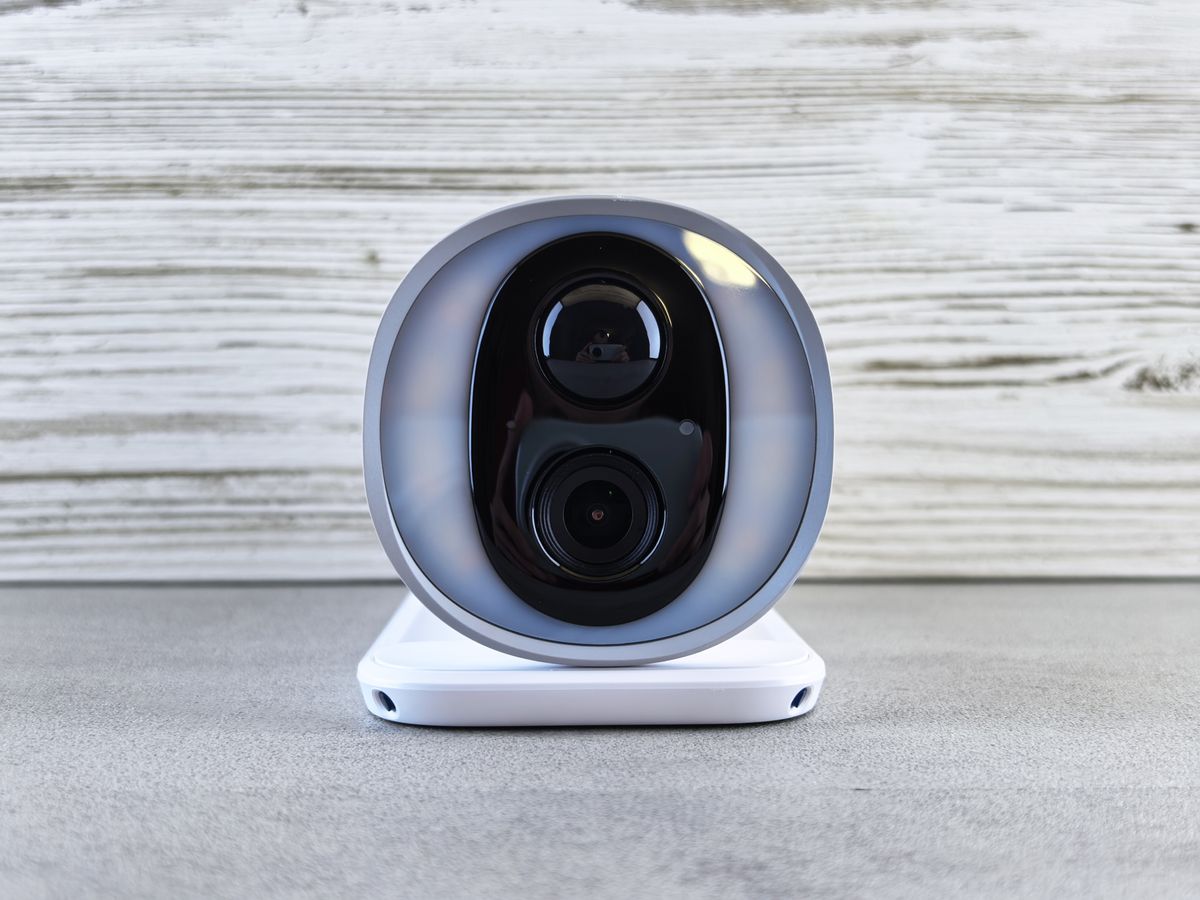
Photo by Andrey Matveev on Pexels
The Outdoor Solar Security Camera addresses these environmental constraints through integrated power management and cellular flexibility. In remote scenarios, the hardware must operate as an autonomous node. For properties where Wi-Fi cannot reach, a 4g lte solar security camera utilizes a SIM card to transmit data over the same networks used by smartphones. This eliminates the need for trenching cables or installing expensive microwave links. Data from Barn Owl Tech suggests that these off-grid cameras are increasingly used for daily photo updates and motion alerts on farms and large acreage. However, performance is not purely about the connection; it is about energy resilience. Users must account for solar security camera winter performance, as reduced daylight hours can impact the duty cycle of the motion sensors. A high-specification Outdoor Solar Security Camera manages this by entering deep-sleep modes, waking only when the PIR sensor detects significant heat signatures. This ensures that the limited battery capacity is reserved for critical events rather than empty-frame recording. Once you see it this way, the camera is no longer just a lens—it is a self-sustaining power plant and a communication hub combined into a single weather-hardened chassis.
Selecting the correct hardware for a remote installation requires a rigorous decision framework. Before procurement, evaluate the physical site against the specific constraints of solar harvesting and cellular signal strength. A no wifi solar security camera is useless without a carrier signal, just as a high-definition unit is useless without sufficient panel orientation. When planning your installation, use the following checklist to ensure the system remains operational year-round:
- Verify 4G LTE signal strength at the exact mounting height using a cellular survey tool.
- Calculate the solar solar window, ensuring at least 4-6 hours of unshaded southern exposure (in the northern hemisphere).
- Test the motion sensor range to ensure the outdoor solar security camera triggers before an intruder reaches the primary structure.
- Confirm the storage capacity of the local microSD card for redundancy during network outages.
- Check the IP rating to ensure the unit can withstand localized weather extremes, from high-heat summers to freezing winters.
Shop Outdoor Solar Security Camera here.