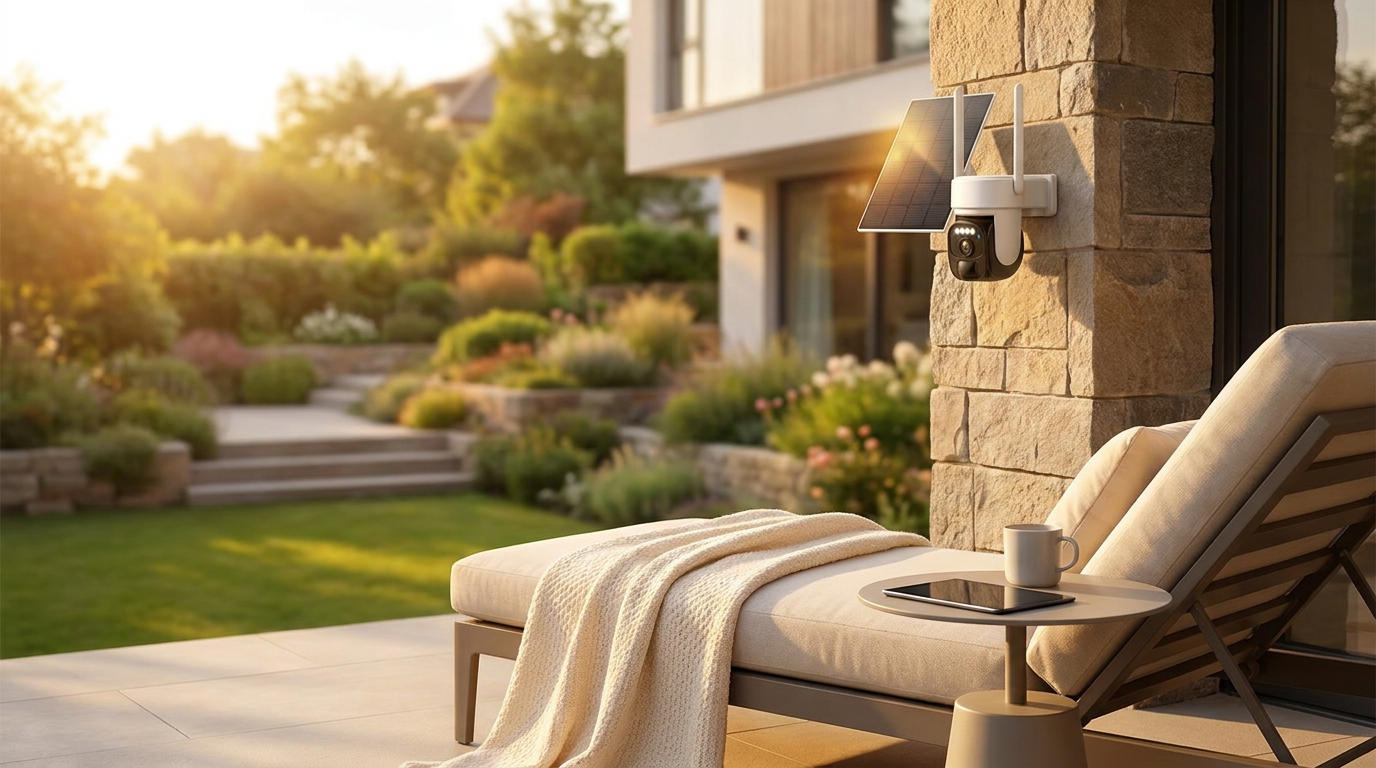
Baseus X1 Pro Price Drop Impacts Solar Security Market
 Priya RamanSenior Analyst
July 9, 2026 — The wireless security market is seeing significant movement as the Baseus X1 Pro outdoor dual-tracking solar camera has returned to its record-low pricing. This shift highlights a growing accessibility for high-end surveillance features like dual-lens tracking and integrated solar power in the residential sector.
To evaluate these hardware shifts, we must categorize devices using a specific framework. Two axes matter here: Monitoring Range (Fixed vs. PTZ) and Power Autonomy (Battery-only vs. Solar-integrated). By mapping these dimensions, we can distinguish between standard perimeter alerts and comprehensive property management. Once you see it this way, the value proposition of a device depends less on the discount and more on its placement within this 2x2 matrix.
Photo by tommy picone on Pexels
According to 9to5Toys, the Baseus X1 Pro is currently available for $149.99 through the official Woot storefront at Amazon. This represents a significant decrease from its $270 MSRP, a price point the device has largely avoided since March. The report from 9to5Toys notes that this specific model utilizes a dual-tracking system to maintain focus on moving subjects while maintaining a wide-angle view of the surroundings.
For property owners, the Outdoor Solar Security Camera offers a similar value proposition by combining PTZ (Pan-Tilt-Zoom) capabilities with wireless WiFi connectivity. While the Baseus model emphasizes dual-tracking, the Outdoor Solar Security Camera focuses on visual clarity through color night vision and two-way audio communication. Both systems leverage cloud storage to ensure that data remains accessible even if the hardware is tampered with.
When selecting a system, the decision rule is simple: prioritize PTZ functionality for open areas like driveways, and reserve fixed-lens cameras for narrow entry points. If your installation site receives more than four hours of direct sunlight, a solar-integrated unit is the logical choice to eliminate the maintenance cycle of manual charging. You can find more information on optimizing solar placement or understanding PTZ benefits to further refine your strategy. Additionally, reviewing color night vision standards and cloud storage security will help ensure your data remains protected.
Expert tip: When installing solar-powered units, ensure the integrated panel faces true south (in the northern hemisphere) at a 45-degree angle. Even a high-efficiency Outdoor Solar Security Camera can see a 30% drop in charging effectiveness if the panel is partially shaded by roof eaves for just two hours a day.
As hardware prices fluctuate, the emphasis remains on the integration of power and movement. High-quality surveillance is no longer defined by price, but by the strategic application of PTZ and solar technologies.
Shop Outdoor Solar Security Camera