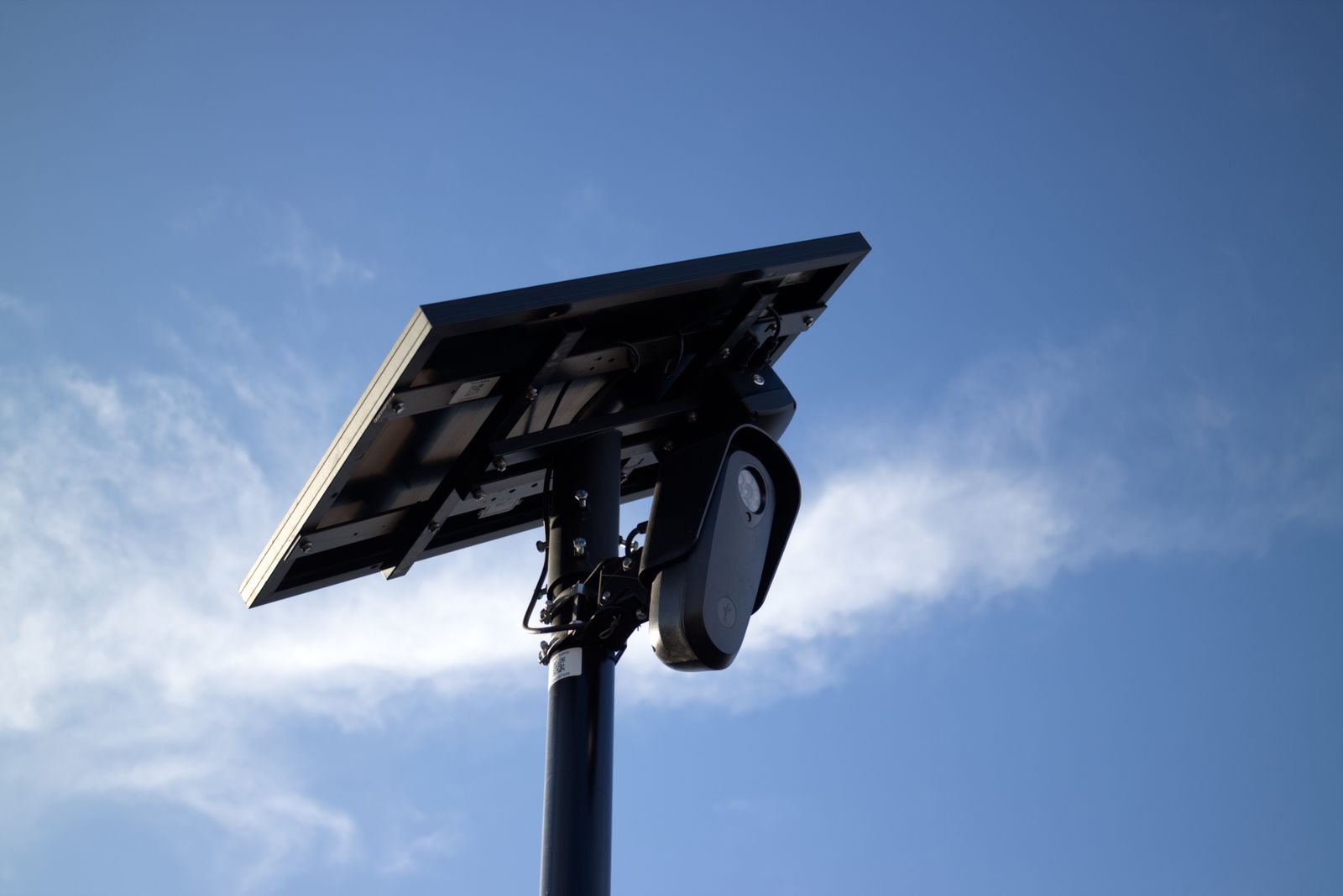
Wireless Solar PTZ Cameras vs. Wired Security: Which Is Best for Suburban Entry Points?
For suburban entry points, a wireless solar pan-tilt-zoom camera is usually the better choice, and the reason is placement rather than picture quality. Entry points that matter most on a suburban house are the side gate, the rear slider, and the far end of the driveway, and those are precisely the spots where running cable is expensive or impossible. Wired cameras win in one clear scenario: a permanent installation at a location that already has power and where you never intend to change the angle.
Below is a direct comparison of how each approach behaves at the four entries a suburban home actually needs covered.
Wireless solar PTZ vs. wired: the honest comparison
| Factor | Wireless solar PTZ | Wired camera | |---|---|---| | Where it can go | Anywhere with sun and WiFi signal | Anywhere you can run cable to | | Installation effort | Mount, connect to the app, tune zones | Cable runs, wall penetrations, often an electrician | | Cost of adding a camera later | The camera and a mount | The camera, a mount, and a new cable run | | Aim after install | Re-aimed from the app at any time | Fixed unless you go back up the ladder | | Power reliability | Depends on sun exposure and battery | Constant, as long as the house has power | | Behavior in a power outage | Keeps running on its own battery | Stops unless it is on a backup supply | | Vulnerability | WiFi coverage and shading | The cable itself can be cut | | Renter friendliness | High, minimal or no drilling | Low, holes and permanent runs | | Coverage per unit | Higher, since it can pan, tilt, and zoom | Fixed cone, one angle |
Neither column is universally better. What matters is which weaknesses you can live with at each specific entry.
Why entry points change the answer
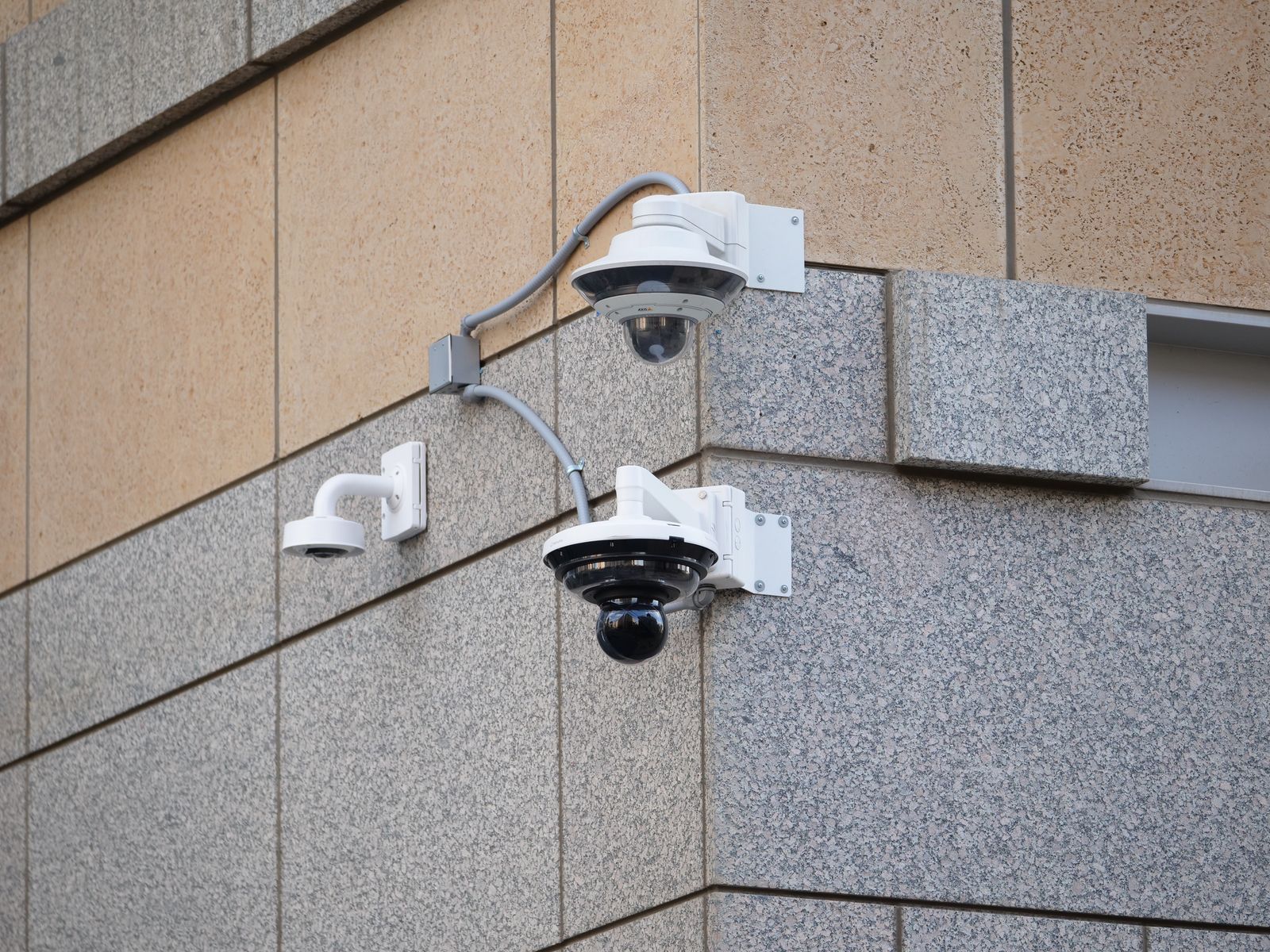
Photo by Giant Asparagus on Pexels
A camera watching a wide yard is doing area surveillance, where a fixed wide lens on constant power performs fine. A camera watching an entry is doing something different: it needs to capture a recognizable person at a specific, narrow location for a few seconds. That job favors the ability to re-aim and zoom.
Consider a side gate. The useful frame is a rectangle maybe four feet wide, at a distance of ten to twenty feet, with a fence and a wall constraining the view. Getting that framing right on the first attempt from a ladder is guesswork. With pan, tilt, and zoom you mount for the sturdiest surface and best sun, then adjust from the app until the gate latch and the path on both sides are in frame. On a fixed camera, the same correction means unmounting and re-drilling.
The rear slider is a similar case, with one addition: it is the entry most likely to be approached at night, and it usually has no street lighting nearby. That is where color night vision changes what the footage is worth. Standard infrared gives a gray image where clothing and vehicle colors disappear, which is exactly the detail that makes a clip actionable rather than merely alarming. Color night footage is more useful at every entry, and it matters most at the ones with no ambient light. The reasoning is worked through in more detail in why color night vision matters for security footage.
Where wired still wins
There are real cases where cable is the right call.
- A location with no usable sun at all. A north-facing entry deep under a second-story overhang, or a covered breezeway between buildings, may never get enough light to keep a battery topped up. Extending the panel solves most of these, but not all.
- A location with no WiFi coverage and no way to extend it. A wireless camera outside signal range cannot upload clips or serve a live view. That is a network problem first, and the options are laid out in this look at whether a solar camera can work without WiFi.
- Continuous 24-hour recording. If the requirement is unbroken footage rather than event-triggered clips, constant power is the straightforward way to get it.
- New construction or a full renovation. When walls are already open, running cable is cheap, and the permanence stops being a drawback.
How each option handles the four suburban entries
The driveway approach. Long driveways are where wired installs get expensive fast, because the best camera position is often at the street end, far from any outlet. A wireless unit with pan and zoom at that position can watch vehicles turning in and then pull in on a plate or a face. The only checks needed are sun exposure and WiFi signal at the exact spot.
The front door. The one entry that usually has power nearby, which makes it the most reasonable place for a wired camera. Even here, two-way audio and adjustable framing tend to matter more than constant power, because most front-door interactions are with delivery drivers rather than intruders.
The side gate or path. Almost always wireless in practice. Cable would have to cross a walkway or be buried, and the framing benefits from being adjustable.
The rear slider or patio. Wireless, for the same reason, with the added factor that this entry has the least ambient light and benefits most from color night footage.
A decision procedure for each entry
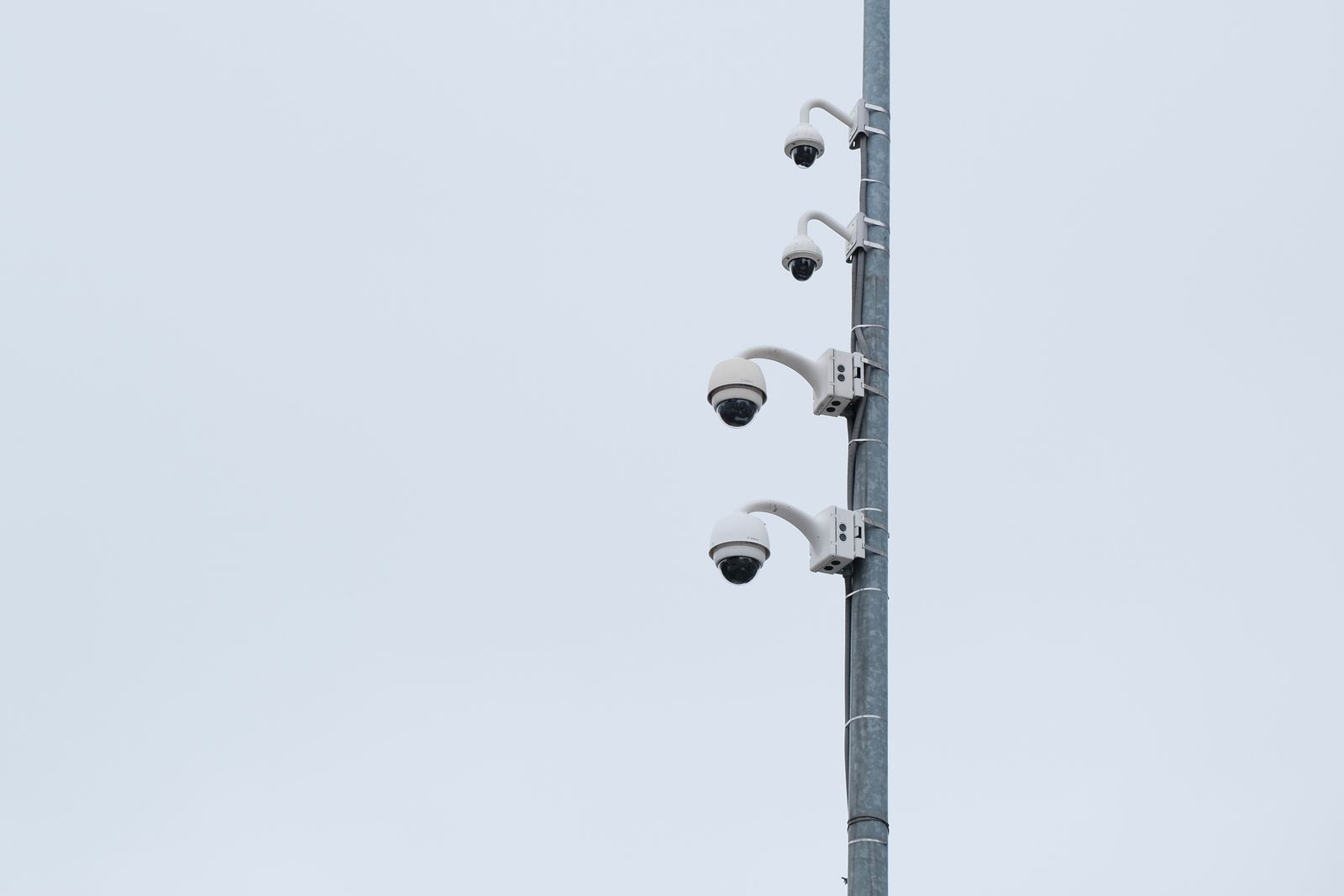
Photo by Tomas Ryant on Pexels
Run this at every position rather than deciding for the whole house at once.
Most suburban homes end up with a mixed answer that leans wireless: possibly one wired camera at the front door where power already exists, and wireless solar units everywhere else. The broader case for that structure is set out in why a solar camera suits residential safety.
Does PTZ replace having more cameras?
Partly, and it is worth being precise about how. A pan-tilt-zoom camera cannot look in two directions at once, so it does not replace a second camera at a second entry. What it does replace is the need for two fixed cameras at one location to cover two directions, and it removes the need to guess the perfect angle before drilling.
The practical pattern is one adjustable camera per entry, set to a wide default view so motion detection covers the whole area, with zoom used on whatever the alert flags. That same logic scales up to larger sites, where a small number of adjustable cameras covers ground that would otherwise need many fixed ones, as described in how PTZ coverage works across a bigger property.
FAQ
Is wireless footage lower quality than wired footage? Not inherently. The differences that show up in practice come from signal strength and from whether the camera is recording continuously or in event clips. A wireless camera with a solid connection at the mount produces footage that looks the same as a wired one at the same specification.
What happens to a wireless camera if the internet goes down? Live view and cloud upload stop, since both need the connection. The camera itself keeps operating on its own power. When the connection returns, the app reconnects. A wired camera on a recorder keeps recording locally through an internet outage but stops entirely if house power fails.
Can somebody disable a wireless camera more easily than a wired one? Each has a different weak point. A wired camera has a cable that can be cut, and it goes dark if house power is lost. A wireless camera depends on WiFi coverage. The strongest answer for either is cloud storage, so footage already uploaded survives whatever happens to the hardware.
Do I need a camera at every entry, or is the front enough? Front-only coverage misses the entries most likely to be used, which are the ones not visible from the street. If you can only start with two, put one at the front approach and one at the least visible rear or side entry rather than two at the front.
What to do next
Walk each entry with a phone and record two numbers: how many hours of direct sun that spot gets, and what the WiFi signal reads at mounting height. Those two checks decide wireless versus wired for that specific position better than any general comparison can. Then install the least visible entry first, since that is the one currently doing the least to protect the house.
Cover photo by Will Freeman on Pexels.