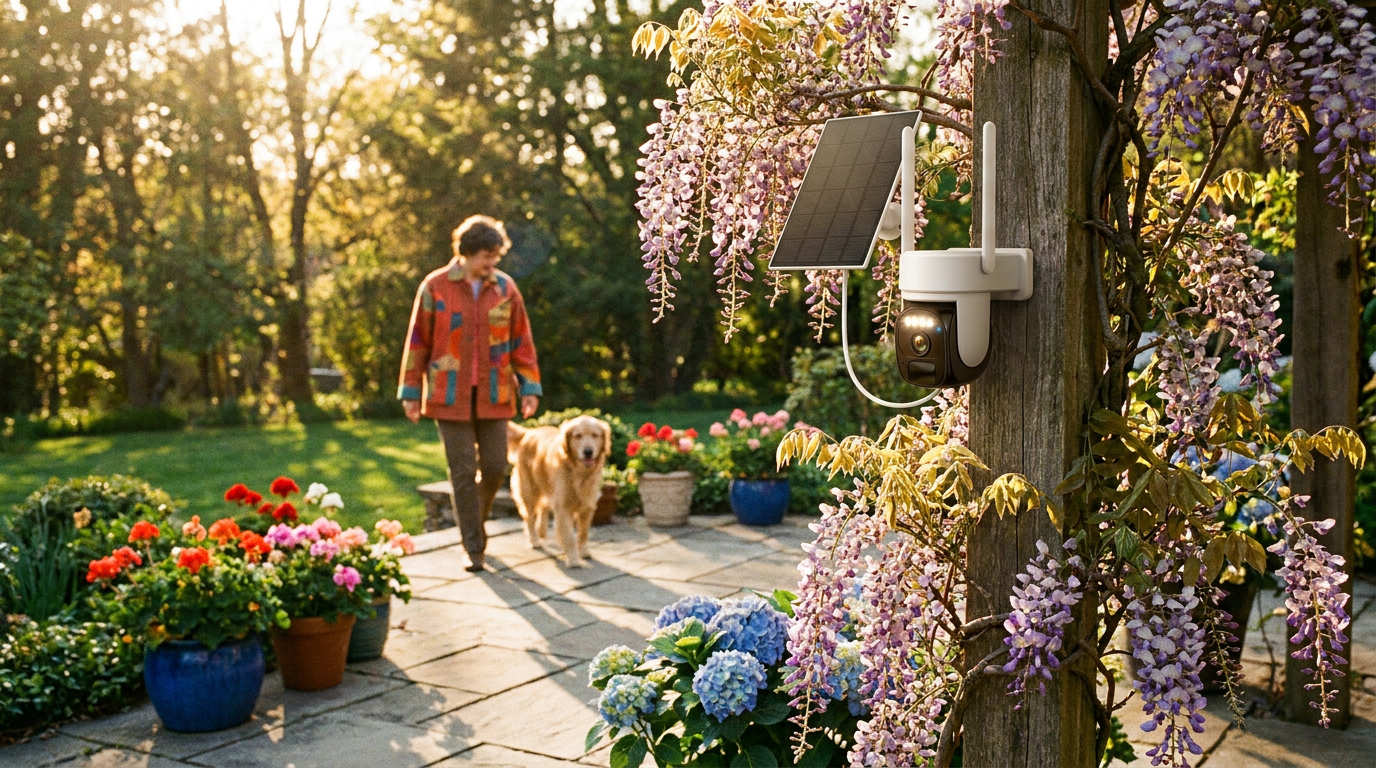
Why does Outdoor Solar Security Camera color vision matter?
 Sam VasquezBuying Guide Lead
May 29, 2026 — Color night vision in an Outdoor Solar Security Camera provides critical forensic evidence by capturing visual details that standard black-and-white infrared sensors miss.
Business owners and facility managers often prioritize night recording, but traditional grayscale footage frequently fails during police investigations because it cannot identify the color of a getaway vehicle or a suspect's clothing. By utilizing high-sensitivity sensors, these modern systems convert ambient light into a full-spectrum image that makes threat detection more reliable.
How does color night vision improve suspect identification?
Color night vision significantly increases the accuracy of suspect descriptions by providing the specific chromatic data necessary for law enforcement to act. According to insights from Steele Industries Inc, color differentiation is vital for capturing critical information and reducing the ambiguity often found in grainy, monochromatic footage. When I look at standard infrared footage, a red jacket and a navy blue jacket look nearly identical; color sensors eliminate that guesswork.
If you're on a budget, you might be tempted to stick with standard IR cameras, but the loss of detail is a high price to pay. Between a standard 1080p IR camera and a 2K color-capable Outdoor Solar Security Camera, I’d go with the color-capable model every time. The ability to tell a silver sedan from a white one can be the difference between a closed case and a dead end. Deep Sentinel notes that these cameras play a critical role in protecting businesses after dark by bridging the gap between simply seeing movement and identifying the actor.
Can solar cameras handle the power demands of color sensors?
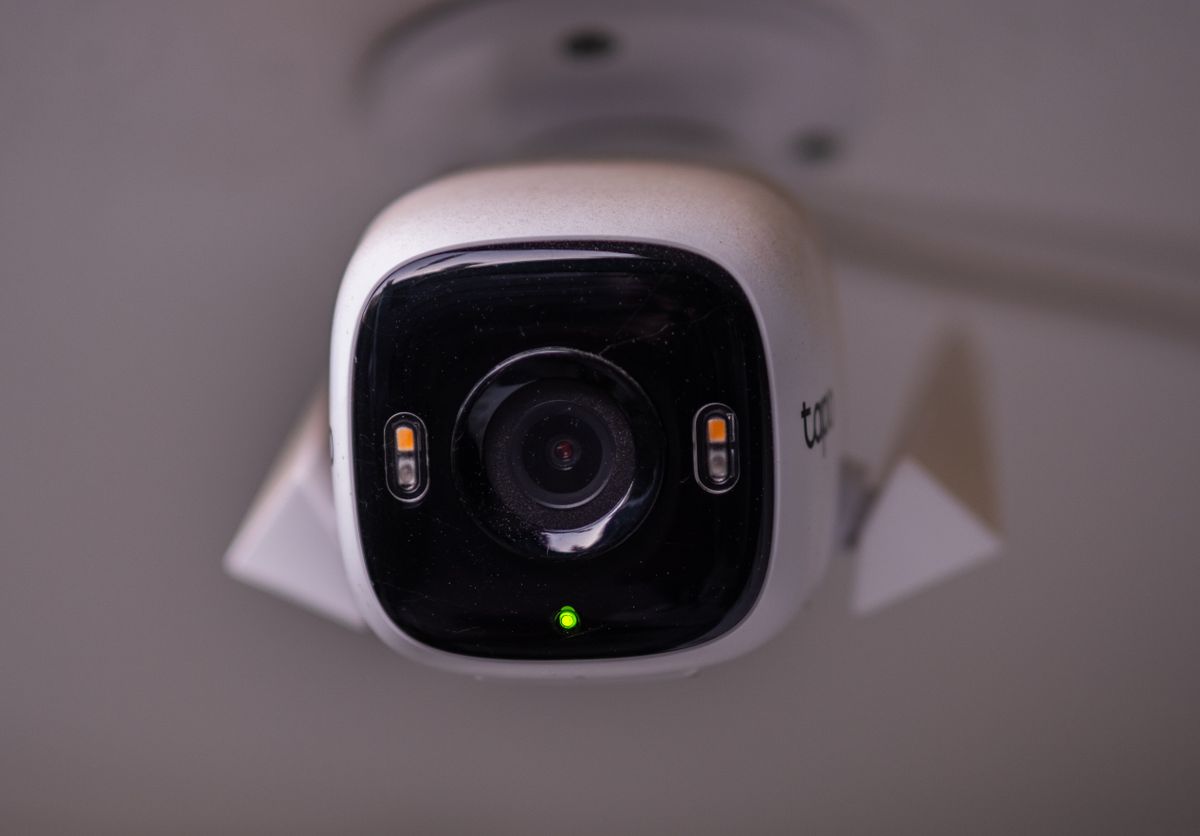
Photo by Doğan Alpaslan Demir on Pexels
Modern Outdoor Solar Security Camera systems are specifically engineered to manage the higher power draw of high-sensitivity sensors and integrated spotlights through efficient lithium-ion storage. Because color night vision typically requires either a high-sensitivity image sensor or a small amount of auxiliary light to function, power management is key. Backstreet Surveillance highlights that color night vision cameras do not require total darkness but instead leverage available ambient light to produce sharper, more usable photos.
Skip this if your business is located in an area with zero ambient light, such as a remote warehouse with no streetlights, as the camera will likely revert to black-and-white mode anyway. However, for most urban or suburban storefronts, the solar panel provides more than enough daily charge to keep these sensors active throughout the night. Bridge Cable points out that the technology behind these systems involves sensors that capture significantly more light than older models, ensuring the battery isn't drained prematurely by inefficient processing.
Quick answers
Q: Does color night vision work in total darkness? A: Most color systems require a minimum of 0.001 to 0.1 lux of ambient light or a built-in LED spotlight to maintain a color image. In absolute 0.0 lux environments, the Outdoor Solar Security Camera will usually switch to standard infrared mode to ensure visibility.
Q: How much more storage space does color footage use? A: While the file size difference is often negligible due to H.265 compression, color video can sometimes be 5% to 10% larger than monochromatic footage because of the additional chrominance data. For a business, this is a minor trade-off for the increased detail provided.
Q: Is color night vision better than infrared for all businesses? A: Color is superior for identification, but infrared has a longer range. For a small storefront, color is better; for a large 5-acre perimeter fence, a hybrid approach using both IR for distance and color for entry points is ideal.
Learn more about Outdoor Solar Security Camera at https://solarsafetycameras.com.
Sources
Photo by Jan van der Wolf on Pexels
- The Ultimate Guide to Night Vision Security Cameras - Deep Sentinel
- 8 Factors to Consider for a Color Night Vision Camera
- Security Camera Night Vision: Key Differences You Must Know