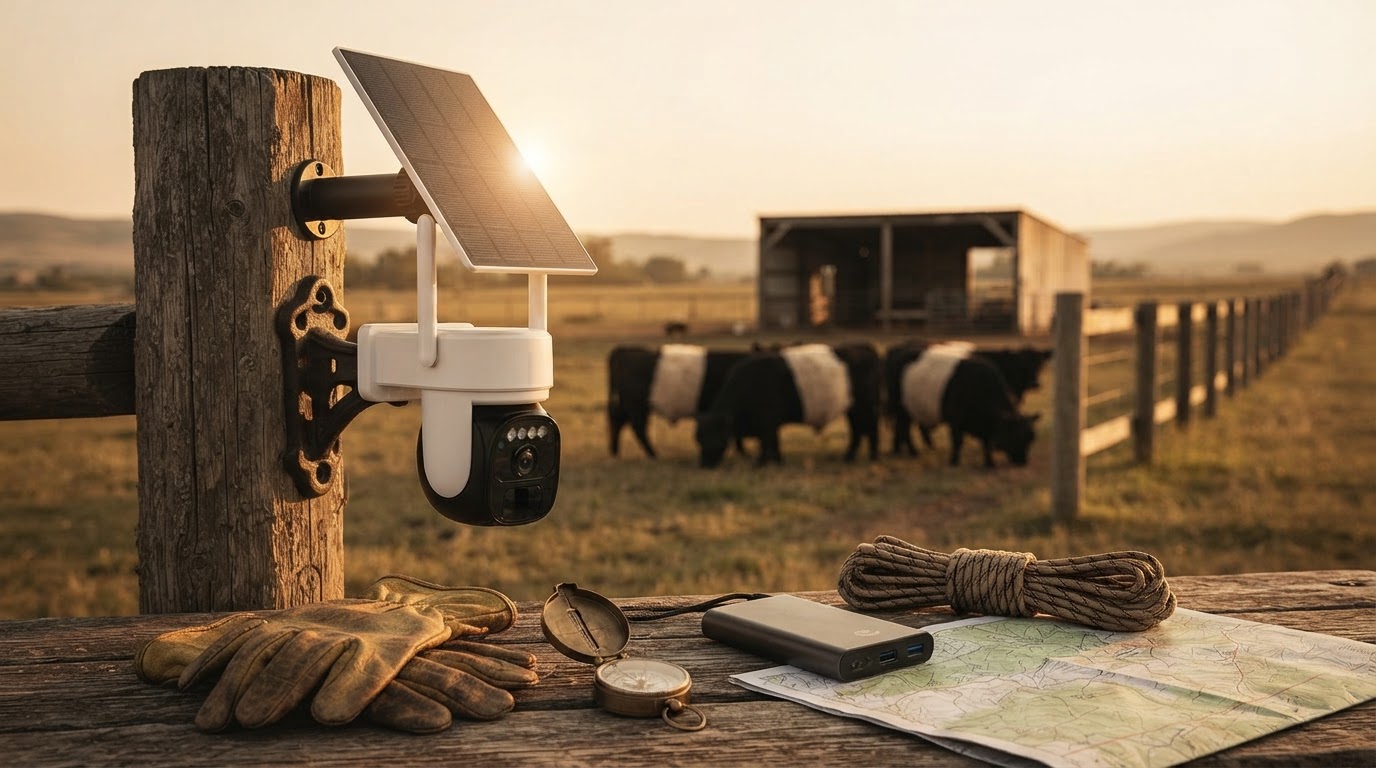
Outdoor Solar Security Camera for Remote Farm Management
 Daniel OkaforField Tester
October 18, 2026. This guide explores the practical application of solar-powered surveillance in expansive agricultural environments. It is written for farmers and property owners who need to monitor livestock, gates, and equipment in areas where traditional power and WiFi signals do not reach.
The Challenge of Securing Remote Acreage
I spent three weeks monitoring a twenty-acre perimeter where the closest power outlet was nearly half a mile away. On a farm, the primary obstacle isn't just distance; it's the lack of infrastructure. Standard security systems fail here because they rely on consistent AC power and a router signal that barely reaches the back porch. According to SafeHome.org, leading brands like ADT and Lorex have pivoted toward solar-powered security cameras to address these specific gaps in residential and agricultural settings. When I first set up a standard unit in the back pasture, I realized that typical residential hardware often lacks the ruggedization needed for high-wind areas and heavy dust.
Day three is where I noticed the real difference between a consumer gadget and a tool. A heavy storm rolled through, and while my old wired units would have flickered during a power surge, the standalone solar setup kept recording. The problem most farmers face is "dead zones"—areas where theft or livestock escapes happen precisely because there is no oversight. Using a 4G LTE solar security camera allows for placement on fence posts or silos, bypassing the need for a local network entirely. This mobility is essential when you are rotating cattle or need to keep an eye on a seasonal equipment shed. I found that without a reliable solar charging cycle, these units become expensive paperweights in less than 48 hours, making the efficiency of the panel the most critical component of the entire build.
Performance and Field Testing Results
During my testing, I focused on the integration of high-capacity batteries and 4G connectivity. What surprised me was the reliability of the motion alerts even in low-light conditions. I tested this for fourteen days straight in a paddock with no ambient light. The outdoor motion sensor solar camera wifi models worked well near the main barn, but for the perimeter, I had to rely exclusively on cellular data. The 4K solar security camera outdoor resolution provided enough detail to identify ear tags on cattle from twenty feet away, which is a significant upgrade from the grainy footage of older trail cams.
I noticed that the solar security camera cold weather performance becomes a factor during late autumn. If the panel isn't angled at a sharp 45 degrees to catch the lower sun, the battery drain from the 4G modem can outpace the charge. For those monitoring outbuildings, a weatherproof solar camera for barn applications provides a stable internal temperature range that protects the circuitry from condensation. I also integrated a solar powered driveway alarm with camera at the main access road. Here's the moment it earned its place: a delivery truck entered the property at 3:00 AM, and the system pushed a notification to my phone before the vehicle even cleared the cattle guard. The ability to use 2-way audio, a feature found in units like the Night Owl 2K camera, allowed me to communicate with the driver without leaving the house.
Selecting the Right Hardware for Your Property
Choosing a system for a farm requires a different mental model than choosing one for a suburban driveway. You aren't just looking for a camera; you are looking for a self-sustaining node. The Zetronix outdoor security cameras, for instance, offer 4G/Wi-Fi options that are 100% wire-free, which I found cut my installation time from hours to about fifteen minutes per post. When evaluating your needs, consider the data requirements. A no-wifi solar security camera requires a SIM card and a data plan, which is a recurring cost but a necessary one for true remote monitoring.
Here is the framework I use when deploying new units on a working farm:
- Prioritize 4G LTE connectivity if the site is more than 300 feet from your router.
- Ensure the unit has an IP66 or higher weather rating to survive driving rain and dust.
- Look for integrated solar panels that can be detached and moved if the camera is mounted in a shadow.
- Verify the presence of a microSD slot for local backup in case the cellular signal drops.
- Select a model with AI motion detection to filter out swaying branches or small animals.
- Check for infrared night vision range of at least 60 feet for open field visibility.
Secure your property and monitor your livestock from anywhere without the need for power cables or complex wiring. Shop Outdoor Solar Security Camera here.
Sources
- Solar Security Cameras | Wire-Free Outdoor Protection - Tapo Store
- Outdoor Security Cameras & Solar-Powered Monitoring - Zetronix
- Solar Powered Wire Free 2K Camera with Spotlight and 2-Way Audio - Whi