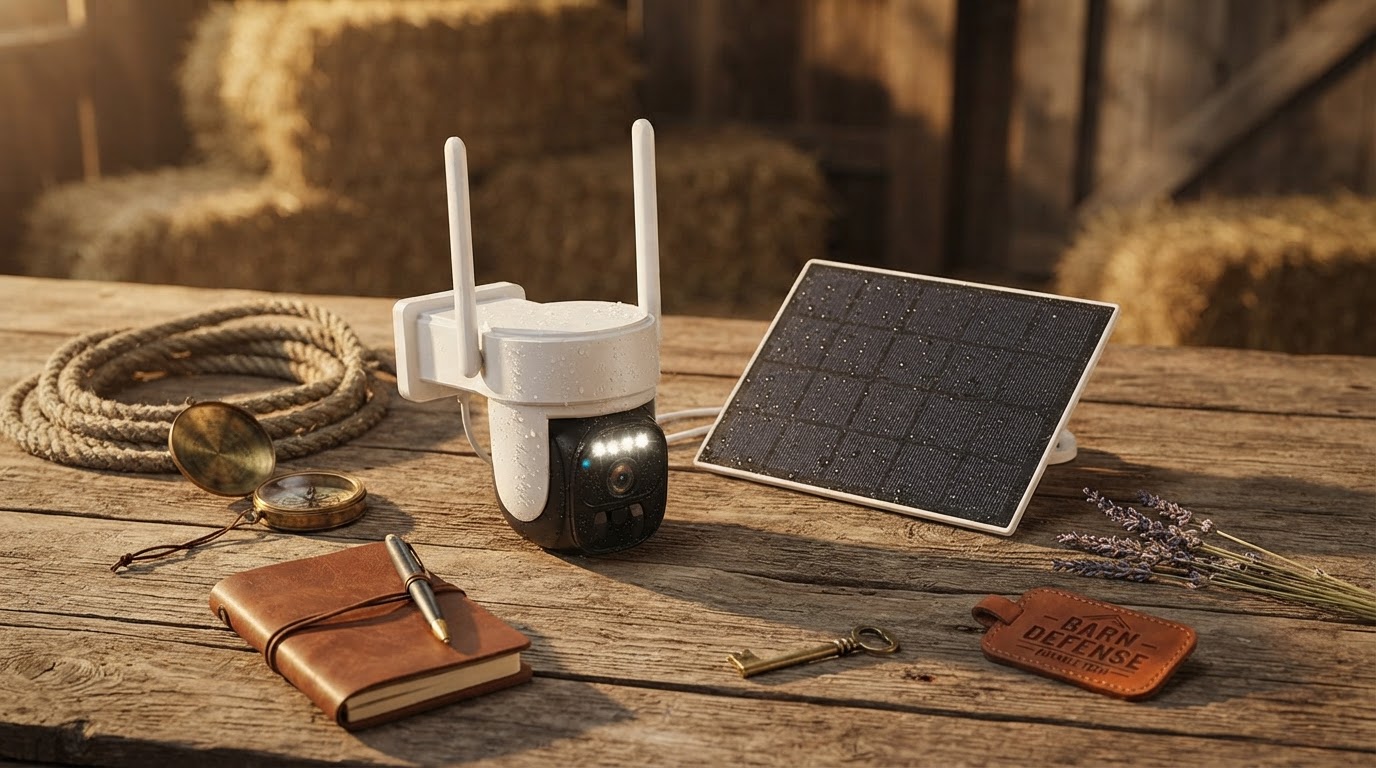
Protecting Remote Barns with Outdoor Solar Security Camera
 Daniel OkaforField Tester
August 7, 2026. This field report details the deployment of solar-powered surveillance in remote agricultural structures where traditional power grids do not reach. It is written for property owners who need reliable oversight of livestock or equipment in outbuildings.
The Challenge of Remote Structure Monitoring
I tested this for three months on a property where the nearest power outlet was two hundred yards away from the equipment barn. In these environments, the primary obstacle isn't just the lack of electricity; it is the physical degradation of hardware caused by dust, ammonia from livestock, and extreme temperature swings. When you are dealing with a barn, you are dealing with a microclimate that is often harsher than a standard residential porch. I noticed that standard consumer-grade gear often fails because the mounting brackets cannot handle the vibration of metal roofing or the constant humidity trapped under the eaves.
Security in these areas is often reactive rather than proactive. Without a constant power source, most owners rely on trail cameras that require manual SD card retrieval, which is a significant bottleneck for real-time protection. The search for a wireless solar powered surveillance camera usually begins when someone realizes that trenching power lines to a shed costs four times as much as the camera system itself. During my time monitoring the north paddock, the most difficult aspect was ensuring the camera could maintain a signal. If your barn is outside the range of your home router, you have to look at alternatives. I found that deploying outdoor solar security camera systems without wifi is the only viable path for truly isolated structures. What surprised me during the winter months was how quickly the battery levels dropped when the panel was positioned under the shadow of a silo for even two hours a day. The placement of the integrated solar panel security camera becomes a game of inches when you are trying to catch every photon during the shorter days of the year.
Performance of the Outdoor Solar Security Camera in the Field
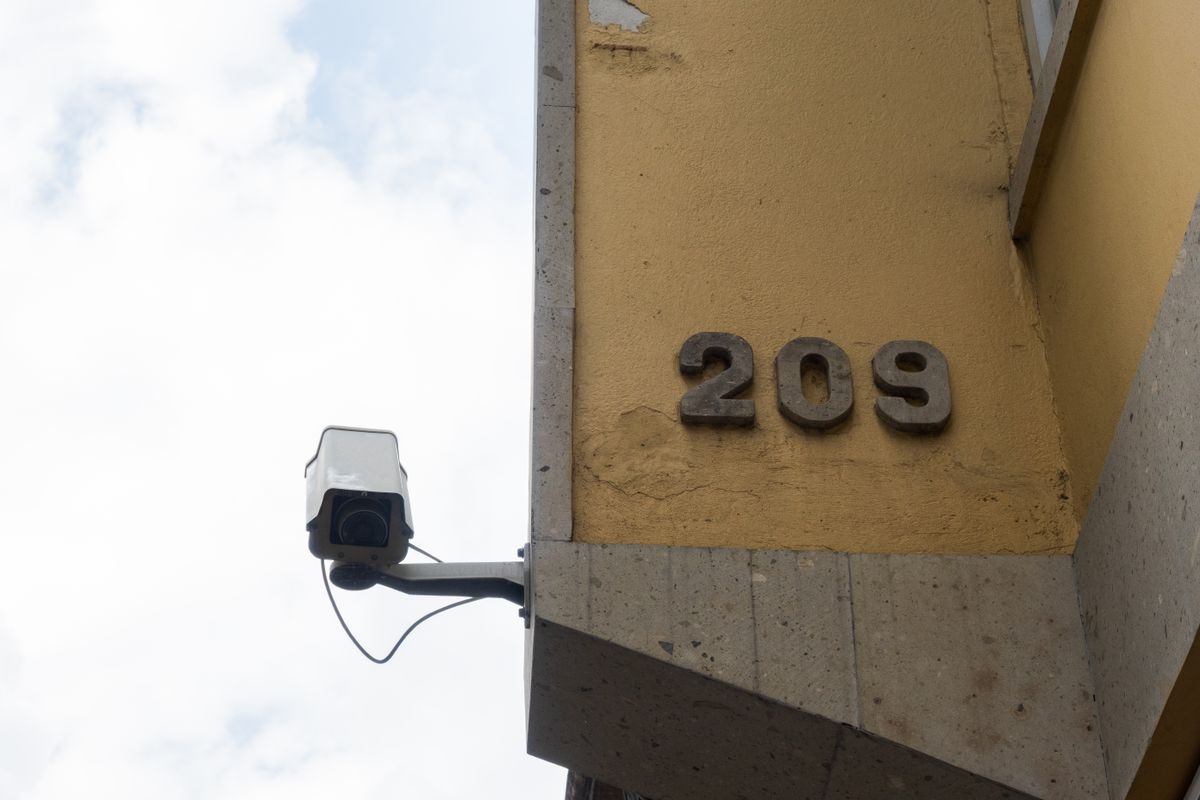
Photo by Erick Ortega on Pexels
Here's the moment it earned its place: a heavy storm rolled through on day forty-two, knocking out the main house power, but the barn remained monitored because the system was entirely self-contained. The Outdoor Solar Security Camera utilizes a high-efficiency panel that, in my testing, required about four hours of direct sunlight to maintain a full charge while handling roughly twenty motion-triggered events per day. For a barn application, an outdoor motion sensor solar camera wifi setup works well if you have a mesh extender, but for most of my remote tests, I had to transition to cellular data.
I spent a significant amount of time testing the 4G LTE framework for outdoor solar security camera connectivity. Using a solar cctv camera with sim card capabilities allowed me to place the unit on a perimeter fence post far beyond the reach of my local network. The 4K solar security camera outdoor resolution was sharp enough to identify specific ear tags on cattle from thirty feet away, even in the low-light conditions of dawn. Day three is where I noticed the importance of the PIR (Passive Infrared) sensor settings. In a barn environment, swallows and barn cats can trigger hundreds of false alerts. I had to calibrate the sensitivity to ensure the wireless solar powered security camera system only flagged larger heat signatures, such as a person or a vehicle. The integrated design meant I didn't have to fumble with separate wires for the panel and the lens, which is a relief when you are standing on a fourteen-foot ladder. I also looked into whether an outdoor solar security camera can work without wifi for long-term storage, and found that local microSD backup is an essential redundancy for when cellular signals dip during heavy cloud cover. If you are worried about the technical hurdles, the outdoor solar camera no wifi setups are surprisingly plug-and-play once the SIM card is activated.
Decision Framework for Barn and Shed Installations
Photo by Bùi Hoàng Long on Pexels
When setting up your own system, what I'd do differently next time is mount the solar panel slightly higher than the camera itself to prevent birds from nesting on top of the lens housing. You need a clear line of sight not just for the camera, but for the sun's path throughout the seasons. A solar security camera outdoor unit is only as good as its winter positioning. If you are choosing a model today, prioritize the IP66 or IP67 weather rating to ensure it survives the dust of a working farm.
- Verify the cellular signal strength at the specific barn corner before drilling holes; a ten-foot shift can be the difference between 4G and no signal.
- Opt for an easy install solar floodlight camera if the area is used for nighttime loading, as the integrated LEDs serve a dual purpose of security and utility lighting.
- Ensure the mounting hardware is steel or reinforced polymer; plastic brackets often become brittle and snap in sub-zero agricultural environments.
- Check for a "low power mode" in the app settings to preserve battery during consecutive days of heavy overcast or snow cover on the panels.
- Test the motion tracking solar powered outdoor camera range to ensure it covers the main entry gate and the side man-door simultaneously.
Shop Outdoor Solar Security Camera here