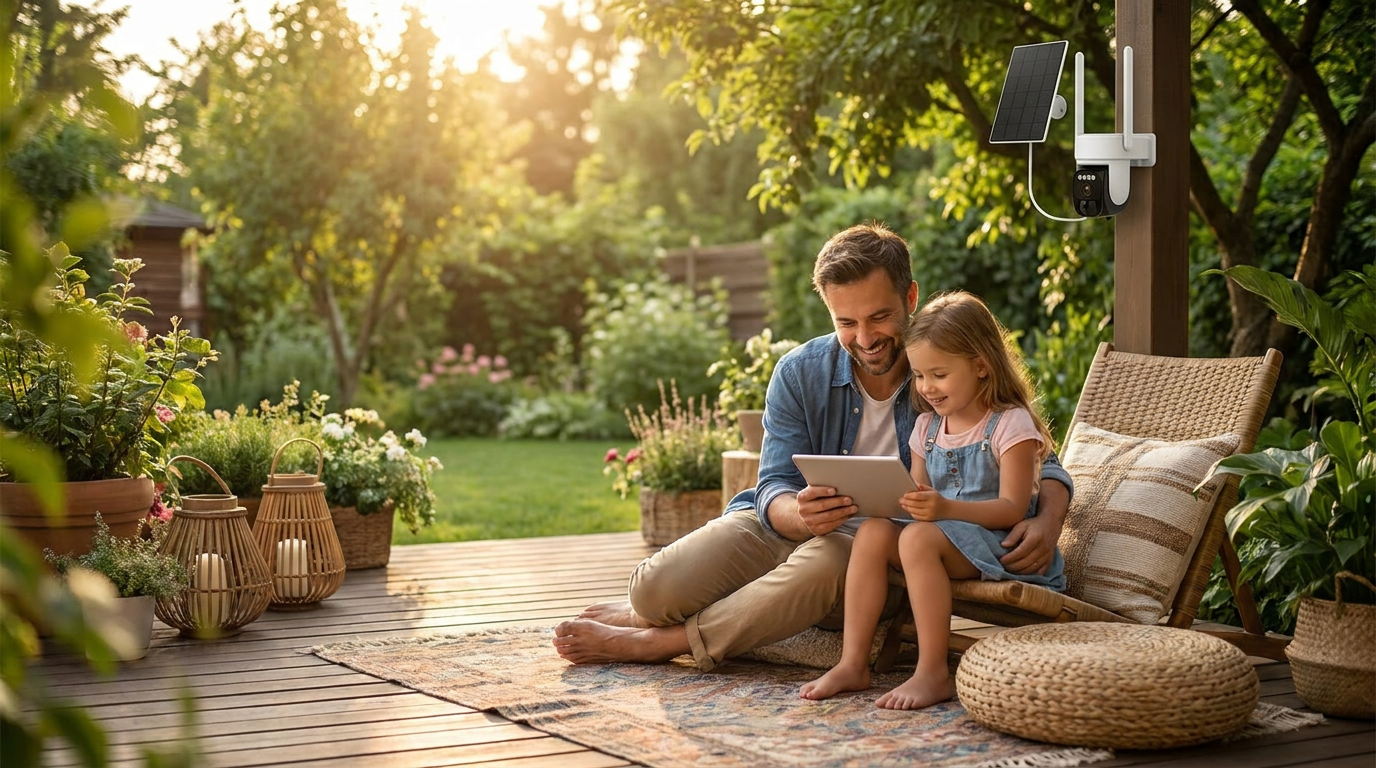
How to Configure an Outdoor Solar Security Camera with SIM?
 Priya RamanSenior Analyst
July 5, 2026 — Configuring an Outdoor Solar Security Camera with a SIM card requires a compatible 4G LTE data plan and a hardware interface that supports cellular network protocols for off-grid data transmission.
Property owners frequently seek these solutions for locations where traditional broadband infrastructure is absent, such as construction sites or agricultural land. The shift toward cellular-integrated hardware eliminates the dependency on local routers, provided there is sufficient signal strength at the installation point. Understanding the relationship between energy harvesting and data consumption is critical for maintaining 24/7 uptime.
Two axes matter here: power autonomy and data throughput. Think of it as a matrix of energy availability versus network stability. When these two factors are aligned, a camera can function indefinitely without manual intervention.
How does a solar CCTV camera connect via SIM card?
A solar CCTV camera connects by utilizing an internal 4G/LTE modem that communicates directly with cellular towers rather than bridging through a local Wi-Fi access point. Once a SIM card is inserted into the designated slot, the device authenticates with the mobile network operator to establish an internet uplink for video streaming and cloud storage. The decision rule: if your installation site lacks a stable Wi-Fi signal but has at least two bars of cellular reception, a SIM-based model is the primary technological choice. According to Hikvision, their solar-powered security camera series features dedicated slots for both 4G SIM cards for data transmission and SD cards for local storage redundancy. This architecture ensures that even if the cellular network fluctuates, the device continues to capture footage locally. The integration of 4K 8MP high-resolution sensors in modern units, such as those listed by eBay vendors, provides clear visual evidence while requiring efficient data compression to manage cellular bandwidth costs effectively.
What are the requirements for 4G solar camera stability?
Photo by Star Zhang on Pexels
The stability of a 4G solar camera depends on the synergy between the solar panel's wattage, the battery's milliampere-hour (mAh) capacity, and the cellular signal quality. For consistent performance, the camera must be placed in a location receiving at least 4 to 6 hours of direct sunlight to offset the high power draw of a cellular modem, which consumes more energy than a standard Wi-Fi chip. Once you see it this way, the importance of panel positioning becomes as vital as the camera angle itself. Research from Maizic Smarthome indicates that specialized models like the Batman 4G solar camera utilize dual-panel configurations to maximize energy intake in regions with varying sunlight intensity. Furthermore, users must ensure their data plan supports M2M (Machine to Machine) or IoT traffic, as some consumer phone SIMs may be throttled or blocked by carriers when used in high-bandwidth surveillance devices. Proper waterproof sealing of the SIM and SD card compartments is also mandatory to prevent moisture ingress, which is the leading cause of hardware failure in remote outdoor deployments.
Quick answers
Q: Can a solar camera use both WiFi and 4G SIM cards simultaneously? A: Most hardware designs, such as those found in 8MP outdoor models on eBay, are built to support one primary connection mode at a time and cannot support both 4G and WiFi simultaneously. Users must select the specific hardware version that matches their available infrastructure before installation.
Q: How much data does a solar CCTV camera with a SIM card use? A: Data consumption varies based on resolution, but a typical 4G solar camera can consume between 2GB and 10GB per month depending on how often the motion-activated triggers are viewed remotely. High-definition 4K streams will exhaust data caps significantly faster than standard definition previews.
Q: What happens to the camera if the 4G signal is lost? A: When the cellular signal drops, the camera continues to record to an internal SD card if one is installed, but remote alerts and live viewing will be disabled. Hikvision and other professional manufacturers include these local storage slots specifically to prevent gaps in security footage during network outages.
Learn more about Outdoor Solar Security Camera solutions for off-grid property, hidden outdoor setups, and remote cabins at https://solarsafetycameras.com.
Sources
Photo by Jonathan Nilsson on Pexels
- 4G Dual Solar Panel Outdoor CCTV Camera ☀️ Sim ... - YouTube
- Solar-powered Security Camera Series - Hikvision
- Solar Camera 4G SIM Card WIFI Outdoor Waterproof 4K 8MP Night ...