
Three Critical Checks for 4G Outdoor Solar Security Camera
 Maya ChenContributing Editor
June 24, 2026 — The rising demand for off-grid surveillance has pushed the Outdoor Solar Security Camera market into a territory where 4G LTE connectivity is no longer a luxury, but a necessity for remote assets. While many consumers assume a standard Wi-Fi unit will suffice with a range extender, the technical reality of monitoring sheds, construction sites, and rural perimeters requires a dedicated cellular backbone.
The conventional wisdom says that any solar camera with a SIM slot will perform reliably, but this ignores the high power draw of constant cellular handshakes. According to Reolink, specialized cellular security cameras are designed specifically to operate without Wi-Fi, integrating solar power options with smart detection to mitigate the battery drain that typically plagues 4G hardware. This integration is essential because a camera that loses its connection during a cloud-heavy week is effectively a paperweight. When evaluating these units, the focus must shift from resolution numbers to the efficiency of the cellular modem and the wattage of the accompanying solar panel.
The Connectivity and Power Matrix
To ensure an Outdoor Solar Security Camera remains functional in isolated environments, three specific technical thresholds must be met. First, the unit must support multi-carrier compatibility. Devices like the Xega 4G LTE Cellular Security Camera illustrate this by supporting major networks like Verizon, AT&T, and T-Mobile, which prevents single-point-of-failure scenarios in areas with spotty coverage. Second, the power budget requires a minimum 2K HD resolution sensor coupled with a high-conversion solar panel; lower-quality panels often fail to keep pace with the energy demands of 4G data transmission. Third, the storage architecture must be hybrid. Relying solely on cloud storage over a 4G link is a recipe for data-cap exhaustion and high latency. Local microSD storage acts as the primary buffer, while 4G is reserved for critical alerts and remote viewing. Run the math: a 4G camera transmitting 2K video can consume gigabytes of data monthly if motion sensitivity isn't calibrated. Without a robust PIR sensor to filter out false triggers, the system will deplete both its data plan and its battery reserves before noon. For those deploying hardware in colder climates, it is vital to understand how does an Outdoor Solar Security Camera handle winter to avoid total system shutdown when sunlight hours decrease. This is particularly relevant when applying Outdoor Solar Security Camera tech to remote property where manual restarts are not feasible. Reliability in these scenarios depends on the hardware's ability to enter a low-power deep sleep mode while maintaining its cellular heartbeat.
Expert tip: Always verify if the camera uses a 4G Cat-M1 or NB-IoT modem versus a standard high-speed LTE modem. While Cat-M1 offers lower bandwidth, its significantly lower power consumption and better building penetration make it superior for remote solar-powered sensors that only need to send alerts and short clips.
Here's the part nobody talks about: the SIM card provided in the box is often the most expensive way to operate the device. I'll change my mind when manufacturers stop locking these cameras to proprietary data plans and allow for true, open-market SIM swapping without feature throttling. Until then, users should prioritize hardware that is carrier-agnostic to ensure long-term viability as network pricing fluctuates.
Shop Outdoor Solar Security Camera.
Sources
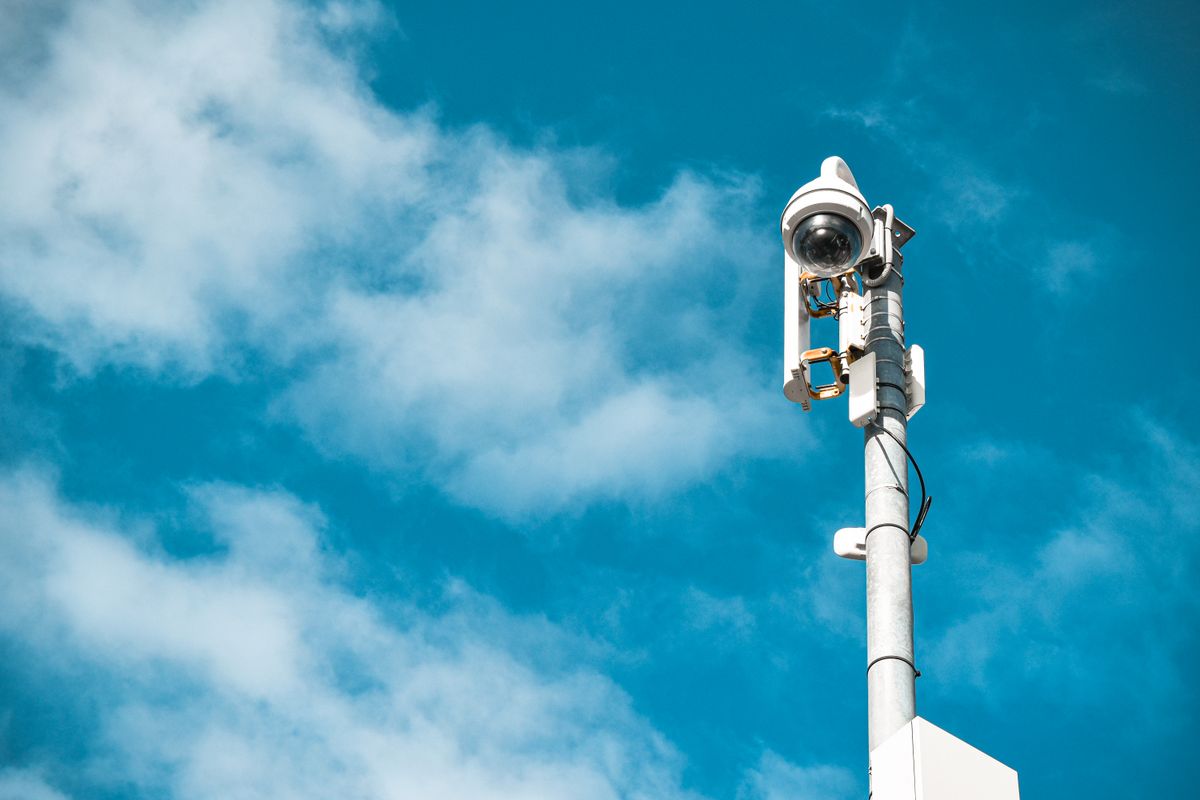
Photo by Ilman Muhammad on Pexels
- Xega 4G LTE Cellular Security Cameras Wireless Outdoor Solar ...
- V150 » VOSKER | Mobile Security Cameras
- Best Cellular Security Camera | 4G LTE CCTV Solutions - Reolink US