4G LTE Framework for Outdoor Solar Security Camera
 Maya ChenContributing Editor
August 5, 2026 — The shift toward decentralized property monitoring has accelerated the adoption of the Outdoor Solar Security Camera in environments where traditional network infrastructure is entirely absent.
The conventional wisdom says that a security system is only as reliable as its local Wi-Fi connection, yet data from recent Reddit community discussions on wireless solar cameras for sheds suggests a pivot toward standalone cellular resilience. Users are increasingly abandoning the struggle of extending mesh networks to remote perimeters, opting instead for integrated SIM card modules that bypass local routers entirely. This technical evolution addresses the primary failure point of remote surveillance: the signal drop-off inherent in long-range 2.4GHz transmissions.
The LTE Connectivity Protocol

Photo by Connor Scott McManus on Pexels
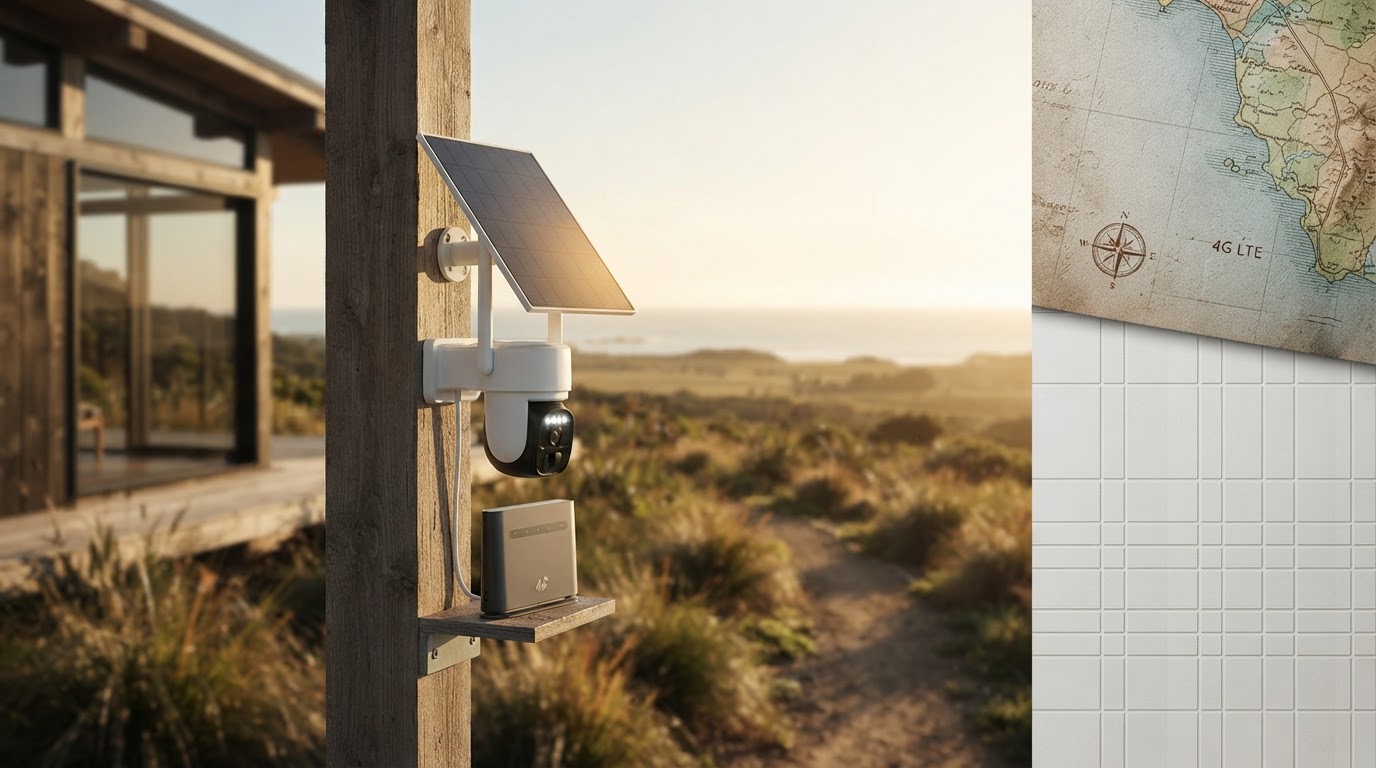
Deploying an Outdoor Solar Security Camera without a local network requires a strict adherence to cellular data management and power efficiency. Here is the part nobody talks about: a camera relying on a 4G LTE connection consumes significantly more battery during data transmission than one using standard Wi-Fi protocols. To maintain 24/7 uptime, these units must utilize high-efficiency integrated solar panels and large-capacity lithium-ion batteries. Run the math: a standard 4G transmission can pull upwards of 2 Watts during active streaming, meaning a system without at least 10,000mAh of storage and a 5W panel will likely face downtime during consecutive overcast days. When deploying outdoor solar security camera systems without wifi, the hardware must support specific cellular bands to ensure the motion tracking and 4K video feeds reach the cloud without latency. While many seek the cheapest solar security camera with an app, the real value lies in the IP65 or IP66 weatherproof rating and the ability to maintain a handshake with cellular towers in low-signal areas. This setup is particularly vital when installing a weatherproof solar camera for barn applications where metal siding frequently kills Wi-Fi signals but allows for external cellular antenna mounting. Understanding can an outdoor solar security camera work without wifi involves recognizing that the SIM card becomes the gateway, requiring a dedicated data plan to function. This transition to 4G LTE solar security camera technology ensures that even if a local router is compromised or powered down, the security perimeter remains live.
Expert tip: When installing a no-wifi system, always check the local signal strength of the specific carrier on your SIM card at the exact mounting height; signal at ground level often differs significantly from signal at a ten-foot elevation.
Reliability in remote surveillance is no longer tethered to the home router. I’ll change my mind when Wi-Fi range extends to a half-mile without significant packet loss, but until then, cellular remains the only logical path for no wifi solar security camera deployments.
Shop Outdoor Solar Security Camera.