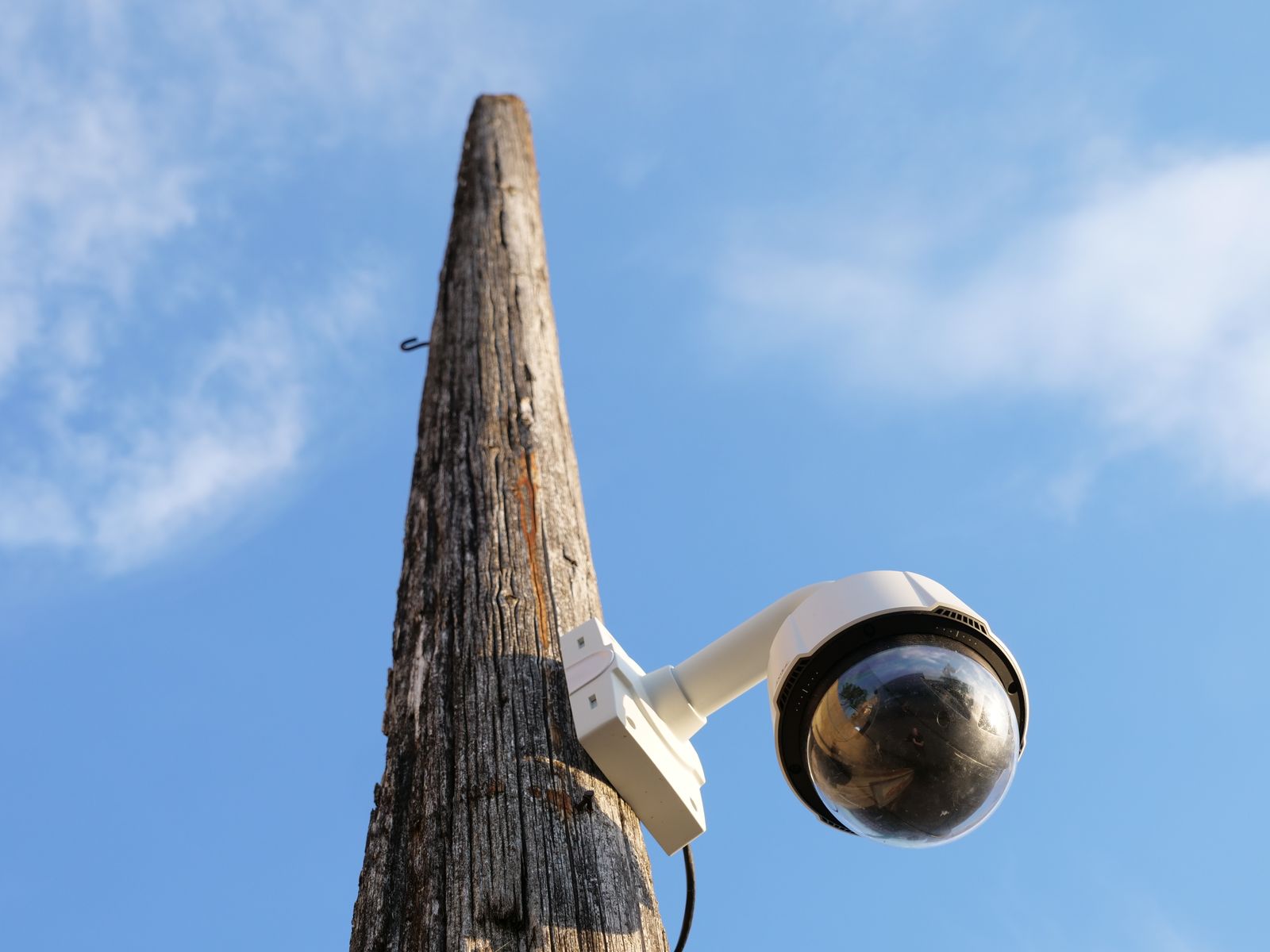
Caring for a Solar Camera in Dusty, Salty, or Pollen-Heavy Air
In clean suburban air a solar camera can go months untouched. Within a few hundred yards of surf, on a dirt lane, or beside a field being harvested, the same camera needs the panel and the lens wiped every few weeks, and the fixings checked twice a year. Two failures follow from neglect: the panel collects a film that steadily reduces how much charge it gathers, and the lens collects one that turns every night clip hazy. Both are gradual, which is why they get missed.
What each kind of air actually does
| Environment | What lands on the camera | First symptom | |---|---|---| | Coastal, within sight of surf | Salt aerosol, fine and sticky | Hazy glass that returns days after cleaning; corrosion on fasteners | | Dirt roads, gravel lanes | Coarse dust, driven by passing vehicles | Gritty film on the panel, night glare | | Farmland and livestock | Soil dust, chaff, pollen, insect residue | Panel film during harvest; webs and insect traffic | | Heavy pollen areas in spring | Fine yellow-green powder, everywhere | Sudden seasonal drop in charging, hazy footage | | Urban roadside | Soot and traffic grime, oily rather than dry | Smeared film that dry wiping makes worse | | Wildfire smoke or ash | Fine ash, sometimes alkaline | Rapid panel coverage over a few days | | Desert or high wind | Abrasive blown sand | Fine scratching over years, not just film |
Salt is the one that behaves differently. Dust sits on a surface and can be brushed off; salt aerosol is hygroscopic, meaning it draws moisture from the air, so it forms a slightly damp film that keeps re-attracting dust and slowly attacks metal. That is why coastal installations need rinsing with fresh water rather than only wiping, and why fasteners are as much a concern as glass.
How to clean a camera without damaging it
Photo by Meruyert Gonullu on Pexels
What to avoid, all of which cause permanent damage: solvents, alcohol, acetone, ammonia-based glass cleaners, abrasive pads, scouring powder, pressure washers, and anything oily or greasy sprayed near the lens or panel. Residue from a spray attracts more dust than it repels, and coatings on optical and panel surfaces do not survive strong chemicals.
How often, by environment
- Coastal within a few hundred yards of surf: rinse with fresh water monthly, wipe the lens monthly, inspect fasteners for corrosion every three months.
- Dirt lane or gravel drive: wipe panel and lens every four to six weeks, more often in dry spells.
- Working farm during harvest or mowing: check weekly while the work is happening, then return to monthly.
- Heavy pollen season: weekly for the three or four weeks of peak, then monthly.
- Urban roadside: every six to eight weeks, with mild soap rather than water alone.
- Clean suburban air: every two to three months, plus after any storm.
- Any environment: whenever a night clip looks softer than you remember, or whenever charge behaves worse than it did last month.
Salt air and the hardware around the camera
The camera housing is built for outdoor use, but the bracket, screws, and whatever they are fixed into are usually the first casualties near the coast. Three habits extend the life of an installation substantially:
- Choose corrosion-resistant fasteners at install. Stainless hardware costs marginally more and lasts years longer in salt air. Mild steel screws will streak rust down a wall within a season.
- Rinse the bracket and fixings, not just the glass. Salt accumulates in the joint between bracket and wall, where you cannot see it and where it does the most harm.
- Leave the housing sealed. Do not open a sealed outdoor unit to clean inside it. Breaking a seal in humid, salty air is far worse than any film you were hoping to remove. Standard install considerations are covered in the walkthrough on mounting a solar camera properly.
When the problem is not dirt
Photo by Jan van der Wolf on Pexels
Cleaning solves most degradation, but not all of it. Four signs point elsewhere:
- Haze that appears inside the glass and does not respond to cleaning suggests condensation or a compromised seal. A film that clears as the morning warms is normal; one that never clears is not.
- Fine scratching visible against the light is abrasion from dry wiping or blown sand. It is permanent, and it shows up as glare and softness around lights at night.
- Charging that stays poor after the panel is clean points at shading or seasonal sun angle rather than surface film. Short winter days behave differently from a dirty panel, and the difference is set out in the notes on cold-season performance.
- Corrosion on the bracket with movement in the mount means the fixing, not the camera, needs replacing before the next storm does it for you.
FAQ
Can a pressure washer be used on an outdoor camera? No. Pressure washing can drive water past seals that handle rain perfectly well, and it can strip surface coatings. Outdoor ratings assume weather, not a directed high-pressure jet at close range. Use a hose at low pressure or a bucket.
Does a dirty solar panel really matter that much? Yes, and it is the most common cause of a camera that used to be reliable and now goes offline in poor weather. An even film of dust or pollen reduces how much energy the panel collects every single day, and the effect compounds through a cloudy week.
Is rain enough to keep a camera clean? Rain rinses loose dust off a panel, which helps. It does nothing about salt film, oily road grime, insect residue, or webs under the housing, and in dusty areas it can leave dried spotting that is worse than the dust was. Rain reduces the frequency of cleaning; it does not replace it.
Should anything be sprayed on the lens to repel dirt? No. Keep sprays, polishes, and water-repellent treatments away from both the lens and the panel. Residue hazes optical surfaces, attracts dust, and is difficult to remove without the abrasives you also want to avoid. Plain water and a soft cloth is the whole method.
Next step
Work out which row of the environment table describes your property, set the matching interval as a repeating reminder, and do the first clean now — wetting before wiping, panel first, plain water only. Then check the live view afterward so you know what a genuinely clean picture looks like on your own cameras.
Cover photo by Giant Asparagus on Pexels.