One Good Camera or Three Cheap Ones? Spending a Fixed Security Budget Well
With a fixed amount to spend, the better return almost always comes from covering the right places with fewer capable cameras than from covering more places with weak ones. The exception is a property with genuinely separate approaches, where a second camera adds coverage that no single unit can reach regardless of quality. The decision comes down to whether the money is buying new information or a second view of information already held.
This question arrives at the point of purchase and rarely gets answered honestly, because both answers sell something. What follows is the arithmetic.
What does each additional camera actually buy?
Cameras do not add value evenly. The first one on a property typically covers the main approach and delivers most of the practical benefit available. The second, if it covers a genuinely different approach such as a rear lane or side gate, adds nearly as much again. From the third onward the returns flatten quickly unless the property is large or has multiple independent entrances.
Think of it in terms of independent approaches rather than walls. A terraced house with one front door and a shared rear alley has two. A detached house on a corner plot with a driveway, a side gate, and a garden door has three. A small commercial yard with a vehicle gate, a pedestrian door, and a loading area also has three. Count the routes a person could take to reach the building without passing anything already covered, and that number is the ceiling on how many cameras earn their place.
When is a second camera the better spend?

Add a camera rather than upgrade one when at least one of these is true.
- There is a second approach that the existing camera physically cannot see, such as the opposite side of a building.
- The property has a detached structure worth covering separately, like a garage, workshop, or shed.
- A single view has to compromise between two jobs, for example identifying faces at a door and watching a driveway thirty feet away.
- Vehicles and people arrive by different routes.
- The building wraps around a corner, so no single position sees both faces.
When is upgrading the better spend?
Put the money into fewer, better cameras when the following describe the situation.
- The existing footage shows events but does not identify anyone.
- Night clips are the problem rather than daytime coverage. Usable color detail after dark changes outcomes more than an extra angle does, which is the argument made in the case for color night vision on business premises.
- One camera is already trying to watch a wide area and losing detail across all of it. Pan, tilt, and zoom control solves this by letting a single unit be aimed where attention is needed instead of averaging across the whole scene.
- Charging or connection reliability is the weak link, in which case a fourth unreliable camera adds four times the frustration.
- The site has one approach that matters and several that do not.
How should a fixed budget be split?
| Budget shape | Property type | Reasonable allocation | |---|---|---| | Enough for one capable camera | Terraced or apartment with one approach | One camera on the approach that matters, spend nothing else | | Enough for one capable or two basic | Semi-detached with front and rear access | One capable camera on the weaker approach, add the second later | | Enough for two capable | Detached house, driveway plus side gate | One per approach, no overlap | | Enough for three or four | Small business premises or large plot | Cover gate, entrance, and yard separately, keep one flexible | | Larger budget | Multiple buildings | Cover each building's entrance before adding second views anywhere |
Two rules make this simpler. Never buy a camera for a position that has not been walked and checked for daylight and signal, because an unreachable position turns a purchase into a shelf item. And leave part of the budget unspent on the first pass; the useful second camera position is usually obvious only after a few weeks of watching the first one.
What costs nothing and often beats another camera?
Before adding hardware, several changes cost little and improve every camera already installed.
That list is worth working through first because it changes what the remaining budget should buy.
Does a flexible camera change the math?
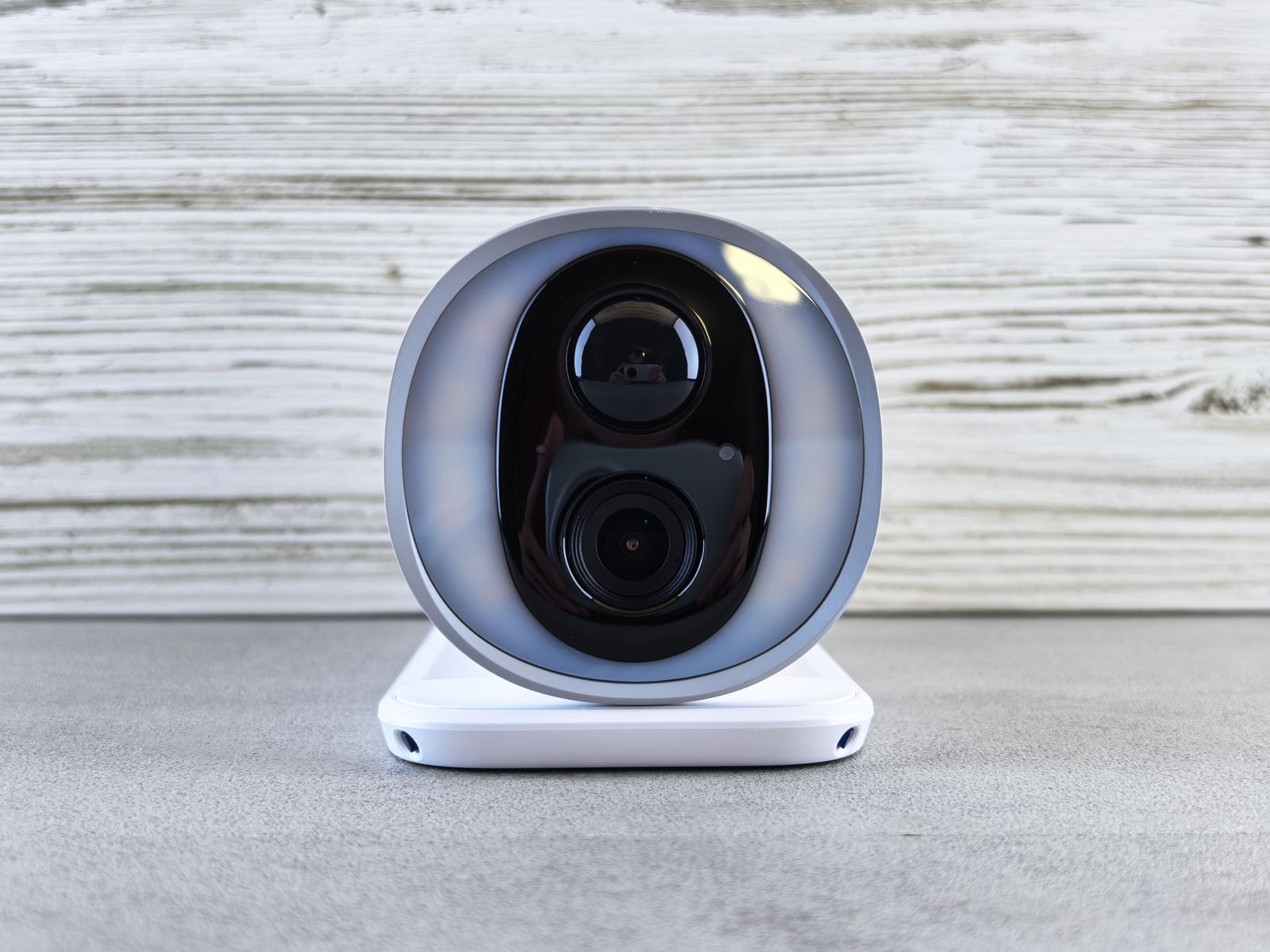
Photo by Andrey Matveev on Pexels
It does, and this is the main reason the old advice to buy several fixed cameras has softened. A unit with pan, tilt, and zoom control covers a range of framings from one position, so a single well-placed camera can watch a driveway during the day and be aimed at a gate overnight. That flexibility does not create coverage where a wall blocks the view, but within a sightline it substantially reduces the number of units a property needs.
For larger sites the same logic applies at scale, and the account of pan-tilt-zoom coverage on warehouse premises shows where one movable camera replaces several static ones. For homes, the practical test is simple: stand at the intended position and look around. If everything worth watching is visible from there by turning your head, one camera can do it.
What about wired versus self-powered on a tight budget?
Budget comparisons often ignore installation. A wired camera's purchase price is only part of the cost once cable runs, trunking, and labor are included, and on a rented or awkward property the run may not be possible at all. Solar, wireless units shift that money into the camera itself. The tradeoff is that positions must have real daylight and a workable signal, which is a constraint on where they go rather than a constraint on quality. The comparison of solar and hardwired systems sets out where each makes sense, and the overview of building up a wireless system covers how to expand without redoing the first installation.
Frequently asked questions
Is one camera ever enough for a whole house? For many properties, yes. If there is a single realistic approach and the camera covers it with enough detail to identify a person, a second camera adds reassurance rather than information. Spend the remainder on lighting and locks.
Do four cheap cameras deter better than one good one, simply by being visible? Visibility has some effect, but a visible camera that produces unusable footage fails at the moment it is needed. A single capable camera on the approach, plus attention to lighting and access, is the more dependable combination.
How long should a first camera run before buying a second? A month covers enough variation in weather, daylight, and household routine to show what is missing. Buying the second camera on the same day as the first usually means guessing about a position that experience would have chosen better.
Does covering the same area twice ever make sense? Occasionally, for a high-value entrance where one view identifies faces and another shows context. On a domestic property with a limited budget, it is rarely the best use of the money.
A practical next step
Walk the property once and count the independent approaches, then write that number down. It sets the maximum number of cameras worth owning, and everything left over in the budget goes toward making each of those views actually usable after dark.
Cover photo by Ala J Graczyk on Pexels.