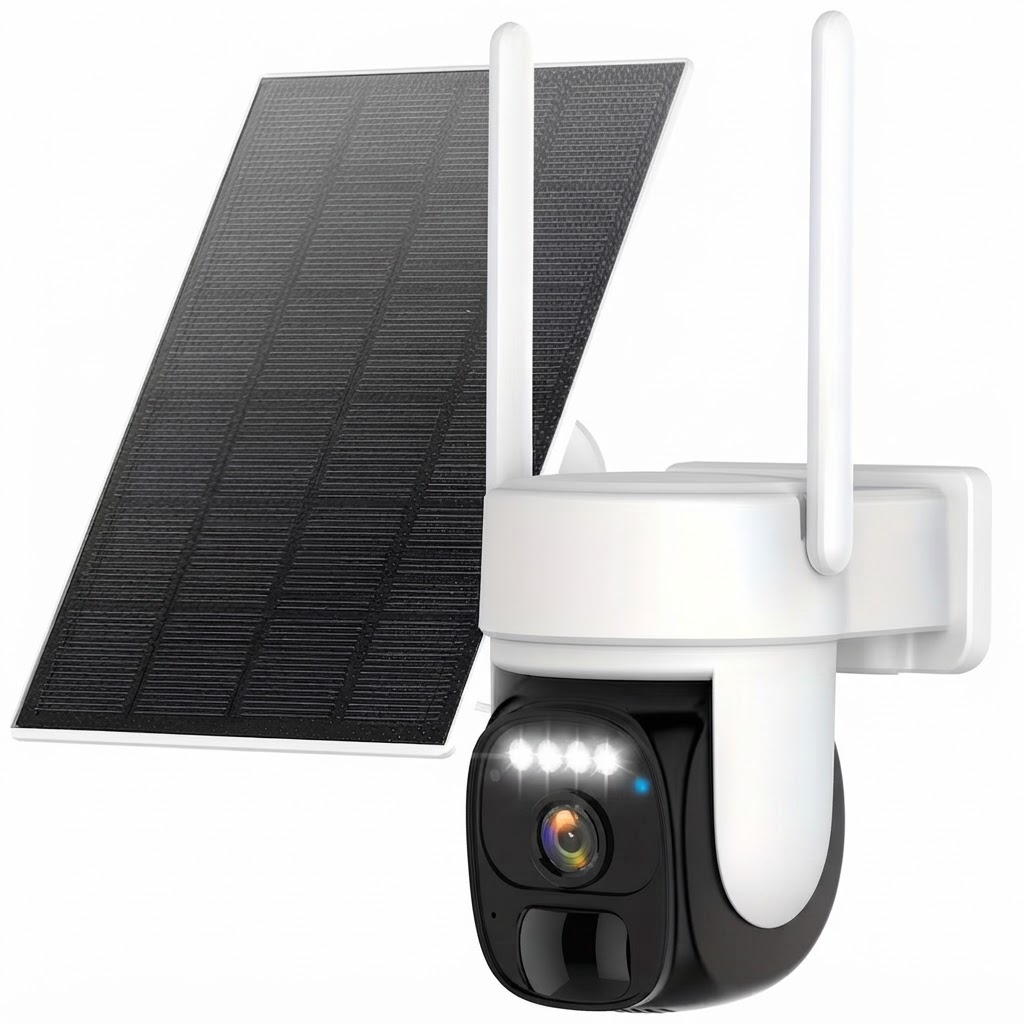
Solar Security Cameras vs. Hardwired Outdoor Cameras: Which Is Right for You?
Comparing Power Architecture and Installation Complexities
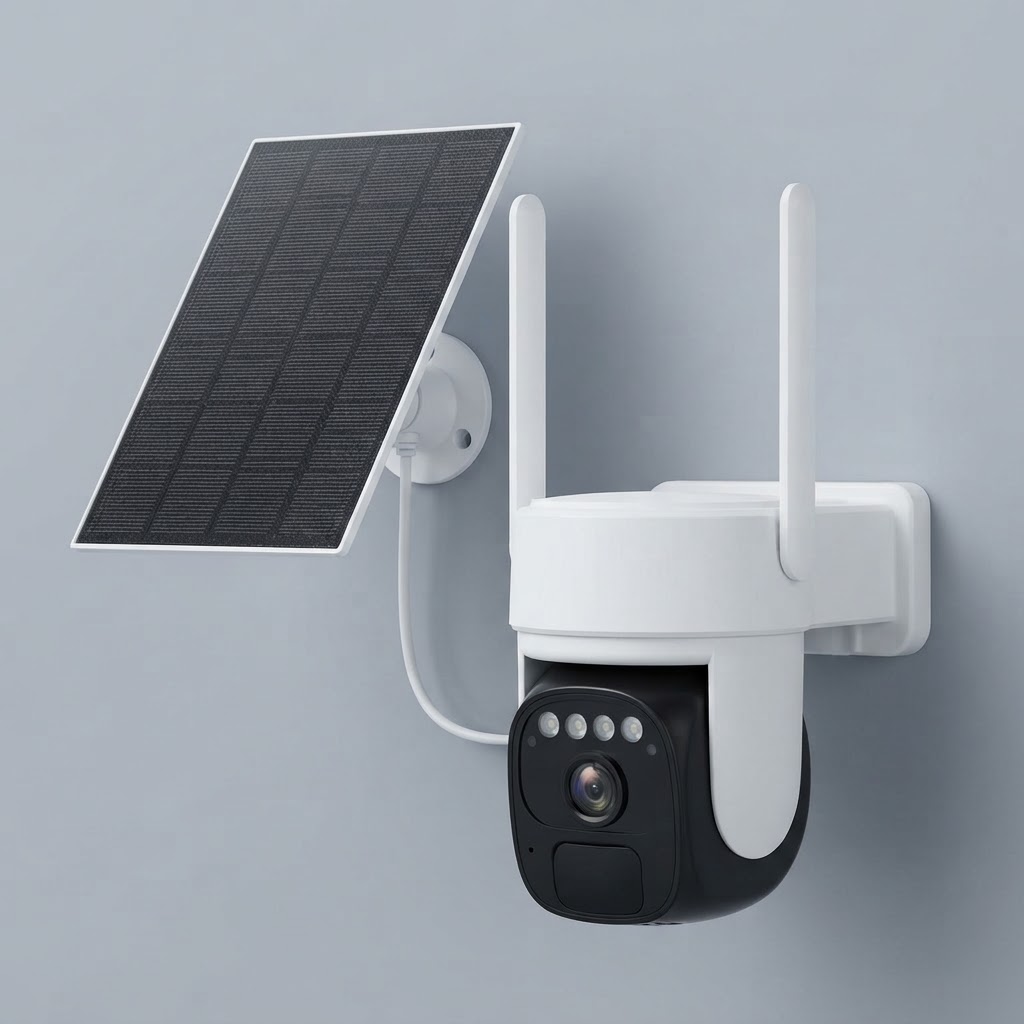
Choosing between solar security systems and traditional hardwired cameras comes down to installation flexibility and property constraints. Hardwired security systems require running electrical conduit and network cables through walls, often requiring professional electrical installation.
In contrast, an outdoor solar security camera features completely wire-free installation. Powered by a 3.5W solar panel charging an internal 5200 mAh battery, solar cameras mount anywhere receiving sunlight. To learn more about full equipment capabilities, read [the main guide]. The installation gap is the largest practical difference between the two, and it is mostly about permission and disruption rather than the price of the hardware.
A hardwired camera needs cable run from a power source to the mounting point, which on an outbuilding, a gate post, or a far corner of a garden can mean trenching, conduit, and an electrician. In most jurisdictions mains work outdoors is notifiable, which means a professional, a certificate, and a booking rather than an afternoon.
A solar camera needs a bracket and two screws. That difference decides the question outright for renters, who cannot alter a property's wiring, and for anyone wanting coverage somewhere with no power nearby at all.
The cost comparison is not the sticker price of the camera. It is the sticker price plus the installation, and on a detached garage or a remote gate the installation is usually the larger number by a wide margin.
Flexibility and Coverage Capabilities
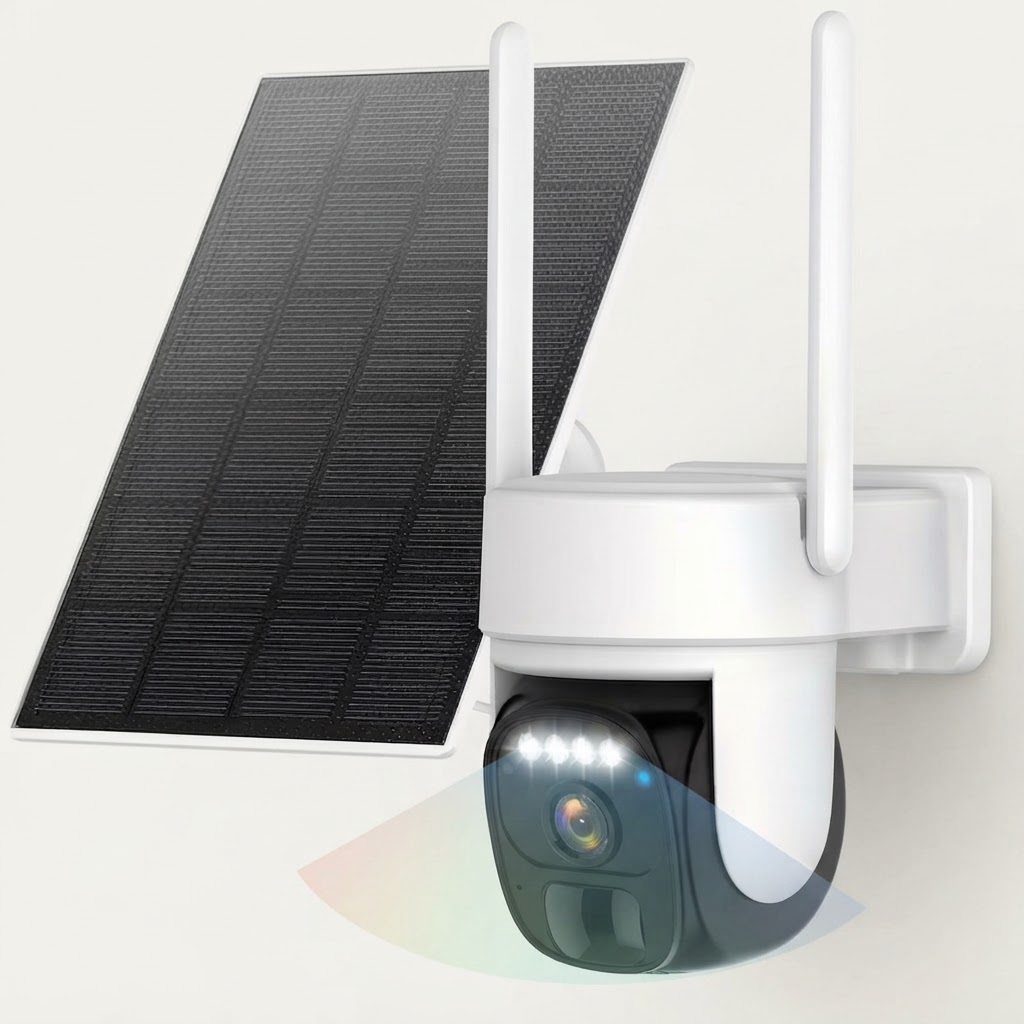
Hardwired cameras are locked in place once installed due to fixed cable runs. Solar cameras provide far greater tactical placement options around residential yards, fence lines, outbuildings, or commercial perimeter fences.
Equipped with a camera pan angle of 355 degrees, a single wireless solar camera can sweep broad areas that would otherwise require multiple fixed hardwired cameras. Remote pan and tilt controls are accessed directly through the Tuya Smart app over standard wireless WiFi connectivity. Placement freedom is the real advantage of a battery and solar system, and it is worth being concrete about what it enables. Outbuildings, gates, fence lines, boat moorings, allotments, sites without a building at all: none of these has a convenient socket, and all of them are places a camera is genuinely useful.
It also makes experimentation cheap. A solar camera that turns out to be pointing at the wrong thing can be unscrewed and moved in ten minutes. A wired one is where it is, because the cable dictates it.
The constraint that replaces the cable, and it is a real one, is sunlight. A solar camera has to go somewhere the panel gets meaningful light, which rules out deep shade under a north-facing eave or beneath heavy tree cover. In practice you are trading a cable constraint for a sun constraint, and which is easier to satisfy depends entirely on the property.
Wi-fi range is the third constraint and is the one most often forgotten. A camera at the end of a long garden may have plenty of sun and no usable signal.
Long-Term Maintenance and Reliability
Hardwired units offer continuous power but remain vulnerable to localized utility outages unless backed up by commercial generators. Solar units operate independently of grid power, continuing to record events during blackouts.
With an IP65 weatherproof rating, solar hardware handles tough weather. The unit requires minimal maintenance beyond maintaining 3-5 hours of direct sunlight daily and occasional cleaning of the panel surface. The maintenance profiles differ in kind rather than in amount.
A wired camera is essentially maintenance-free until something fails, and its reliability is high because power is constant regardless of weather or season. Its vulnerabilities are the cable itself and the fact that cutting power at the supply takes the camera down with it.
A solar camera needs a few things over its life. The panel wants wiping two or three times a year, since dust and hard-water spotting measurably reduce charging, and clearing promptly after snow. The battery is a consumable that will hold less charge each year and eventually need replacing, which makes replaceability a question worth asking before buying. And winter performance drops, so a system that is comfortably in balance in June can run short in December.
The compensating advantage is independence. A solar camera keeps recording during a power cut, which is exactly when a wired system on the same property goes dark, and there is no cable for anyone to cut.
Final Recommendation for Property Owners
If you want simple wire-free setup, motorized PTZ coverage, continuous grid-independent operation, and color night vision up to 33 feet, a solar-powered security camera delivers superior flexibility and cost savings compared to traditional wired installations.
Read the full guide: Complete Guide to Outdoor Solar Security Cameras: Installation, Features, and Setup
The choice usually resolves on three questions, and it is rarely close once they are answered.
Is there power within easy reach of where the camera needs to go? If yes, and the property is owned rather than rented, wired is simpler and more reliable long term. If no, solar avoids an installation cost that frequently exceeds the camera itself.
Does the position get real sun? Several hours a day through winter, not just in summer. If it does not, a solar camera will disappoint regardless of its specification, and a wired one or a battery camera charged manually is the honest answer.
How much traffic passes the camera? Heavy activity means constant recording, which drains a battery faster than a panel can replace it in the darker months. Busy frontages suit wired power; quiet perimeters suit solar.
Many properties end up mixed, and there is nothing wrong with that: wired where power already exists near the front door, solar on the outbuildings and the back gate where running cable is not worth it.