Solar Security Cameras vs. Hardwired Systems: Total Cost & Performance Comparison
Should you buy a DIY solar security camera pack or pay thousands for a hardwired PoE system? For existing homes, outbuildings, and renters, a wireless solar PTZ camera pack offers complete property coverage with zero drywall cutting or trenching fees. Choose hardwired systems primarily if you are constructing a new build requiring uncompressed 24/7 continuous NVR stream recording.
System Architecture & Scenario Comparison Matrix
| Scenario / Property Need | Solar Security Camera Pack | Hardwired PoE NVR System | Decision Winner |
| --- | --- | --- | --- |
| Existing Home Retrofit (Finished Drywall & Masonry) | Mounts in minutes using simple screws; zero wall drilling or attic wire routing required. | Requires cutting drywall, running Cat6 cables through attics, and drilling exterior masonry. | Solar Security Camera Pack |
| Remote Perimeters, Gates & Detached Barns | Fully off-grid operation powered by integrated solar panels and battery storage. | Requires expensive ground trenching ($15–$25 per foot) and conduit runs for power/data. | Solar Security Camera Pack |
| Grid Power Outages & Blackouts | Remains 100% operational; solar panel recharges internal batteries independently of power grid. | Shuts down entirely unless connected to a costly central Uninterruptible Power Supply (UPS). | Solar Security Camera Pack |
| New Construction (Open Stud Walls) | Easily installed on exterior soffits or fascia boards post-siding. | Cost-effective to run low-voltage Cat6 cables before drywall and insulation are installed. | Hardwired PoE System |
| Continuous 24/7 Non-Stop Video Recording | Utilizes smart motion-triggered (PIR) recording to preserve battery integrity overnight. | Supports uninterrupted 24/7 continuous video streams saved directly to a local NVR hard drive. | Hardwired PoE System |
| 5-Year Total Cost of Ownership (4 Cameras) | Low hardware package cost; $0 professional labor fees; optional low-cost cloud or local SD storage. | Moderate hardware cost plus $1,200–$3,500 in professional electrician wiring and trenching labor. | Solar Security Camera Pack |
Evaluating security systems requires matching technology to real-world property constraints. The matrix below compares DIY solar security camera packs against hardwired Power-over-Ethernet (PoE) systems across critical operational scenarios.
Critical Trade-Offs & Primary Failure Modes
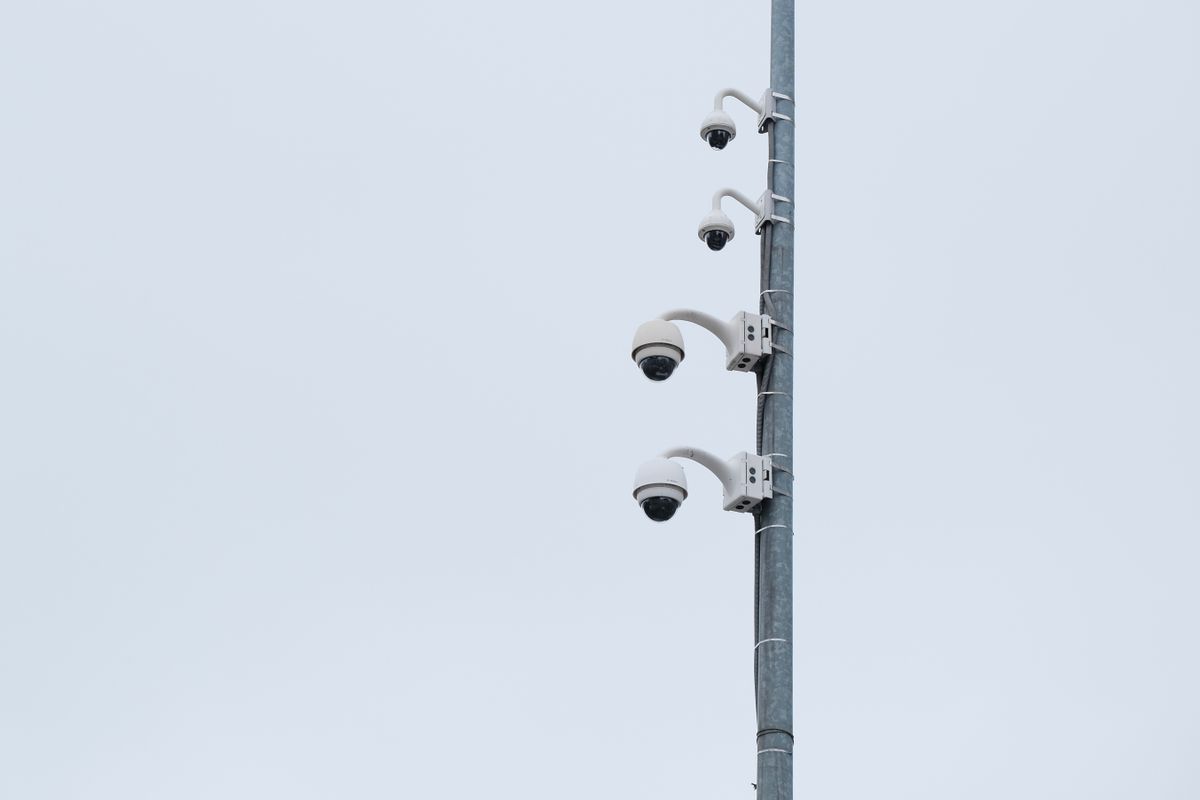
Photo by Tomas Ryant on Pexels
Every surveillance architecture has operational boundaries. Understanding how each system fails under real-world stress is essential to making an informed investment.
Expert Recommendation: Choosing the Right System
If you own an existing property, rent your residential or commercial space, or need to monitor detached structures like detached garages, workshops, or perimeter fences, an Outdoor Solar Security Camera Pack is the most efficient, cost-effective solution. You avoid multi-thousand-dollar contractor bills while gaining advanced PTZ coverage, color night vision, and power resiliency during outages.
Choose a hardwired PoE system only if you are building a new property from the ground up with exposed stud walls, or if your operational mandate strictly requires uncompressed 24/7 continuous video stream archives.
Solar vs. Hardwired Property Decision Estimator
Use this framework to calculate the estimated upfront financial outlay and 5-year Total Cost of Ownership (TCO) differences between self-installed solar security camera packs and contractor-installed hardwired PoE camera networks.
Property Assessment Flowchart: Choosing Your Setup
- Are you installing cameras on an existing structure or during new building construction? → Yes: Existing Structure -> Proceed to sunlight assessment. No: New Construction -> Consider hardwired PoE routing inside open stud walls
- Does the exterior camera mounting point receive at least 2 to 3 hours of daylight exposure? → Yes: Yes -> Solar Security Camera Pack is ideal. No: No -> Use a solar camera with a detachable solar extension cord or hardwired power
- Do you require 24/7 non-stop continuous recording or intelligent motion-triggered event alerts? → Yes: Motion-triggered smart alerts -> Solar Wireless Camera Pack. No: Continuous 24/7 non-stop stream -> Hardwired PoE NVR System
Essential Key Takeaways for Property Owners
- TCO Savings: Solar camera packs eliminate professional installation fees, saving homeowners between $1,200 and $3,500 in electrical trenching and drywall fishing costs.
- Power Independence: Solar security cameras run independently of the grid, ensuring continuous property surveillance even during localized electrical blackouts and storm outages.
- PTZ Efficiency: Pan-Tilt-Zoom functionality lets a single solar camera cover wide areas that would otherwise require two or three static hardwired bullet cameras.
- Simple DIY Setup: Solar cameras mount in under 15 minutes using basic hand tools and sync effortlessly to standard smartphone apps over 2.4GHz WiFi.
- Storage Flexibility: Modern solar cameras support secure cloud backups alongside local microSD storage, eliminating mandatory monthly fees.
Deep-Dive Decision Framework: When to Choose Which
Solar wireless cameras excel in existing residential homes, rented premises, large acreage, and outbuildings where professional wiring is cost-prohibitive. Hardwired PoE systems remain superior for new construction and ultra-high-security commercial facilities requiring uncompressed continuous 24/7 NVR recording.
Best choice for
- Solar Security Camera Pack — Avoids thousands of dollars in electrician trenching fees and wall drilling while delivering full PTZ coverage.
- Solar Security Camera Pack — Operates completely off-grid beyond the reach of standard electrical conduit.
- Hardwired PoE NVR System — Open wall bays allow low-cost Cat6 running for continuous 24/7 local recording.
- Do not choose solar cameras if the camera site receives absolute zero ambient sunlight year-round (e.g., inside enclosed windowless parking garages).
- Do not choose hardwired systems if you rent your property or cannot legally drill through exterior masonry and plaster walls.
- Hybrid Security System Architecture — Deploy hardwired PoE cameras on pre-wired front porches and solar PTZ camera packs along distant property lines, side yards, and outbuildings.
Recommended Solution: Outdoor Solar Security Camera Multi-Pack
For comprehensive, zero-trenching property protection, multi-pack solar camera systems provide the ultimate balance of visual coverage, hardware reliability, and cost efficiency.
Real-World Deployment Scenarios
Rural Acreage with Long Perimeter Fences & Gate Access — Deploy an Outdoor Solar Security Camera Pack. Trenching ethernet cables 300+ feet to remote entry gates costs upwards of $4,500 in labor and rigid conduit. Solar PTZ cameras operate entirely off-grid, maintaining clear line-of-sight wireless communication without disturbing landscaping.
Suburban Existing Home Retrofit (Brick & Stucco Exterior) — Install Outdoor Solar Security Camera units at roof soffits or exterior wall corners. This eliminates drilling through heavy exterior masonry or cutting interior drywall, while Pan-Tilt-Zoom optics eliminate optical blind spots across side yards and driveways.
Commercial Retail Storefront in New Multi-Tenant Complex — Install a hardwired PoE system during initial construction. Open commercial drop-ceilings make cable runs straightforward, and continuous 24/7 NVR video storage fulfills standard commercial insurance compliance protocols.
Here is how solar wireless cameras and hardwired PoE systems compare across typical real-world property layouts.
Electrical Autonomy: Battery Chemistries & Solar Trickle Rates
A common concern among property owners considering solar security cameras is power performance during gloomy winter weather. Modern outdoor solar security cameras feature high-capacity lithium rechargeable battery banks paired with monocrystalline solar panels. Monocrystalline cells convert light into electrical energy far more efficiently than older polycrystalline designs, generating a continuous trickle charge even under overcast or diffuse light conditions.
Because these units use ultra-low-power Passive Infrared (PIR) sensors to remain in a low-draw standby state until thermal motion is detected, they consume minimal energy during inactive periods. Even during prolonged winter storms with consecutive zero-sunlight days, modern battery packs sustain baseline operational readiness for 3 to 5 full days. Once direct sun returns, just 2 to 3 hours of daylight recharges the system back to maximum capacity.
Conversely, traditional hardwired security cameras rely entirely on the home or business electrical grid. If a severe storm downs utility lines, grid-tied cameras immediately drop offline unless backed up by dedicated central UPS batteries, which typically exhaust within 2 to 6 hours.
Network Infrastructure: Wireless WiFi vs. Hardwired Cat6 Ethernet
Hardwired systems connect directly to a central Network Video Recorder (NVR) over Category 6 Ethernet cables. While Cat6 cabling delivers immune physical throughput, installing it in an existing structure requires fishing wire through finished attics, wall cavities, and exterior soffits. In contrast, wireless solar cameras transmit high-definition video over standard 2.4GHz WiFi frequencies, penetrating typical exterior building materials over substantial distances.
When deploying solar security cameras, verifying adequate outdoor WiFi signal strength at the mounting location is critical. A signal level of -67 dBm or stronger ensures rapid live-stream initializations, responsive PTZ app controls, and immediate motion alert push notifications straight to your smartphone.
Footage Storage: MicroSD & Cloud Encryption vs. NVR Hard Drives
Hardwired camera systems store video on local NVR hard drives located inside the building. While this provides massive storage volume for continuous 24/7 recording, local NVR units present a physical vulnerability: if an intruder locates and steals the NVR unit, all historical surveillance evidence disappears. Solar security camera packs solve this vulnerability by offering dual storage redundancy: localized onboard micro-SD card storage combined with encrypted cloud backup. Recorded video clips upload immediately to secure remote servers, ensuring that footage remains accessible through your smartphone app even if a physical camera is tampered with.
Frequently Asked Questions
Answers to critical questions regarding solar camera power reliability, performance under winter conditions, and system connectivity.
Action Plan: Moving from Evaluation to Deployment
Your decision: Determine whether your property benefits most from zero-drill DIY solar flexibility or pre-wired continuous recording.
Do this next: Audit your exterior walls for direct sunlight exposure (aim for 2-3 hours daily) and measure outdoor 2.4GHz WiFi signal strength at target mounting spots using your smartphone.
- Read next: How Many Solar Security Cameras Do You Need?
Explore the Outdoor Solar Security Camera Pack at https://solarsafetycameras.com for complete 360-degree wireless property defense.
Take these steps to transition from property evaluation to full wireless surveillance coverage.
Further Guides & Cost Analyses
Link to cluster content for downstream information needs.
Cover photo by Giant Asparagus on Pexels.