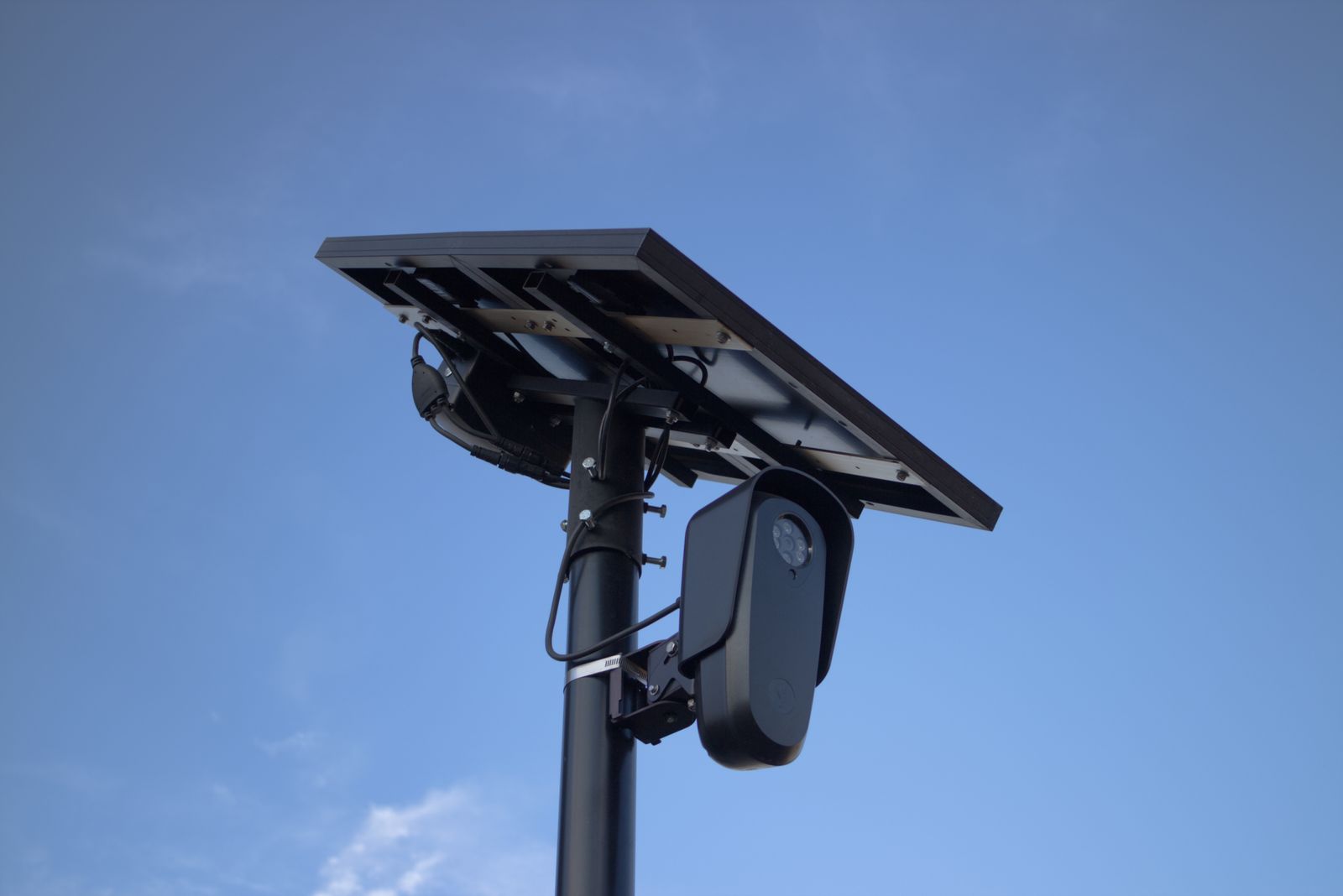
DIY Solar Camera vs Professional Hardwired Cost: 5-Year TCO Breakdown
Should you pay $2,000 to $5,000 upfront for a contractor-installed hardwired security system, or invest in a $300 to $500 DIY solar camera pack? For the vast majority of residential and small business properties, no. A 4-camera DIY solar PTZ pack delivers comprehensive perimeter defense while saving $2,000 to $4,500 over five years by eliminating electrician labor, exterior wall drilling, subterranean trenching, and mandatory monthly cloud monitoring subscriptions.
5-Year Total Cost of Ownership (TCO) Matrix: DIY Solar Pack vs. Hardwired Professional
| Cost Parameter / Scenario | 4-Camera DIY Solar PTZ Pack | 4-Camera Hardwired (PoE / NVR) Professional | Financial & Operational Impact |
| --- | --- | --- | --- |
| Initial Hardware Purchase | $399 – $549 (Includes 4 PTZ Solar Cameras, panels, brackets) | $600 – $1,200 (4 IP fixed cameras + NVR recorder) | Solar packs provide integrated PTZ capabilities out of the box at lower base hardware costs. |
| Professional Labor & Installation | $0 (Self-installed in 45–60 minutes total) | $900 – $1,800 ($75–$150/hr per electrician; 8–12 labor hours) | Labor accounts for up to 60% of total hardwired system invoices. |
| Wall Drilling & Interior Repairs | $0 (Surface mount with 2 screws or gutter clamps) | $350 – $800 (Drywall cuts, exterior conduit, stucco patching) | Hardwired routing creates hidden wall restoration and painting expenses. |
| Subterranean Trenching (Perimeter/Detached) | $0 (100% wireless solar power & WiFi communication) | $600 – $1,500 ($12–$25 per linear foot for underground conduit) | Solar eliminates digging across driveways, lawns, and concrete walkways. |
| Ongoing Grid Electricity Usage | $0 (Powered 100% by renewable ambient sunlight) | $25 – $60 (Continuous 24/7 power draw over 5 years) | Solar operates fully off-grid during localized power outages. |
| Mandatory vs. Optional Subscriptions | $0 – $180 (Optional cloud storage; free local micro-SD support) | $600 – $1,800 ($10–$30/month cloud or monitoring contracts) | Solar users retain full privacy and zero monthly fee obligations. |
| Total 5-Year Investment | $399 – $729 total | $3,075 – $6,160 total | DIY Solar saves between $2,346 and $5,431 over 5 years. |
The table below breaks down the true line-item costs of protecting a typical residential or small commercial property with four camera locations over a five-year period.
Trade-Off Analysis: Where Each System Wins and Where They Fail
Photo by Meruyert Gonullu on Pexels
Pros
- Solar Advantage: PTZ (Pan-Tilt-Zoom) functionality allows a single camera to sweep 350° horizontally and 90° vertically, replacing two to three fixed hardwired units.
- Solar Advantage: Non-invasive surface mounting preserves vinyl siding, brick fascia, and historic structures without structural damage.
- Solar Advantage: Full operational resilience during municipal power grid blackouts and severe weather interruptions.
- Hardwired Advantage: Continuous 24/7 uncompressed NVR recording without reliance on motion detection triggers.
- Hardwired Advantage: Immunity to localized WiFi network congestion or radio frequency interference.
- Solar Failure Mode: Prolonged heavy cloud cover (7+ consecutive sunless days) without direct ambient daylight can deplete internal lithium batteries if motion activity is extremely high.
- Solar Failure Mode: Wireless range limitations if mounted more than 150 feet from a WiFi access point without range extenders.
- Hardwired Failure Mode: Physical wire vulnerability—a single cut Cat6 cable or localized power grid failure disables the entire camera node or NVR recorder.
- Hardwired Failure Mode: Fixed field-of-view cameras create static blind spots unless high-cost motorized PTZ hardware is retrofitted.
Installation Mechanics: Wall Trenching & Wire Routing vs. Direct Mount Solar
Understanding physical mounting requirements reveals why hardwired systems incur massive labor charges.
5-Year Security System TCO & Savings Estimator
Calculate your estimated 5-year savings based on property size, contractor labor rates, and storage preferences.
Key Financial & Operational Takeaways
Before committing to contractor quotes, keep these core economic facts in mind:
Which System Matches Your Property Budget and Infrastructure?
For 90% of residential properties, rentals, and small business locations, a DIY Solar Security Camera Pack provides equivalent perimeter security at a fraction of the cost, eliminating contractor delays and recurring subscription fees.
Best choice for
- DIY Solar PTZ Camera Pack — Offers complete 360-degree perimeter coverage, color night vision, and motion alerts without wall drilling, professional labor, or recurring monthly fees.
- DIY Solar PTZ Camera Pack — Non-invasive surface mounting brackets and vinyl siding clamps allow full installation and removal without altering building structures or violating lease agreements.
- DIY Solar PTZ Camera Pack — Eliminates thousand-dollar subterranean trenching costs by relying on 100% self-sustaining solar energy and long-range wireless WiFi transmission.
- Avoid DIY Solar if the mounting site receives zero ambient daylight (e.g., inside enclosed subterranean parking garages or windowless interior warehouses).
- Avoid Professional Hardwired if you are on a budget under $2,000 or plan to relocate within the next 3–5 years, as hardwired installations are non-portable assets.
- Hybrid Setup (Solar Exterior + Hardwired Interior) — Combines cost-effective solar PTZ defense around exterior perimeters with hardwired NVR cameras inside central server rooms or cash vaults.
Top Recommended All-In-One Solution for Wireless Property Protection
If you want to eliminate professional installation costs while securing total pan-tilt-zoom perimeter coverage, the Outdoor Solar Security Camera Pack delivers commercial-grade features in a plug-and-play package.
Featured Product: Outdoor Solar Security Camera Pack
Photo by Jan van der Wolf on Pexels
Outdoor Solar Security Camera Pack
Key Features:
- Pan-Tilt-Zoom (PTZ) Capability: 350° horizontal pan and 90° vertical tilt eliminate static blind spots.
- 100% Wireless & Solar Powered: High-efficiency solar panels maintain continuous battery charge via daily ambient light.
- Full-Color Night Vision: High-intensity spotlight array delivers crisp, vivid color video in complete darkness.
- Two-Way Audio & Motion Detection: Instant mobile app alerts paired with real-time two-way voice communication.
- Flexible Dual Storage: Supports zero-fee local micro-SD card storage alongside optional secure cloud backup.
Real-World Cost Scenarios: Residential, Small Business, and Rental Properties
Suburban Single-Family Home (4 Perimeter Zones) — Hardwired quotes averaged $3,400 including electrician labor, wall drilling through brick veneer, and attic cable routing. Installing a 4-camera DIY Solar PTZ Pack required $449 total hardware spend and 50 minutes of surface bracket mounting, yielding an immediate initial savings of $2,951.
Small Commercial Auto Repair Shop (Detached Yard & Gate) — Contractors quoted $5,200 due to a required 120-foot subterranean trench under asphalt to connect perimeter gate cameras to an main-office NVR. Deploying a DIY Solar Camera Pack eliminated trenching completely, saving $4,650 while delivering instant smartphone motion alerts across all outdoor work bays.
Leased Retail Storefront & Rear Alley — Landlords strictly prohibited drilling into historic exterior masonry facade. A DIY Solar Camera Pack mounted via heavy-duty gutter clamps provided high-definition color night vision and two-way audio defense without structural alterations, saving $2,100 in contractor fees and deposit penalty risks.
See how line-item financial breakdowns compare across three representative real-world installation projects.
When evaluating security system quotes, property owners frequently fall into the trap of looking strictly at base hardware prices. However, in professional security installations, hardware represents less than 30% of the total invoice. Understanding where your money actually goes reveals why wireless solar technology has disrupted the commercial and residential security market.
1. The True Cost of Professional Labor
Certified electrical contractors in the United States charge between $75 and $175 per hour depending on region and municipal licensing requirements. Mounting four hardwired Power-over-Ethernet (PoE) cameras requires snaking low-voltage Cat6 cables through walls, ceilings, and attics back to a centralized Network Video Recorder (NVR). A standard residential installation averages 8 to 14 billable electrician hours—adding $900 to $2,100 in pure labor costs before a single camera captures video.In contrast, a DIY solar camera pack requires zero electrical wiring. Each camera mounts to soffits, fascia boards, or masonry using two standard stainless steel screws or non-invasive clamp brackets. Total installation time for a four-camera solar setup averages under one hour for a single individual.
2. Hidden Building Repairs and Subterranean Trenching
Hardwired installations frequently inflict collateral damage on building structures. Routing thick cable bundles requires cutting drywall access panels in finished interior spaces, drilling through exterior stucco or brick facades, and applying weather-resistant silicone sealing. Restoring drywall, patching exterior plaster, and repainting damaged areas typically adds $350 to $800 in unquoted contractor fees.If your security plan includes monitoring detached structures—such as perimeter gates, standalone garages, equipment sheds, or barn facilities—hardwired systems require subterranean trenching. Excavating dirt, laying PVC conduit, backfilling, and restoring sod or concrete costs between $12 and $25 per linear foot. A modest 80-foot trench run can easily add $1,500 to a hardwired proposal. Solar security cameras eliminate trenching costs entirely by generating their own electricity from ambient sunlight and transmitting data wirelessly over local WiFi networks.
3. Subscriptions vs. Local Storage Sovereignty
Many hardwired commercial security brands tie hardware functionality to mandatory monthly cloud storage or third-party monitoring contracts ranging from $15 to $45 per camera per month. Over five years, subscription obligations for four cameras can accumulate an additional $3,600 to $10,800.With an app-controlled Outdoor Solar Security Camera Pack, subscription choices remain 100% optional. Owners can insert inexpensive local micro-SD cards into each camera unit for continuous loop recording and motion event storage—achieving complete data privacy and zero monthly subscription fees. If off-site backup is desired, low-cost cloud options are available without long-term binding contracts.
Further Reading on Solar Security ROI and Property Coverage
Expand your knowledge on solar security engineering, property placement strategies, and long-term financial return on investment with these comprehensive guides:
- Solar Security Camera ROI: How Outdoor Solar Surveillance Pays for Itself — Explore detailed financial formulas showing how solar cameras offset energy consumption and prevent property loss.
- How Multi-Pack Outdoor Solar Security Cameras Maximize Property Coverage and Business Savings — Learn how strategic multi-camera placement eliminates perimeter blind spots while maximizing bulk purchase savings.
- Solar Security Camera Cost & Savings FAQ: Subscriptions, Power, and Maintenance — Get answers to common owner questions regarding battery lifespan, cloudy weather charging performance, and firmware management.
- PTZ Cameras vs. Fixed Cameras for Perimeter Defense: Which Protects Blind Spots Better? — Discover why motorized pan-tilt-zoom lenses cover up to three times the physical area of traditional stationary bullet cameras.
Frequently Asked Questions: DIY Solar vs. Hardwired Systems
Get clear, authoritative answers to common questions about storage choices, coverage capabilities, and mounting mechanics.
How to Choose and Action Your Security Setup Today
Your decision: Determine whether your property receives 2–3 hours of daily ambient daylight along exterior walls and whether you prefer eliminating $2,000+ in contractor installation expenses.
Do this next: Audit your perimeter layout, identify key entry points and driveway angles, and select a 4-camera Outdoor Solar Security Camera Pack to establish 360-degree coverage without hiring an electrician.
- Read next: Solar Security Camera ROI: How Outdoor Solar Surveillance Pays for Itself
- Read next: How Multi-Pack Outdoor Solar Security Cameras Maximize Property Coverage and Business Savings
Visit solarsafetycameras.com to order your Outdoor Solar Security Camera Pack and experience professional wireless surveillance with zero contract commitments.
Take these simple, immediate actions to evaluate your property's perimeter needs and implement zero-fee outdoor surveillance.
Cover photo by Will Freeman on Pexels.