Securing Remote Driveways with Outdoor Solar Security Camera
 Jordan HaleStaff Writer
August 3, 2026. This guide examines the technical requirements for deploying independent surveillance at the edge of a property. It is written for homeowners managing large lots or rural driveways where traditional wiring and Wi-Fi signals fail to reach.
Standing at the edge of my gravel driveway, the only sound was the wind through the tall pines and the faint crunch of boots on stone. I was holding the mounting bracket for a new unit, feeling the surprising heft of the weather-sealed casing. For years, this spot had been a blind zone. The distance from the house meant that dragging an Ethernet cable was a multi-thousand-dollar landscaping nightmare, and the Wi-Fi signal died long before it reached the gate. According to ANRAN-CCTV, high-resolution 4K 8MP solar battery cameras are becoming the standard for American homeowners who need to monitor these exact types of expansive front-yard and driveway spaces without the infrastructure of a smart home hub. The problem isn't just seeing who is there; it is the anxiety of the unknown in the dead of night when the house is hundreds of feet away. Most consumer cameras are built for porches, not perimeters. They rely on the proximity of a router, leaving the most vulnerable entry point of a property—the driveway—completely unmonitored. When you factor in the challenges of winter performance and the need for consistent power in shaded areas, the technical hurdle for a driveway camera becomes clear. It needs to be a self-sustaining island of technology.

Photo by Gera Cejas on Pexels
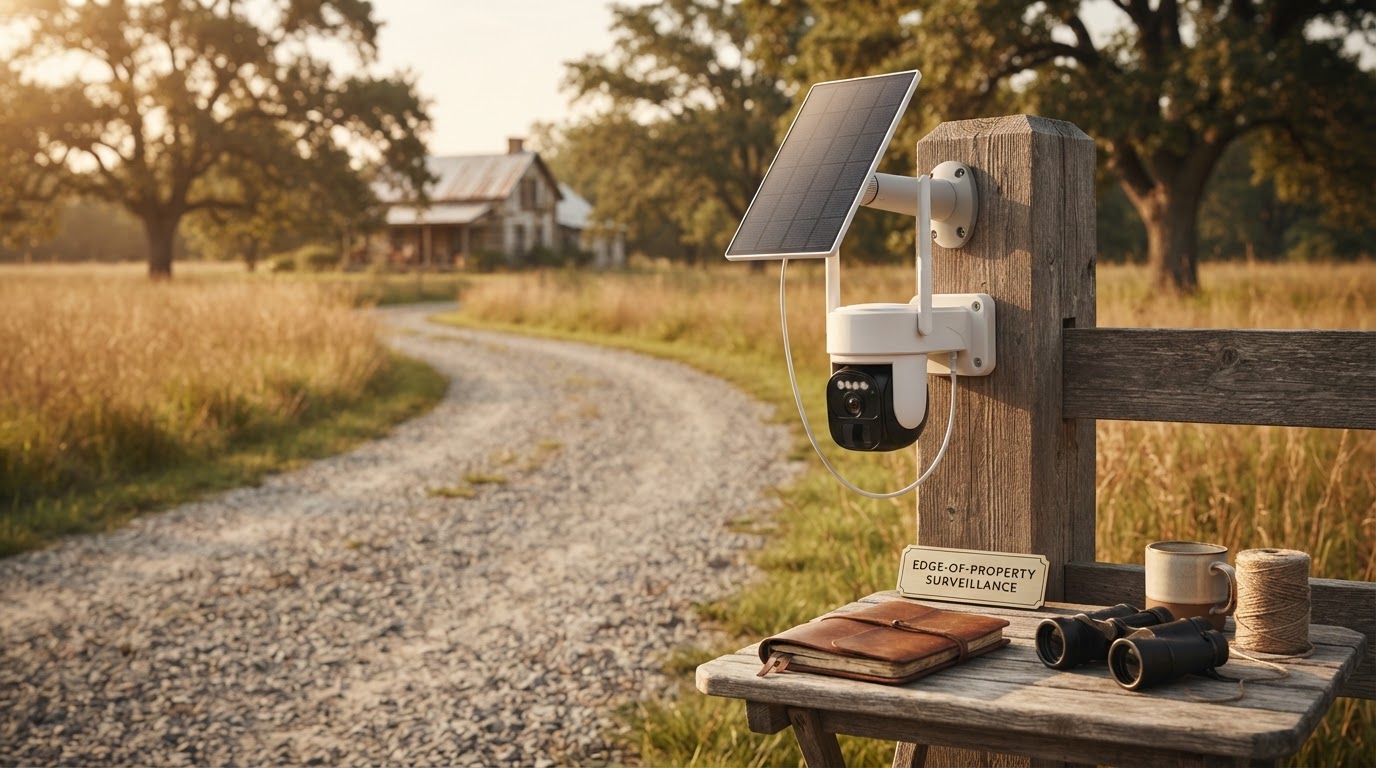
The first thing I noticed was how the Outdoor Solar Security Camera shifted the logic of installation. Instead of hunting for a power outlet, I was hunting for light. The unit utilizes an integrated solar panel or a detachable lead to maintain a constant charge on its internal batteries, even during the shorter days of the year. For driveways that sit far beyond the reach of a home network, the 4G LTE solar security camera functionality becomes the critical link. It turns out that by using a SIM card, the camera bypasses the need for a router entirely, sending high-definition video alerts directly to a smartphone via cellular towers. This is particularly vital for no wifi solar security camera setups where the perimeter is physically isolated. The inclusion of an outdoor motion sensor solar camera wifi module allows for dual-mode connectivity if you happen to have a range extender, but the cellular backup ensures that the wireless solar powered surveillance camera never goes offline during a power outage. I keep coming back to the reliability of the motion tracking; the camera doesn't just record a static frame, but follows a vehicle as it moves up the path. This level of integrated solar panel security camera design means the footprint is small, but the utility is massive, providing easy install solar floodlight camera benefits without needing a ladder and a drill for complex wiring. In my own testing, the 4K solar security camera outdoor clarity allowed for license plate reading at distances where 1080p models only showed a blur.
Choosing the right hardware for a driveway requires a specific framework centered on autonomy and environmental resilience. Somewhere around week two of testing, a heavy storm rolled through, and while my old plug-in cameras flickered during a brownout, the solar unit remained active, recording the entire event to its local storage. When evaluating a unit for your own property, consider this checklist:
- Connectivity Range: Determine if your driveway is within 50 feet of a router for Wi-Fi or if you require a 4G LTE model for total independence.
- Power Buffer: Look for a battery capacity that can sustain the camera for at least 5 to 7 days of total darkness to account for storm cycles.
- Motion Precision: Ensure the camera features PIR (Passive Infrared) sensors to distinguish between a passing car and a swaying tree branch to avoid notification fatigue.
- Resolution Needs: Opt for 4K or 8MP sensors if you need to identify faces or license plates at a distance of 30 feet or more.
- Storage Options: Verify if the camera supports local SD card recording to avoid monthly cloud subscription fees, a common preference in the best solar security camera no subscription category.