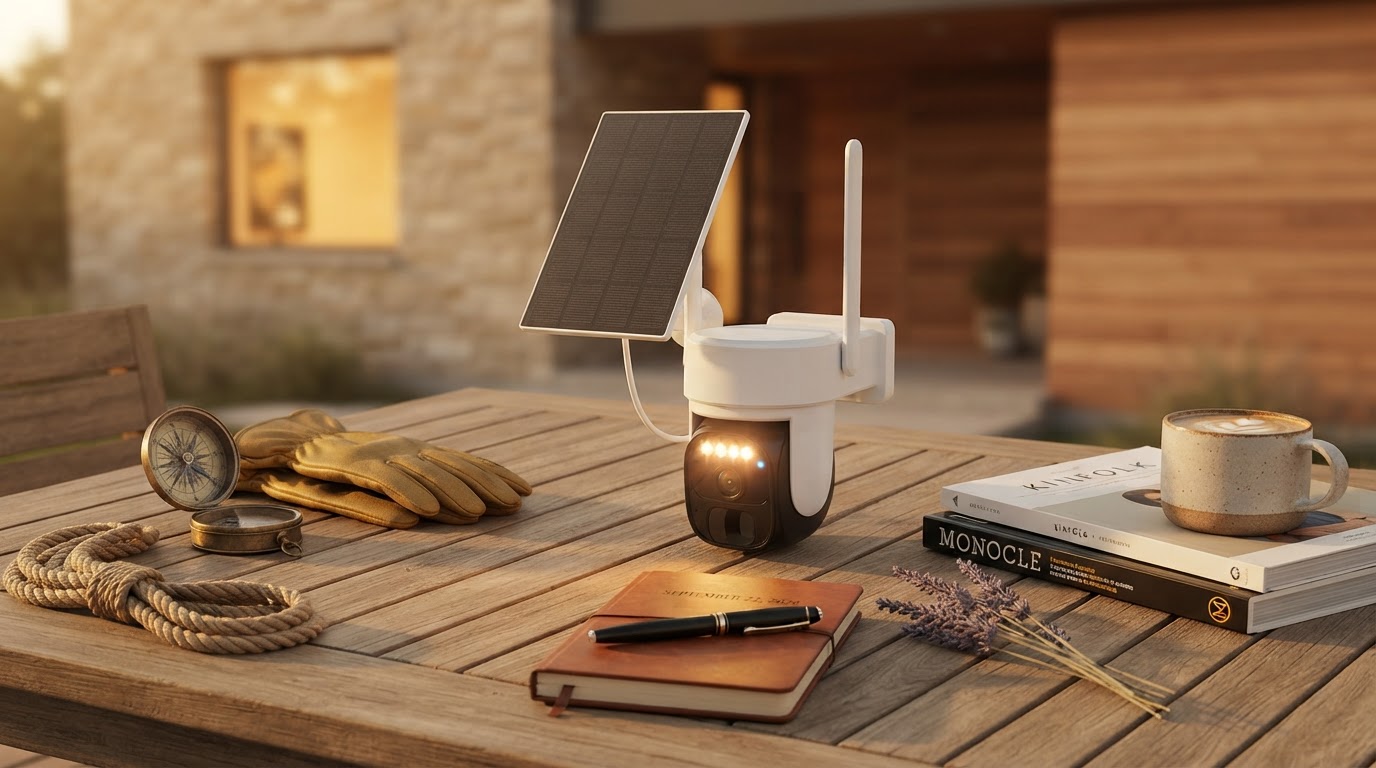
Outdoor Solar Security Camera Motion Light Integration
 Jordan HaleStaff Writer
September 22, 2026. This analysis explores the technical synergy between high-output motion lighting and autonomous solar surveillance. It is written for homeowners and property managers seeking to eliminate blind spots in areas without existing electrical infrastructure.
Standing at the edge of my driveway late last Tuesday, the air was crisp and the silence was heavy. The first thing I noticed was how quickly the darkness swallows the perimeter once you move twenty feet from the porch. For many, this is the exact moment they realize that a standard camera isn’t enough; you need the sudden, startling clarity of a floodlight to truly deter an intruder. According to Maxsa Innovations, motion-activated solar floodlights can reach outputs of 600 lumens, providing enough illumination to transform a grainy night-vision feed into a crisp, color-accurate record of events. When these lights are paired with a camera, the sensor triggers both the recording and the illumination simultaneously, creating a proactive defense mechanism. In remote areas like a backyard shed or a long gravel driveway, the absence of wiring makes this integration a necessity rather than a luxury. Users often struggle with the trade-off between battery life and light intensity, but recent advancements in LED efficiency have allowed for brighter bursts without draining the internal cells prematurely. The goal is to create a perimeter that reacts to movement before a threshold is crossed, ensuring that the Motion Sensor Solar Floodlight Camera has the light it needs to capture identifying features.
Somewhere around week two of testing various configurations, it became clear that the Outdoor Solar Security Camera approach solves the primary pain point of traditional wired systems: placement flexibility. Because these units rely on integrated solar panels, they can be mounted on poles, fences, or trees where running a 120V line would be cost-prohibitive. Research into user queries shows a high demand for 4G LTE solar security cameras and no-wifi solar security camera solutions, particularly for properties where a steady internet connection is as scarce as a power outlet. The hardware typically features high-performance motion detectors that can distinguish between a swaying branch and a human visitor, reducing false alerts that would otherwise waste battery power. Unlike a solar camera with 24/7 recording, which requires a massive energy budget, the motion-light combo operates on an as-needed basis. This conservation of energy is critical during winter months or in regions with frequent cloud cover. By utilizing high-capacity lithium batteries, these cameras store enough energy during a few hours of peak sunlight to power hundreds of motion-triggered events. It turns out that the integration of a 2K resolution sensor with adjustable LED floodlights—some capable of reaching 1000 lumens according to Reolink—provides the visual fidelity needed to identify license plates or faces at a distance, even in total darkness.
I keep coming back to the idea that the best security is the one you don't have to maintain. When selecting a solar motion light with a camera combo, the decision framework should prioritize the physical environment and the specific limitations of your site. If you are installing a unit in a high-traffic area, the battery capacity must be significantly higher to account for frequent light activations. Conversely, for a quiet side-gate, a smaller panel might suffice. Consider these essential factors before finalizing your installation:
- Verify the lumen output: Ensure the light provides at least 600-1000 lumens for effective color night vision.
- Check solar panel orientation: The panel must have an unobstructed view of the southern sky (in the northern hemisphere) for at least 4-6 hours daily.
- Assess connectivity needs: Determine if you require a 4G LTE model for remote locations or if a standard 2.4GHz Wi-Fi signal will reach the mounting point.
- Evaluate weatherproofing: Look for an IP65 or higher rating to ensure the camera and light housing survive heavy rain and snow.
- Storage options: Decide between local microSD card storage to avoid monthly fees or cloud backups for off-site redundancy.
To secure your property with the latest in autonomous surveillance and high-output lighting, you can Shop Outdoor Solar Security Camera here.
Sources
- Motion Activated Solar-Powered Lights/Cameras - MAXSA Innovations
- Lighting Cameras | Floodlight & Spotlight Cameras - Wyze
- Thing to Know About Solar Security Camera with Light - Eufy