Color Night Vision vs. Infrared Security Camera: Outdoor Solar Guide
Should you choose color night vision or traditional infrared for outdoor solar security?
Standard infrared fails by producing washed-out, monochrome footage that conceals suspect clothing colors, vehicle shades, and facial nuances. Conversely, continuous spotlight color night vision fails by rapidly draining solar battery reserves during shorter winter days, leaving your property unmonitored before dawn.
The Optimal Solution: Deploy a Smart Hybrid PTZ camera system. Keep the system in low-power infrared mode for stealthy, continuous perimeter scanning, and automatically trigger bright white LED spotlights for color recording only when motion is detected.
Side-by-Side Performance Matrix Across Deployment Scenarios
| Scenario / Environment | Infrared Night Vision (850nm) | Continuous Spotlight Color | Smart Hybrid PTZ (IR + Spotlight) |
| --- | --- | --- | --- |
| | | | |
| | | | |
| | | | |
| | | | |
Compare how infrared LEDs, continuous white spotlights, and motion-triggered Smart Hybrid modes perform across critical real-world outdoor conditions.
Trade-Off Analysis: Critical Strengths and Failure Modes
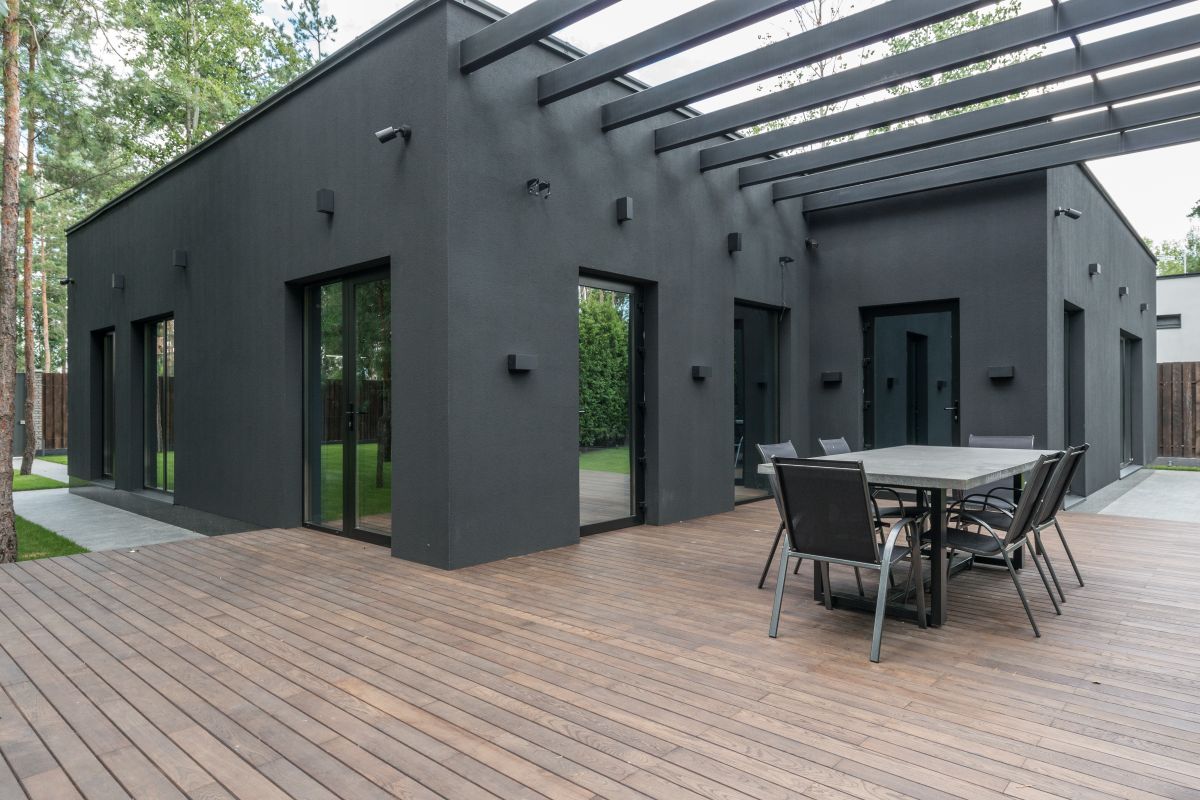
Photo by Max Vakhtbovych on Pexels
Pros
- Standard IR: Penetrates total darkness up to 100 feet with zero ambient lighting required.
- Standard IR: Extremely low energy draw preserves solar battery reserves during winter freezes.
- Color Night Vision: Captures actionable forensic evidence (clothing colors, vehicle paint, hair shade).
- Color Night Vision: Motion-activated spotlights act as an immediate psychological intruder deterrent.
- Smart Hybrid: Automatically toggles between stealth standby and forensic color capture upon motion detection.
- Standard IR Failure Mode: Monochrome footage makes distinguishing red vs. black jackets impossible for police reports.
- Standard IR Failure Mode: High-intensity IR light reflects off license plates and soffits, causing severe white-out glare.
- Color Night Vision Failure Mode: Leaving spotlights on continuously drains solar camera batteries within hours.
- Color Night Vision Failure Mode: White light attracts nocturnal swarms, causing spider webs across the lens dome.
Pro Security Insight: Eliminating IR Glare, Spider Webs, and License Plate Reflection
As perimeter security professionals, the most common installation mistake we observe is mounting cameras flush against overhanging soffits or white vinyl gutters.
When infrared LEDs ignite at dusk, light reflects off nearby white surfaces directly back into the lens, causing the camera's image sensor to auto-adjust its aperture. This results in severe background 'blackout,' rendering everything beyond 5 feet pitch black.
Actionable Fixes:
Night Vision Selection Flowchart for Outdoor Property Defense
- Is the installation area illuminated by ambient streetlights or porch lamps? → Yes: Select Low-Light Starlight Color Mode (uses ambient light to render color without battery-draining spotlights).. No: Proceed to next question.
- Does the camera receive at least 3-4 hours of direct sunlight on winter days? → Yes: Configure Smart Hybrid Mode (IR standby with 100% brightness motion-activated spotlights).. No: Configure Standard Infrared Mode with PIR sensitivity set to Medium to preserve solar battery reserve.
- Is active intruder deterrence (lighting up trespassers) a primary requirement? → Yes: Enable Motion-Activated White Light Spotlights + Two-Way Audio Siren Push Alerts.. No: Use Stealth IR Mode (850nm/940nm) for hidden perimeter tracking.
Key Takeaways for Property Owners
Quick summary of core decision factors before selecting or configuring your wireless solar security camera system:
Decision Framework: Which Configuration Fits Your Property?
Selecting the right night vision setup depends heavily on solar availability and property risk zones. Single fixed cameras often leave blind spots, whereas multi-camera PTZ packs allow tailored night vision modes across driveways, backyards, and entry gates.
Best choice for
- Smart Hybrid PTZ Solar Setup — Provides 360-degree pan-tilt coverage, running quiet IR standby until a vehicle or trespasser breaks the boundary, instantly illuminating them in full color.
- Low-Light Ambient Color Mode — Leverages existing streetlight lumens to capture vivid 2K/4K color footage without requiring built-in spotlights to turn on.
- Infrared Only with Solar Panel Extension — Maximizes battery efficiency in low-sunlight conditions while maintaining clear black-and-white motion capture.
- Do NOT set white spotlights to continuous 'Always On' mode on a solar-powered camera unless connected to an oversized external power supply.
- Do NOT point infrared cameras directly at glass windows or glass doors—the IR light reflects back into the lens, blinding the sensor.
- Dual-Lens Fixed + PTZ Combinations — Uses a stationary wide-angle fixed lens for continuous IR monitoring while the motorized PTZ lens tracks motion in full spotlight color.
Recommended Outdoor Solar Security Solution
For comprehensive nighttime defense across residential and commercial properties, multi-camera PTZ coverage eliminates dark zones without requiring hardwiring.
Real-World Deployment Scenarios & Video Outcomes
Photo by Yunus KALÇIK on Pexels
Prowler Checking Car Handles at 2:00 AM in Driveway — Smart Dual-Light Motion Spotlight Mode: The camera detects body heat via PIR sensor at 25 feet. White spotlights snap on instantly, startling the prowler into fleeing. The app records clear, high-definition color video displaying the prowler's jacket color, shoe style, and vehicle getaway description.
Monitoring a Long Backyard Fence Line Adjacent to Dark Woods — Infrared High-Gain Standby: In total darkness, white spotlights would create harsh shadows and glare against trees. Infrared illuminates up to 80 feet uniformly. If motion crosses the threshold, two-way audio can be triggered manually via app to warn intruders.
Commercial Warehouse Alleyway / Loading Bay — Automated PTZ Tour with Hybrid Color Burst: The PTZ camera pans across three preset inspection points using stealth IR. When motion occurs near the bay door, the camera locks onto the target, activates spotlights, zooms in, and uploads color event clips to cloud storage.
Here is how different night vision settings perform during actual crime prevention and evidence gathering scenarios.
To appreciate why hybrid night vision is essential for solar security, one must understand how digital image sensors process light at night.
The Role of Lux Ratings and Aperture
Camera image sensors measure ambient illumination in Lux (1 Lux equals the light of a single candle one meter away).- Direct sunlight measures roughly 100,000 Lux.
- Full moon nights offer approximately 0.1 Lux to 0.3 Lux.
- Pitch-black overcast nights drop below 0.001 Lux.
- Standard optical sensors require at least 0.1 Lux to capture color without artificial illumination. When ambient light drops below this threshold, sensor noise (graininess) spikes, degrading resolution.
Infrared (850nm vs. 940nm)
When light falls below 0.1 Lux, traditional cameras activate infrared Light Emitting Diodes (LEDs):White Light LED Power Consumption & Solar Reserves
High-power white LED spotlights draw significantly more wattage than invisible IR LEDs.- Infrared Standby Draw: ~0.5W to 0.8W per hour.
- Dual White Spotlight Draw: ~3.0W to 4.5W per hour.
Frequently Asked Questions About Camera Night Vision
Answers to common technical questions regarding solar battery management, stealth features, and app controls.
How to Configure Your Night Surveillance Strategy
Your decision: For high-risk entry points and active driveways, deploy Smart Dual-Light mode (IR standby with motion-activated color spotlights). For remote perimeter fences with limited solar exposure, rely on stealth Infrared mode.
Do this next: Audit your property's nighttime ambient lighting, inspect camera mounting angles to prevent gutter reflection, and verify that solar panels receive at least 3-4 hours of unshaded sunlight daily.
- Read next: Troubleshooting Solar Security Camera Night Vision: Fixing Blurry Footage and Glare
- Read next: Buyer's Guide: Choosing the Best Solar PTZ Camera Pack for Total Nighttime Defense
Protect every corner of your estate using the Outdoor Solar Security Camera Pack featuring pan-tilt-zoom motion tracking, high-output white spotlights, and intelligent IR switching.
Take these concrete steps to maximize nighttime clarity and safeguard your property.
Real-World Deployment Scenarios & Failure Modes
Detail realistic property scenarios (driveways, gates, backyards) showing failure modes in action.
Recommended Next Guides in Outdoor Property Defense
Provide clear internal links to relevant placement, troubleshooting, and buying guides.
Cover photo by Patrick on Pexels.