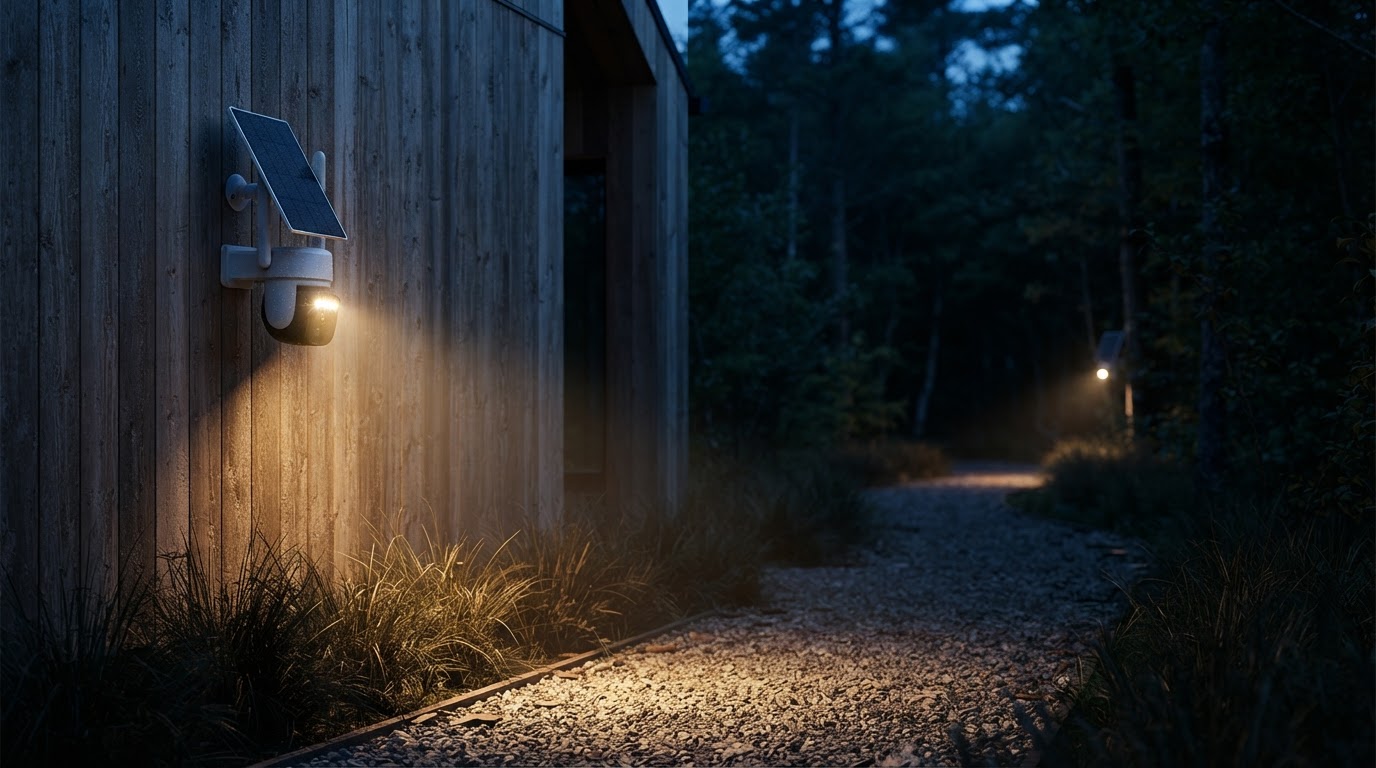
Outdoor Solar Security Camera Solutions for Dark Perimeters
 Sam VasquezBuying Guide Lead
November 22, 2026. This comparison evaluates integrated solar-powered floodlight cameras to determine which hardware best balances illumination and surveillance for off-grid perimeters. It is written for homeowners and property managers who need high-lumen output without hiring an electrician.
The Challenge of Dark Perimeters and Wiring Barriers
Most homeowners realize too late that a standard camera isn't enough to deter an intruder; you need light. However, the cost of trenching power lines to a detached garage or a remote fence line often exceeds the cost of the security system itself. This is where the all-in-one solar floodlight camera fills a gap, combining a high-capacity battery, a solar charging interface, and high-intensity LEDs. According to eufy, a solar-powered floodlight camera is a specialized security device that must successfully manage the power draw of both 2K video streaming and high-lumen lighting from a single renewable source. The technical hurdle isn't just capturing the video; it's ensuring the battery doesn't deplete after three or four motion events on a cloudy day.
I see many people struggle with why install an Outdoor Solar Security Camera with motion when they could just buy a cheap hardware store light. The difference is the handshake between the PIR sensor and the recording trigger. If the light turns on but the camera lacks the power to record the event, the system has failed. This is especially true for those looking for a solar motion light with camera combo that needs to operate in winter conditions where sunlight is at a premium. If you are mounting a device in a high-traffic area, the constant triggering of 2000+ lumens will drain most batteries faster than a small solar panel can replenish them. You have to be realistic about the placement and the expected activity levels to avoid a dead unit by midnight.
Comparing the Integrated Market Leaders
When looking at the current hardware, the Reolink Solar Floodlight Cam is a standout for those who need raw coverage. It features 2K 4MP video and 150-degree wide coverage, currently priced around $99.59. What I like about this unit is the AI-driven lighting; it doesn't just blast light at every passing cat, which saves significant battery life. In contrast, Wyze offers a 2K floodlight camera with a 160-degree wide-angle view and a massive 2800-lumen output. While the Wyze unit is powerful, you have to be careful with that lumen count. A 2800-lumen blast is great for visibility, but if you don't have a massive solar array, it's a liability. Between these two, I'd go with the Reolink for a balanced approach to power management, especially if you aren't in a high-sunlight state like Arizona or Florida.
If you're on a budget, you might be tempted by generic units, but the integration usually fails at the software level. For those who don't need the blinding light of a full floodlight, choosing an affordable solar PTZ security camera might be a better path, as those units prioritize lens movement over high-wattage LEDs. However, if the goal is active deterrence, the integrated floodlight is superior. The Reolink Solar Floodlight Cam, as noted in recent technical reviews, provides a "true game-changer" experience for wire-free setups because it functions as a standalone security hub without recurring fees. Skip this if you already have existing exterior lighting; in that case, a standard Outdoor Solar Security Camera without the heavy floodlight attachment will save you money and mounting space. I've found that for most residential sheds or side yards, the 2K resolution offered by these brands is the sweet spot—4K often consumes too much bandwidth and battery for a solar-only setup.
Choosing the Right Hardware for Your Property
Selecting an Outdoor Solar Security Camera with integrated lighting requires a specific decision framework. You aren't just buying a camera; you're buying a small power plant that has to sustain a light fixture. First, look at the lumen-to-battery ratio. A high lumen count is useless if the battery is only 5,000mAh. Second, check the weather rating. These units are large and catch a lot of wind and snow, so the mounting bracket needs to be more robust than a standard bullet camera. Third, consider the PIR (Passive Infrared) range. You want the light to trigger before the intruder is right under the lens.
Here's what I'd actually buy: the Reolink Solar Floodlight Cam. It hits the best price-to-performance mark and the 150-degree coverage reduces blind spots that cheaper cameras miss. Before you buy, go through this checklist:
- Verify the solar panel has at least a 10-foot cable to allow for optimal sun placement away from the camera.
- Ensure the mobile app allows you to adjust the brightness of the floodlights to preserve battery during winter.
- Look for 2K resolution as the baseline; 1080p is becoming obsolete for identifying faces at a distance.
- Confirm the unit supports local SD card storage to avoid monthly subscription costs.
- Check if the motion zones are customizable so the street traffic doesn't trigger the floodlight.
To secure your property with a reliable, all-in-one lighting and surveillance solution, Shop Outdoor Solar Security Camera here.
Sources
- Reolink Solar Floodlight Cam
- No Wires. No Fees. Actually BRIGHT?! Reolink Solar Floodlight ...
- Lighting Cameras | Floodlight & Spotlight Cameras - Wyze