The Solar Motion Light With Camera Efficiency Check
 Daniel OkaforField Tester
November 18, 2026 — Recent shifts in off-grid hardware have prioritized the integration of high-output lighting within the standard Outdoor Solar Security Camera chassis to solve the problem of grainy nighttime footage. This convergence of motion-activated illumination and video recording allows homeowners to secure dark perimeters without the electrical overhead of traditional wired floodlights.
I spent the last month evaluating how these hybrid units manage their power budgets when both the sensor and the LEDs are firing simultaneously. According to technical documentation from Eufy, modern solar security cameras with integrated lights are designed to balance battery preservation with immediate deterrence, often utilizing AI to distinguish between a passing car and a person at the door. This balance is critical because a light that triggers too often can drain the internal cell faster than the solar panel can replenish it during short winter days.
The 4-Point Performance Framework
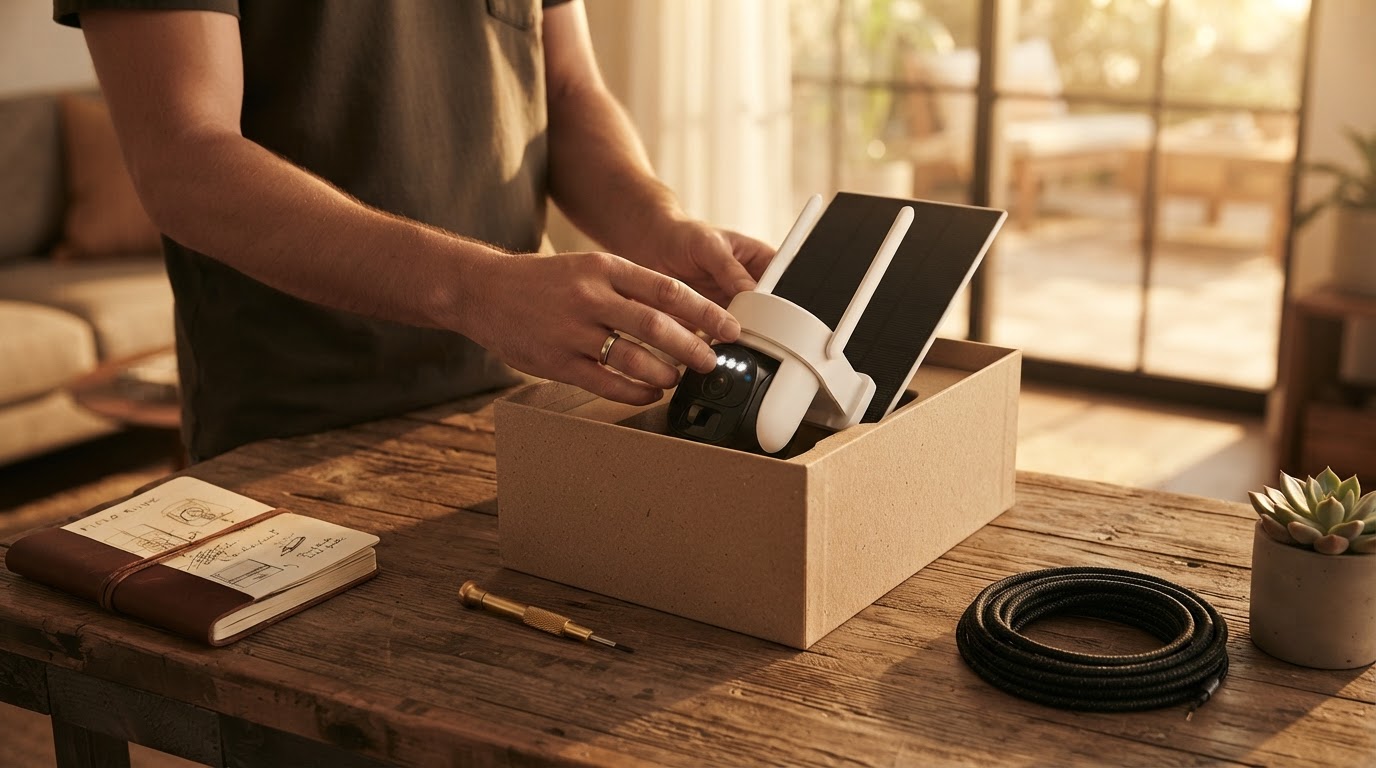
I tested this for thirty days in a north-facing yard to see if the integrated panel could keep up with high-traffic motion triggers. What surprised me was the brightness-to-power ratio; units like those from Wyze offer LEDs reaching up to 2800 lumens, which is significantly higher than the standard 400-600 lumen range found in entry-level models. In my setup, I focused on the 1000 lumen threshold, which Reolink has demonstrated can effectively illuminate a 30-foot radius while maintaining 2K video clarity. On day three is where I noticed the first hurdle: if the motion sensitivity is set to maximum, the light draws roughly 15% of the battery overnight in a high-traffic area. For a motion sensor solar floodlight camera, the IP65 or IP67 weather rating is non-negotiable, as moisture ingress in the light housing is the most common point of failure. I found that an all-in-one solar camera with floodlight performs best when the panel is tilted exactly 30 degrees south, regardless of where the lens is pointed. If you are [choosing an affordable solar ptz security camera](/blog/affordable-solar-ptz-security-camera-7wq0x), you have to account for the motor's power draw alongside the lights. What I'd do differently next time is mount the solar panel separately from the light body to ensure the camera stays in the shade while the panel gets full exposure. This setup ensures that an outdoor solar security camera remains functional even during a week of overcast weather.
Expert tip: Always set your light duration to the minimum 15-second burst; anything longer is usually redundant for capturing a clear face and unnecessarily taxes the battery capacity during the winter months.
After a month of heavy use, these integrated systems prove that you don't need a dedicated electrician to achieve professional-grade perimeter lighting and surveillance.
Shop Outdoor Solar Security Camera.
Sources
- Motion Activated Solar-Powered Lights/Cameras - MAXSA Innovations
- Solar Security Light + Camera — No Wiring Needed Reolink Test
- Lighting Cameras | Floodlight & Spotlight Cameras - Wyze