How to Protect Remote Acreage and Outbuildings Without Running Power Lines
Securing acreage without mains power starts with a decision most people skip: you are not covering the perimeter, you are covering the small number of places a person or vehicle has to pass through to reach something worth taking. On almost every rural property that reduces to a handful of gates, culverts, tracks, and building doors. Cameras powered by their own solar panels and connected over wireless or cellular links can cover those points without a single trench.
A fence line measured in thousands of feet cannot be watched. A gate, a cattle guard, a fuel tank, and a shop door can be. That reframing is what makes off-grid coverage affordable.
Start by mapping what actually gets stolen
Rural theft concentrates on a predictable set of targets, and knowing which ones you have determines where cameras go.
- Fuel from bulk tanks, which requires vehicle access and time on site
- Tools, compressors, and welders from shops and open bays
- Trailers, implements, and anything else that can be towed away in minutes
- Batteries, catalytic converters, and copper from parked equipment
- Livestock, which requires vehicle and trailer access to a loading point
- Chemicals and inputs stored in outbuildings
- Wire, panels, and pipe stacked in yards
Find the chokepoints
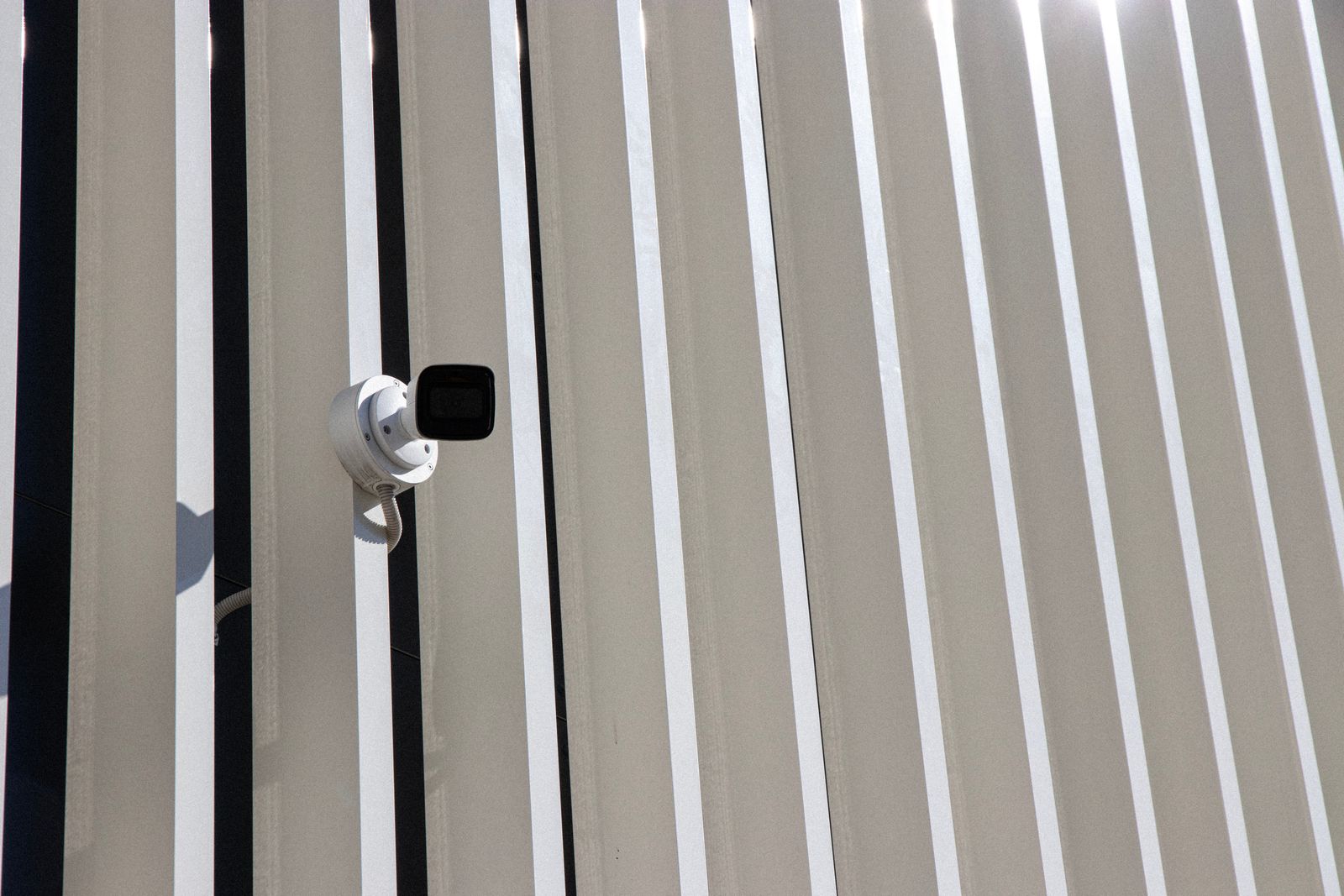
Photo by Reinis Brūzītis on Pexels
Walk or drive the property with the specific goal of identifying where a vehicle can enter and where it must slow down.
A camera on the main gate and a camera on the shop door will catch more meaningful activity than six cameras spread thinly along fence lines.
Which points deserve a camera, and what kind of view
| Point | Purpose of the camera | View that works best | |---|---|---| | Main entrance gate | Record every vehicle in and out | Angled to catch the vehicle, its occupants, and the plate as it slows | | Secondary or field gate | Detect unexpected entry | Wide enough to show a vehicle and direction of travel | | Shop or equipment bay door | Identify who entered and when | Close enough for facial detail at the door | | Fuel tank or storage area | Capture the act itself | Tight on the dispensing point and adjacent parking spot | | Equipment yard | Track movement between items | Elevated wide view, ideally one that can pan across the yard | | Loading pen or chute | Detect livestock movement | Covers the pen gate and the vehicle position beside it | | Home or bunkhouse approach | Personal safety and visitor record | The walkway approach, close enough to identify faces |
A camera capable of pan, tilt, and zoom earns its place in the yard and elevated positions, where a single vantage point overlooks several targets. Fixed views are usually the better answer at a gate or a door, where the important scene never changes. Cabin and single-building situations are covered separately in our guide to a solar security camera for a remote cabin.
Solving power and connectivity without running lines
The two constraints on remote acreage are the same two constraints everywhere: energy and a data path.
Energy. A panel and battery removes the need for a supply line, but only if the mount point receives genuine direct sun. Practical rules:
- Face the panel toward the strongest midday sun for your location, tilted rather than flat so rain sheds dust and snow slides off.
- Check the site in the season with the least sun, not the most. A spot shaded by bare branches in February is a spot that fails in February.
- Watch for shading that arrives later, from a growing tree, a new stack of hay, or a piece of equipment parked in the same place every day.
- Expect shorter usable capacity in cold weather, and reduce needless recordings so stored charge goes to real events.
- Keep the panel surface clean. Dust, pollen, and bird droppings cost more output than most people assume.
- Wireless network extension works where a building with internet is close enough to reach the camera, sometimes with an outdoor access point or an additional network node placed toward it.
- A cellular data connection works where no network reaches, which describes most back acreage. This is the standard answer for gates and remote outbuildings, and it is covered in our comparison of cellular outdoor solar cameras.
- Local recording with periodic review is the fallback where neither signal exists, accepting that you will not receive alerts in real time.
Layers that make cameras more effective
Cameras record. They do not stop anything by themselves, and on a large property the time between an alert and a human arriving is long. Pair them with measures that slow an intruder down.
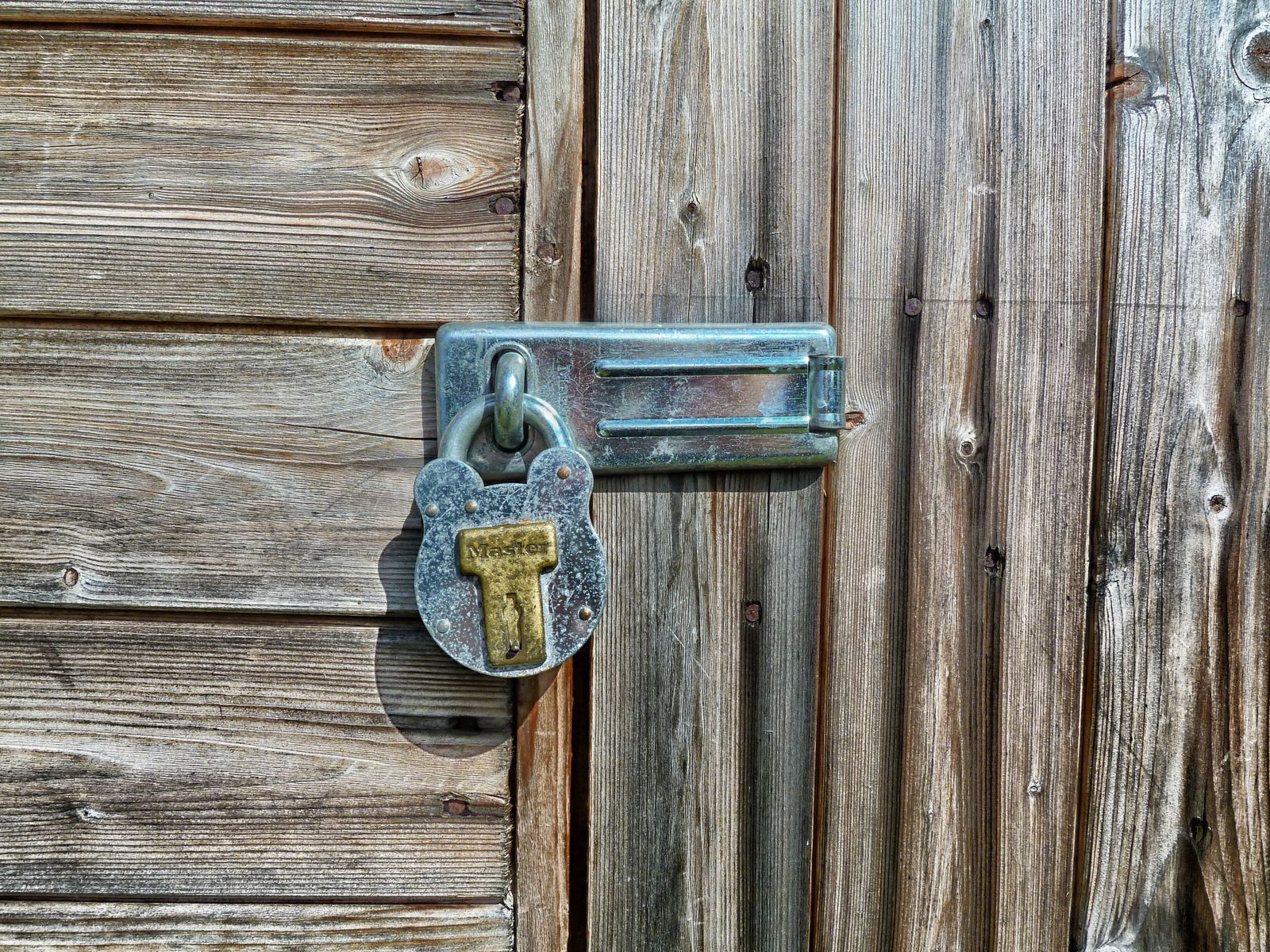
- Gates that are locked, not just closed. A chained gate adds minutes and forces a decision.
- One entrance rather than several. Closing off redundant access routes concentrates traffic where the camera is.
- Signage at entrances stating the property is monitored. It changes the behavior of opportunists, who are the majority.
- Lighting at buildings, motion-triggered rather than continuous, which both deters and improves after-dark footage.
- Removing the easy target. Equipment parked out of sight of the road, trailers with wheel locks, and fuel behind a locked gate all reduce the reason to enter.
- Knowing your neighbors' patterns. On rural roads, neighbors notice unfamiliar vehicles and are the fastest alert system available.
- Recording that survives the camera. If a unit can be taken or damaged, footage backed up off-site is what remains.
Placement, audio, and local rules
Rural properties often sit next to other people's land and public roads, which makes framing worth thinking about. Laws on recording audio and on filming areas beyond your own property vary by state, city, and country, so confirm the rules that apply where you live before finalizing angles and before enabling audio. Keep coverage on your own gates, tracks, yards, and buildings, and never position or use a camera to record inside a neighbor's home or private enclosed space. Where a public road is unavoidably in frame at a gate, keeping the detection area on your own side of the gate is the sensible approach.
FAQ
How many cameras does a large property need? Fewer than the acreage suggests. Count vehicle entrances and valuable buildings, not acres. Many working properties are covered adequately by three to six well-placed cameras, because the routes into a property are far fewer than its boundary length.
What happens when there is no internet anywhere on the property? A cellular data connection is the usual answer, since it needs a signal rather than a wire. Where even that is absent, a camera recording locally still provides a record for review, though without alerts. Confirm signal at the exact mount point before committing.
Will a solar camera survive a full winter on a farm? It depends more on the mount point than on the equipment. A panel with an unshaded view of midday sun, tilted to shed snow, and a camera configured not to record every animal that walks past, is the combination that gets through short days. A shaded panel will struggle regardless of specifications.
Is a movable camera worth it outdoors on acreage? In yards and elevated positions overlooking several targets, yes, because one lens can cover what would otherwise need three. At a single gate or a single door, a fixed view is simpler and there is nothing for the camera to gain by moving.
Next step
Take one drive around the property with a notepad and write down every point where a vehicle can enter and every building holding something worth stealing. Rank that list by loss value, take the top three, and check two things at each: whether a phone gets any signal there at mounting height, and whether the spot gets direct midday sun in winter. Those notes are the whole plan.
Cover photo by Sofia Guzeva on Pexels.