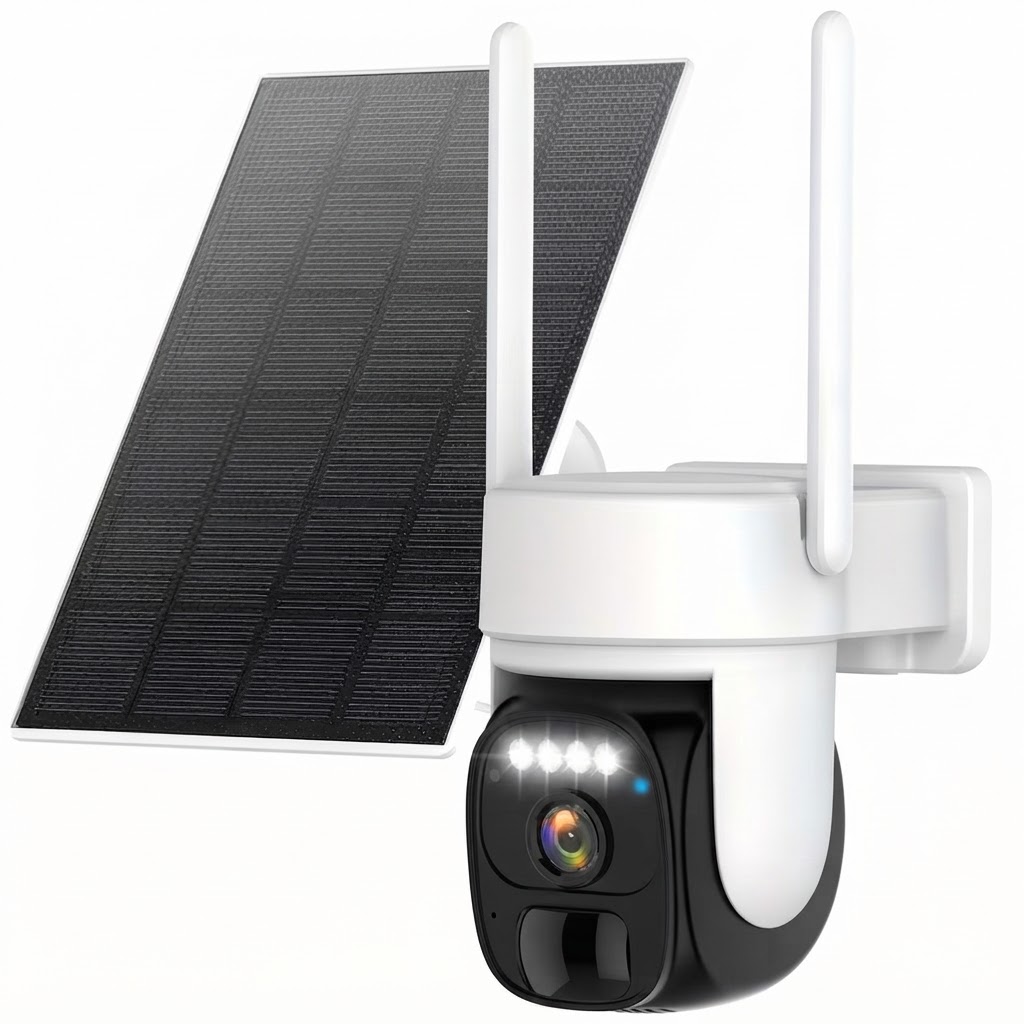
7 Must-Have Features to Look for in a Wireless Solar Security Camera
Feature 1: High-Efficiency Solar Charging
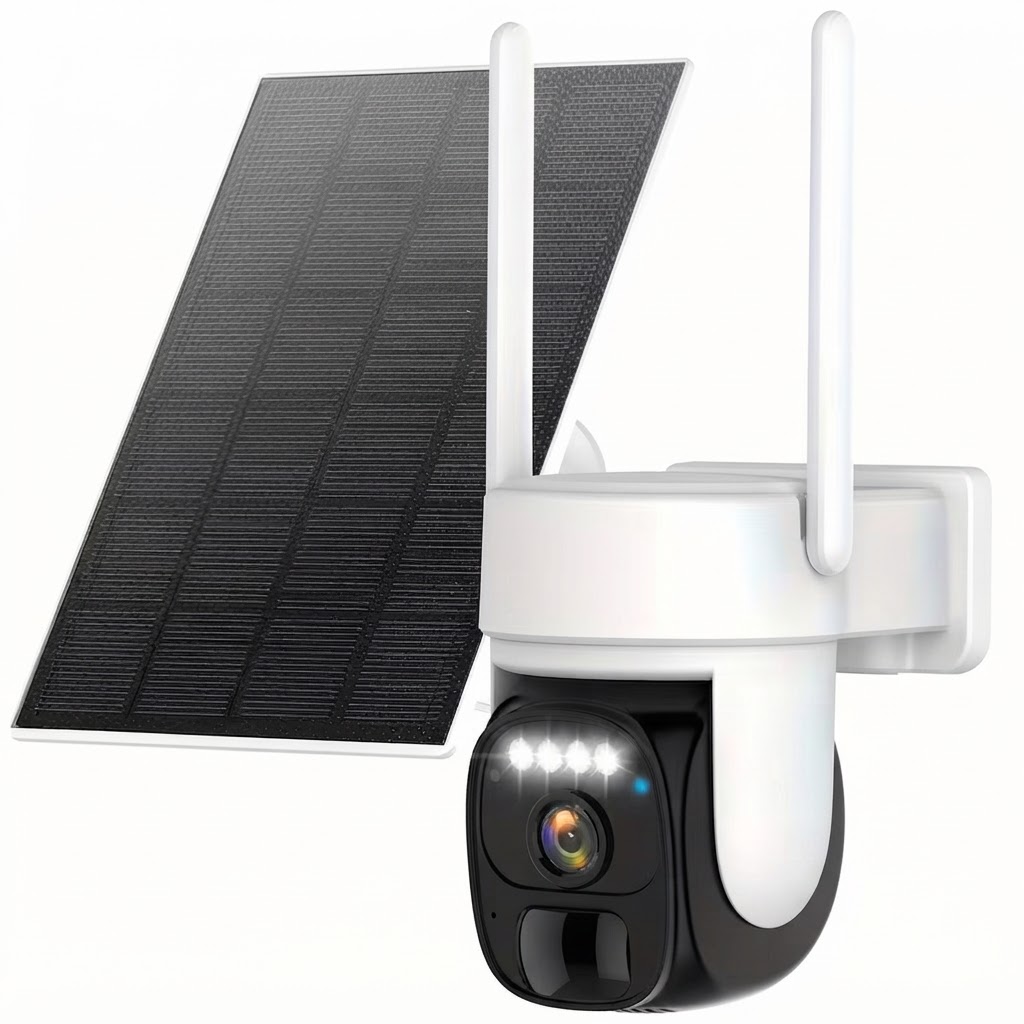
An effective outdoor camera requires uninterrupted power generation. Look for units pairing a compact 3.5W solar panel with energy-efficient trickle charging. This ensures the unit maintains power with just 3-5 hours of direct sunlight exposure each day. For comprehensive details on full system features, visit [the main guide]. Panel efficiency matters less than panel placement, and it is worth understanding why before paying extra for a specification. A modest panel in full sun collects far more than an excellent one in partial shade, because shading does not reduce output proportionally; it can collapse it.
The useful question when comparing cameras is whether the panel is integrated into the body or separate on a lead. An integrated panel is tidier and quicker to fit, but it forces the camera to point where the sun is rather than where the view is. A separate panel lets you optimise both independently, and on a north-facing wall that is the difference between a system that works and one that does not.
Feature 2: High-Capacity Battery Backup
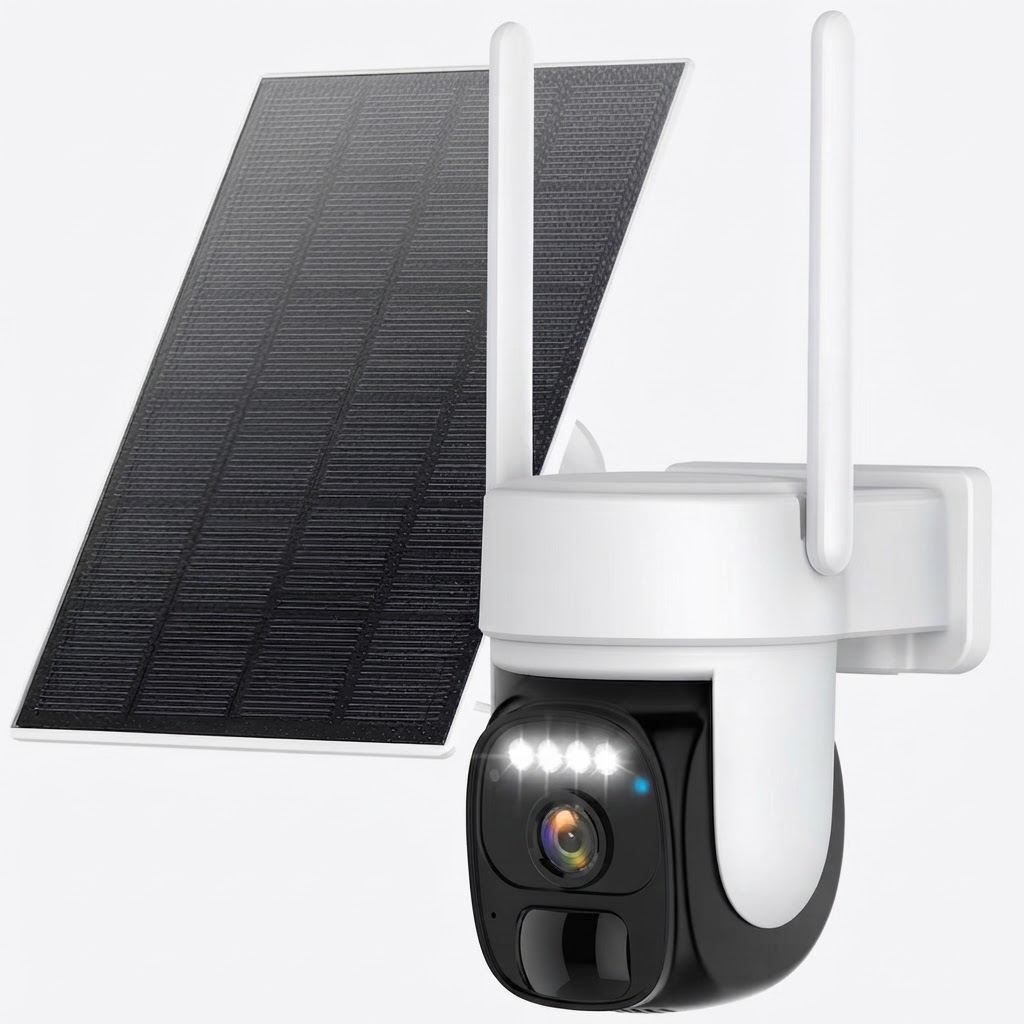
Solar availability fluctuates with weather patterns. A internal 5200 mAh battery stores enough power to run night vision, motion sensing, and live streams across consecutive overcast days without dropping network connectivity. Battery capacity is what carries the camera through the times the panel cannot help: long nights, overcast weeks, and midwinter generally. A larger battery is not a luxury in a northern climate, it is what keeps the system running in December.
The specification worth checking, and the one manufacturers are quietest about, is whether the battery can be replaced. Every rechargeable cell degrades, holding progressively less charge over a few years. Where the battery is user-replaceable, that is a cheap fix and the camera carries on. Where it is sealed in, the battery's life is the camera's life.
One related detail: check whether the camera can also run from a mains adapter. Being able to plug it in temporarily is extremely useful for a flat battery in midwinter or for a spell of unusually heavy activity, and it costs nothing to have the option.
Feature 3: Pan-Tilt-Zoom (PTZ) Wide Coverage
Static cameras miss peripheral action. A motorized lens providing a camera pan angle of 355 degrees allows you to survey expansive areas like backyards, driveways, or commercial parking spaces from a single installation point. Movement broadens what one camera can watch, and it costs power every time it moves. On a battery system that is a genuine trade rather than a footnote, and it is the reason many people end up leaving a PTZ camera parked on one view most of the time.
The other consideration is that a moving camera is only pointing one way at a time. If it is tracking something at the side of a property, it is not watching the front door. Two fixed cameras covering two approaches will often serve a property better than one that pans between them, and they cost about the same.
Where movement genuinely earns its place is on large open areas, driveways, and yards where nothing much happens most of the time and the ability to look around on demand is worth more than continuous coverage of one arc.
Feature 4: Color Night Vision Technology
Standard infrared produces dark, grainy images. Color night vision technology uses low-light sensors to capture vivid detail up to a night vision range of 33 feet in total darkness. It helps to know that colour night vision and infrared are different mechanisms rather than better and worse versions of the same thing.
Infrared works in complete darkness, using invisible illumination and producing a monochrome image. Its range is shorter in rain or fog, which scatter the light, and dark clothing shows up at a shorter distance because it reflects less.
Colour night vision needs some ambient light to work with, typically a street lamp or a nearby security light, or it uses a white spotlight to provide its own. Colour is genuinely more useful for identification, since the colour of a vehicle or a jacket is often the detail that matters.
On a battery camera the important caveat is power. A white spotlight running through the night is a substantial drain, so this is a feature best triggered by motion rather than left on. In a location with no ambient light at all and no mains nearby, infrared is the realistic option.
Feature 5: Weatherproof Construction
Outdoor equipment must endure severe weather conditions. Hardware rated with an IP65 weatherproof rating keeps rain, snow, and dust away from internal electronics. The rating to look for is on the label as an IP code, and the second digit is the one that matters for rain. IP65 means protected against water jets from any direction, which covers driving rain comfortably. IP66 is stronger still. Anything rated below IP65 wants a sheltered position under an eave rather than an exposed wall.
Temperature range is the specification people skip and then regret. Batteries lose capacity in cold weather, and a camera specified only down to freezing will behave unpredictably in a hard winter. Check the stated operating range against your actual climate rather than assuming.
The two practical failure points in the field are rarely the housing itself. They are the seal around the cable entry, if there is one, and spider webs and grime on the lens, which scatter infrared straight back and produce washed-out night footage. A wipe every few weeks does more for image quality than any specification on the box.
Feature 6: Real-Time Two-Way Audio
Interactive communication helps deter intruders or instruct delivery personnel. Built-in speakers and microphones enable active two-way audio directly through the Tuya Smart app. Two-way audio is more useful than it first appears, mostly for ordinary purposes rather than dramatic ones: telling a delivery driver where to leave a parcel, answering the door while out, or speaking to someone in the garden.
Its security value is real but modest. Announcing that someone is being watched moves them along in many cases, and does nothing in others.
Two caveats are worth stating. Audio recording carries different and generally stricter legal obligations than video in many jurisdictions, particularly where a camera covers any area beyond your own property. Recording conversations is not treated the same way as recording images, and it is worth checking local rules rather than assuming.
And on a battery camera, live audio sessions draw power. It is a feature to use when needed rather than one to leave streaming.
Feature 7: Flexible Storage Options
Protecting footage requires flexible backup channels. Look for systems supporting up to a max MicroSD card capacity of 128 GB for local event logging, along with an included cloud storage trial of 30 days for encrypted remote storage.
Read the full guide: Complete Guide to Outdoor Solar Security Cameras: Installation, Features, and Setup
The three approaches fail in different ways, which is the argument for having more than one.
A memory card is cheap and subscription-free and keeps recording when the internet is down. If the camera is stolen, the footage goes with it, which is the exact scenario that matters most.
Cloud storage survives theft and is reachable from anywhere, but costs monthly and depends on the connection being up at the moment of the event.
A local recorder keeps footage off the camera without a subscription, at the cost of somewhere to put it and its own power supply.
For most homes the sensible combination is a card plus cloud: one covers theft, the other covers an outage. If a subscription is not on the table, a card alone is still far better than nothing, and it is worth replacing the card every couple of years since continuous rewriting wears them out and a failing card is a common cause of missing clips.