Selecting an Outdoor Solar Security Camera for Off Grid Use
 Maya ChenContributing Editor
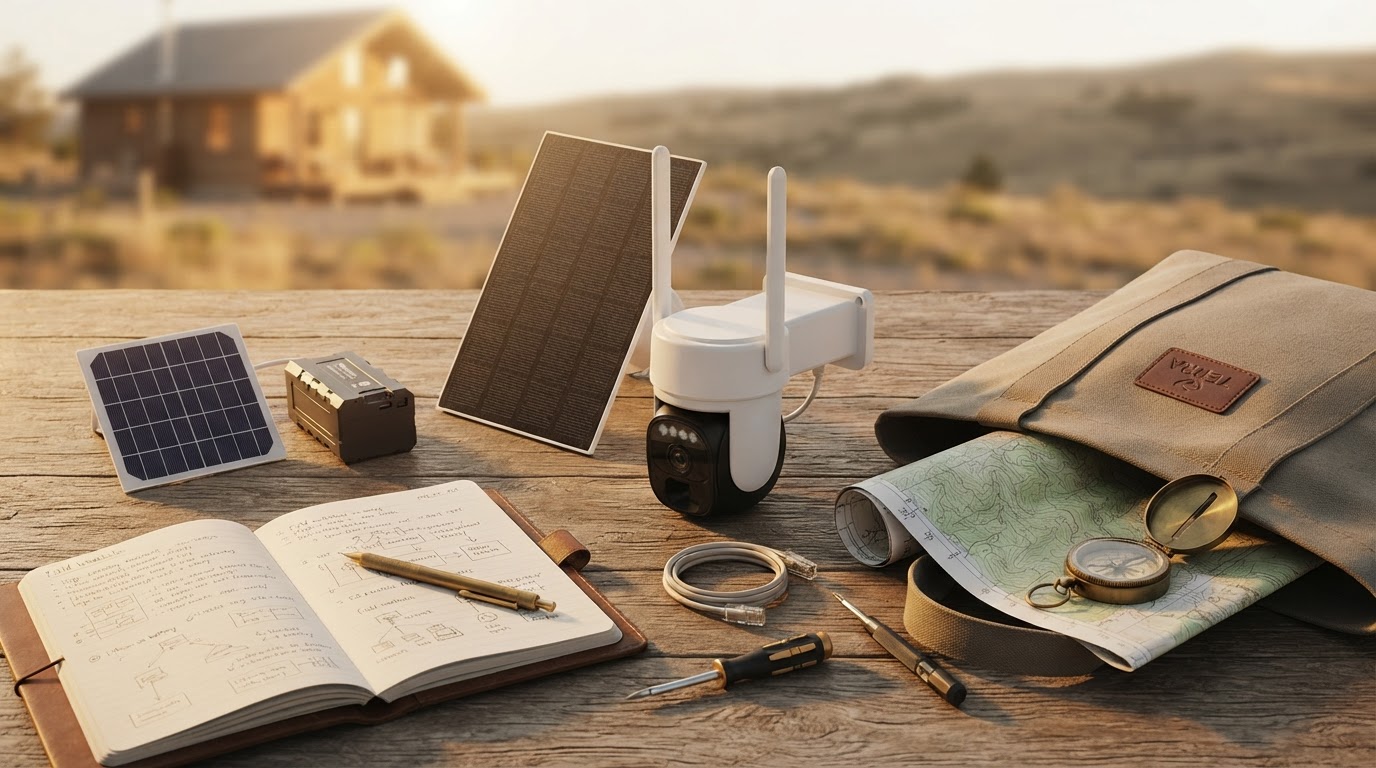
November 1, 2026. This technical analysis identifies the core hardware requirements for deploying an Outdoor Solar Security Camera on properties lacking electrical infrastructure. It is written for property owners who prioritize uptime over marketing aesthetics.
The Failure of Consumer Wi-Fi Standards in Remote Areas
The conventional wisdom says that a high-resolution camera is the most critical asset for property protection, but in off-grid environments, resolution is secondary to connectivity and power endurance. Most consumers purchase devices designed for suburban backyards, only to find they are effectively paperweights when placed on a remote perimeter. A solar surveillance camera for remote locations must operate independently of a home router, which usually means shifting from Wi-Fi to cellular data. According to Eufy, solar-powered compatibility is what allows a system to function without any reliance on traditional electrical wiring, yet many neglect the data bottleneck.
Here's the part nobody talks about: a camera that cannot transmit its data is not a security tool; it is a forensic one, and even then, only if the hardware isn't stolen along with the footage. For a truly remote setup, a no wifi solar security camera utilizing 4G LTE is the only viable path. The reliance on local SD card storage alone creates a single point of failure. If the property is a working agricultural site, the requirements become even stricter, often necessitating a solar powered cctv for farm no internet configuration that can handle high-dust environments and frequent motion triggers from livestock or machinery without depleting the battery reserve before midday.
Quantifying Solar Efficiency and Data Transmission
Run the math: A standard 4K solar security camera outdoor requires significantly more energy to process and transmit video than a lower-resolution 1080p unit. In off-grid scenarios, the "best" camera is the one that stays powered through a three-day storm. An integrated solar panel security camera must be positioned with surgical precision to capture maximum irradiance, yet many users treat placement as an afterthought. Research into 4G LTE solar security camera performance shows that signal strength directly impacts battery life; the harder the modem works to find a tower, the faster the internal cells drain.
Barn Owl Tech notes that off-grid cameras should provide HD photos and video on demand to remain effective, but this requires a robust power management system. The Outdoor Solar Security Camera ecosystem has evolved to include motion tracking solar powered outdoor camera models, but these mechanical components—the motors that move the lens—are energy intensive. For an off-grid property, a fixed-lens wireless solar powered surveillance camera is often superior because it lacks these mechanical failure points and power draws. If the goal is long-term reliability without human intervention, the focus must remain on the efficiency of the solar wifi camera for home security components rather than just the peak megapixel count.
Technical Framework for Off-Grid Deployment
When evaluating hardware for a remote installation, ignore the software "ecosystem" and focus on the physical constraints of the site. The most common mistake is overestimating the winter sun exposure. A solar security camera outdoor setup in northern latitudes will see a 70% drop in energy production during December compared to June. Consequently, the battery capacity must be large enough to bridge these gaps.
- Verify 4G LTE Band Compatibility: Ensure the camera supports the specific carrier bands active at the remote site.
- Calculate Battery Buffer: The unit should have at least 5 to 7 days of standby power without solar input.
- Assess Passive Infrared (PIR) Sensitivity: Motion sensors must be adjustable to prevent false triggers from wind-blown vegetation, which drains power.
- Evaluate Ingress Protection: A minimum rating of IP66 is required for exposed off-grid mounting.
- Check Cold-Weather Charging: Look for systems that have low-temperature cut-offs to protect the lithium batteries from damage during winter charging.
Shop Outdoor Solar Security Camera here