How to Map Your Property Perimeter for Maximum Security Camera Coverage
Map a property perimeter by listing every way a person can reach a door, a gate, or a vehicle, then walking those paths at dusk with a notepad. Place cameras at 8-10 feet where those paths pinch, and use a 355-degree PTZ head only when one sunny corner can see two approaches. Coverage is a list of approaches, not a camera count matching the acreage.
Map approaches, not square footage
A half-acre with one driveway and a locked side gate needs fewer views than a small lot with an alley, a shared drive, and a walk-through fence. Draw the house, then mark: street, driveway, front door, side path, back door, garage, and any dark cut-through. Those marks are the perimeter that matters.
Blank fence in the middle of a side yard is rarely the first camera. People use gates and pavement. Put 1080p and color night vision where feet actually land, inside about 33 feet of the lens.
Business lots follow the same list: customer entry, staff door, dumpster, and vehicle gate. A warehouse wall with no door is a later camera, not the first.
Walk the fence line at dusk with a phone
Photo by Valentin Ivantsov on Pexels
Daylight lies. At dusk, walk each marked path and watch where a person disappears behind a hedge, a dumpster, or a parked car. Those disappearances are blind spots. Note whether a camera at 8-10 feet on the nearest corner would still see a face inside the 33-foot night cone.
Open the live view only after a temporary mount or a person standing in for the camera. A guess from the kitchen window is how side yards get missed.
Listen as well. Two-way audio is useless if the speaker will sit behind a soffit. The dusk walk is also a talk test.
Corners, gates, and the 355-degree PTZ sweep
A corner that sees the driveway and the side gate is a PTZ site if the 3.5W panel still gets 3-5 hours of sun. Park home on the more likely path. Save a preset on the second. Do not leave the head touring; that drains the 5200 mAh pack and wears the motors.
A gate that sits in a notch may need its own fixed view. PTZ cannot be in two places during the same event. If both the front walk and the alley can be used at once, that is two cameras, not a braver tour setting.
Keep pan limits inside the lot. Shared drives and neighbor windows are etiquette and, in many places, a legal line. Map the stop as carefully as the start.
How many cameras after the map, not before
Count pinches on the dusk sketch. One pinch can be one Outdoor Solar Security Camera. Two pinches that a single sunny corner can see can be one PTZ. Two pinches that cannot share a view are two units. That is the order: map, then count.
WiFi at each pinch still has to work. A perfect corner with no 2.4 GHz signal is a local-only recorder or a different mount. Sun at each pinch still has to work. A perfect view in permanent shade is a panel split or a skip.
Write the map on paper and keep it. When a later camera is added, the sketch stops a third unit from filming the same door.
Perimeter features versus camera jobs
| Feature on the map | First camera job | Usually not enough | | --- | --- | --- | | Front walk / door | Face-height 8-10 foot view, two-way audio | A high eave looking at roofs | | Driveway pinch | PTZ home on the entry, 33-foot night cone | A mid-yard fence camera | | Side gate | Dedicated view or a PTZ preset | Hoping the front camera will swing in time | | Alley or cut-through | Second unit if it cannot share a corner | One touring head for the whole block | | Blank side fence | Skip until an approach exists | Matching camera count to fence length |
Property perimeter mapping checklist
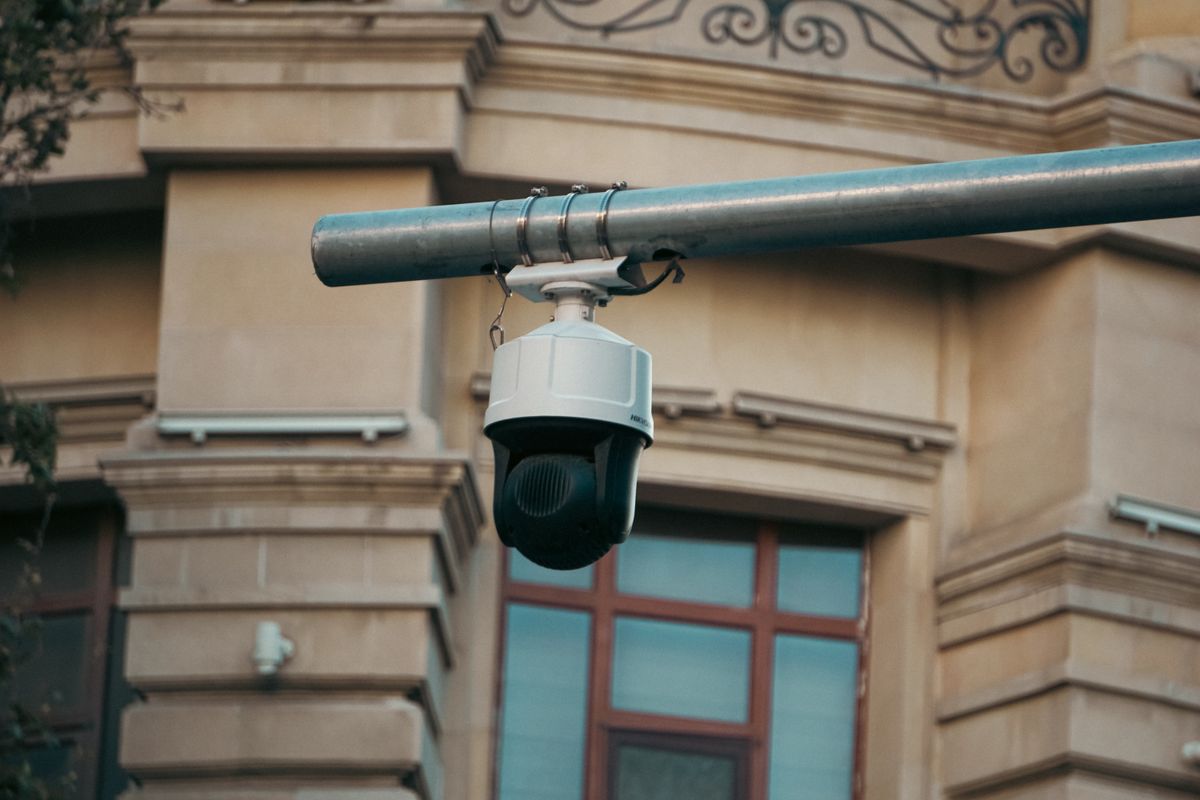
Photo by Elmir Jafarov on Pexels
- [ ] List every door, gate, driveway, and cut-through.
- [ ] Walk those paths at dusk and mark where a person vanishes.
- [ ] Place 8-10 foot views on pinches, not on blank fence.
- [ ] Assign PTZ only to a sunny corner that can see two approaches.
- [ ] Stop pan travel at the property line, including shared drives.
- [ ] Confirm sun and 2.4 GHz at each chosen plate before drilling.
Frequently asked questions
How many cameras does a typical house need?
As many as there are approaches that cannot share a view. Many homes need a front pinch and a side or rear pinch, not a camera per wall.
Can one PTZ camera cover a whole perimeter?
Only if every important path is visible from one sunny 8-10 foot corner. Two simultaneous approaches still need two lenses.
Should the map include the backyard lawn?
Include it if it is a path to a door or a shed. A lawn that nobody crosses is a later camera, not the first.
What about neighbor windows on a tight lot?
Draw the property line on the same sketch. Limit PTZ travel and motion zones so the 1080p frame stops at that line.
Does mapping change in winter?
Leaf-off can open a view; snow can hide a path. Re-walk at dusk in the dark season and confirm the 3.5W panel still sees sun.
Related reading
Suburban placement, door order, blind spots, and neighbor limits finish the perimeter sketch.
- suburban home camera placement for a full perimeter
- five high-value outdoor camera placement locations
- front door versus back door camera order
- outdoor camera privacy and neighbor etiquette
What to do next
Sketch the house, mark every approach, and walk those lines at dusk. Put the first 8-10 foot camera on the busiest pinch with sun and WiFi. Add a PTZ preset only when a second path is visible from that same corner. Stop pan travel at the lot line, then add a second unit only for a path the first lens cannot see.