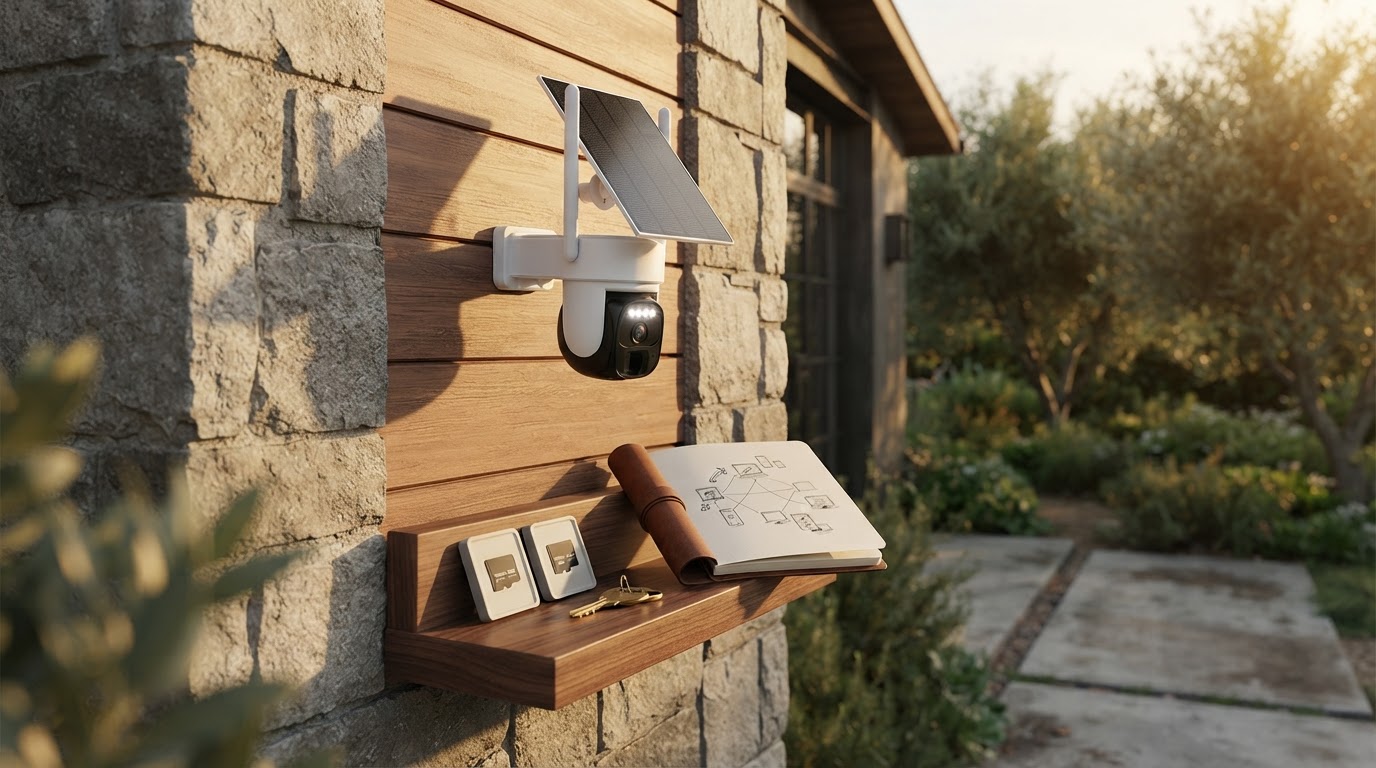
Tapo Outdoor Solar Security Camera Local Storage Strategy
 Maya ChenContributing Editor
October 14, 2026 — The shift toward local storage in the Outdoor Solar Security Camera market is accelerating as consumers reject the recurring costs of cloud-based surveillance. While the conventional wisdom says that cloud backups are necessary for security, the reality is that high-capacity microSD cards and localized AI processing have made monthly fees largely obsolete for the average homeowner.
Hardware manufacturers are beginning to prioritize on-device intelligence to reduce server dependency. According to the Tapo Store, modern wireless outdoor security cameras now deliver AI-powered detection and no-subscription storage options that handle person and vehicle recognition locally. This shift addresses the primary pain point for users who want a set-it-and-forget-it system without a lingering line item on their credit card statement. However, the efficacy of these systems relies heavily on the quality of the local hardware and the stability of the wireless connection.
The Local Storage Framework
Run the math: a standard 256GB microSD card in an Outdoor Solar Security Camera can store weeks of motion-triggered events, yet many consumers still default to $10-a-month subscriptions that total $120 annually. The transition to a no-fee model requires specific hardware benchmarks to ensure reliability. For a system to remain functional without the cloud, it must feature at least an IP66 weather resistance rating to protect the physical storage slot from moisture ingress. Furthermore, integrated solar panels must provide enough consistent wattage to power local AI chips, which often consume more energy than passive motion sensors. Research indicates that 4G LTE solar security cameras and 4K solar models are the most demanding, often requiring larger battery buffers to maintain local recording during extended periods of low sunlight. When selecting an affordable solar PTZ security camera, the pan-tilt-zoom functions must be balanced against the power draw of the local processor. If the hardware lacks a high-efficiency integrated solar panel, the system risks shutting down during local data writes, potentially corrupting the storage card. This is particularly critical for those looking for an easy install solar camera for renters who may not have the ability to hardwire a backup power source. For those monitoring remote areas, such as a wireless solar camera for shed environments, the reliance on local storage is even more pronounced as Wi-Fi stability can be intermittent.
Expert tip: Always format your high-endurance microSD cards to FAT32 or exFAT as specified by the manufacturer, and check the write-speed rating; a Class 10 U3 card is necessary for 4K solar security camera outdoor units to prevent frame dropping during local recording.
Here's the part nobody talks about: local storage is only as secure as the camera’s mounting height. If a thief can reach the camera, they can take the footage with them. I'll change my mind when cloud providers offer a zero-egress fee model that matches the one-time cost of a high-endurance SD card. Until then, the hardware-first approach remains the most logical financial choice for residential security. For those seeking a best budget solar security camera reddit users often highlight, the focus should remain on physical durability over software features.
Shop Outdoor Solar Security Camera.
Sources
- Wireless Outdoor Security Cameras | Smart Protection, No ... - Tapo Store
- What are the best solar power security cameras without a subscription?
- Finally a Solar Wi-Fi Camera that Actually Works! NO MONTHLY FEES