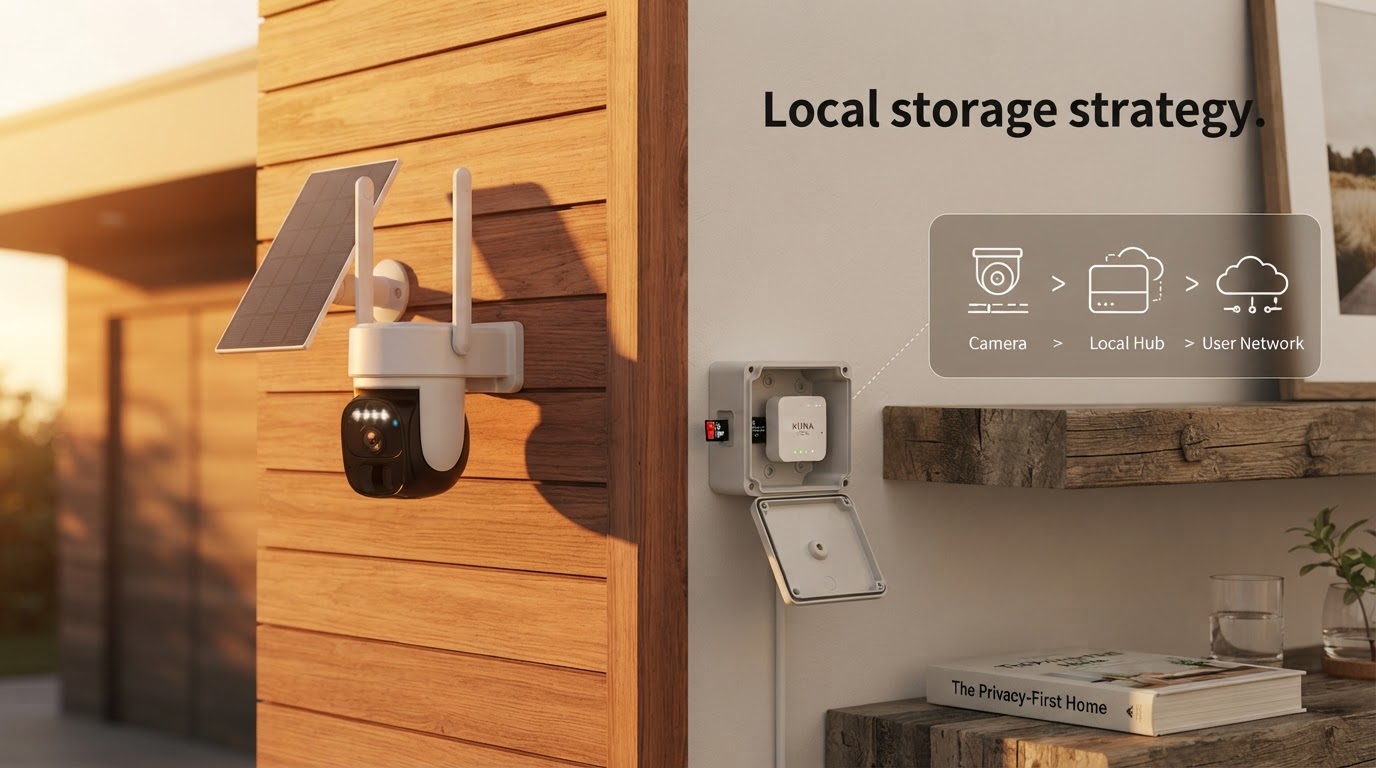
Outdoor Solar Security Camera Local Storage Strategy
 Sam VasquezBuying Guide Lead
November 10, 2026 — The shift toward decentralized data is accelerating as homeowners prioritize an Outdoor Solar Security Camera that functions without recurring monthly fees. This trend reflects a growing demand for hardware-first solutions that utilize local storage rather than mandatory cloud contracts.
Selecting a device that bypasses the cloud requires looking closely at how the manufacturer handles motion alerts and data retrieval. According to Secure Home Tech, many modern systems now offer full functionality through onboard storage, provided the user supplies their own high-endurance microSD card. While cloud services offer a convenient backup, the ability to store 4K footage directly on the device is becoming the standard for privacy-conscious users who want to own their data outright without a monthly bill.
The Local Storage Framework
When I evaluate an Outdoor Solar Security Camera for a no-subscription setup, I look at the Reolink Argus 4 Pro and the TP-Link Tapo series. Reolink is currently leading the pack with their 4K panoramic coverage, which uses dual lenses to provide a 180-degree field of view without the distortion typically found in fisheye lenses. This model is ideal if you need to cover a wide driveway or a large backyard with a single unit. On the other hand, the Tapo solar lineup is a strong contender for those who already use the TP-Link ecosystem. While Tapo offers an optional cloud service called Tapo Care, their cameras are fully functional with a local microSD card, allowing for recording and review without any extra costs. Between these two, I’d go with the Reolink if you need maximum resolution and a wider view, but the Tapo is excellent if you want a more streamlined app experience. If you're on a budget, you might look toward simpler 1080p models, but be aware that lower resolution can make identifying faces at a distance difficult. Skip this if you live in an area with extremely high foot traffic where a local card might be overwritten too quickly; in those cases, a high-capacity NVR (Network Video Recorder) setup is safer than a standalone camera.
Expert tip: Always check the maximum supported microSD capacity before buying; while some cameras cap at 128GB, newer 4K models often require 256GB or 512GB cards to store more than a few days of high-resolution motion events.
For those just starting, I recommend checking out the cheapest solar security camera with app to see how entry-level units handle data. If you are concerned about how these devices hold up over time, read our analysis on sustainable outdoor solar security camera performance. Renters should also consider an easy install solar camera for renters to avoid permanent mounting issues. Finally, remember that even a best budget solar security camera reddit users recommend will still require a high-quality SD card to ensure reliable local recording.
Here’s what I’d actually buy: the Reolink Argus 4 Pro remains the most robust choice for a subscription-free home because of its 4K clarity and lack of paywalled features.
Shop Outdoor Solar Security Camera.
Sources
- What are the best solar power security cameras without a ...
- Finally a Solar Wi-Fi Camera that Actually Works! NO ...
- Solar Security Cameras | Wire-Free Outdoor Protection