Fixed vs. PTZ Solar Security Cameras: Which Offers Better Property Coverage?
A fixed camera watches one scene perfectly and everything else not at all. A pan-tilt-zoom camera watches a much larger area, one section at a time, and can be steered or zoomed to follow something interesting. For a driveway, a door, or a single gate, fixed coverage is usually the more dependable answer. For a yard, a parking area, a corner lot, or any space where activity can start in several places, one PTZ unit generally beats two fixed cameras.
What does a PTZ camera actually do differently?
A PTZ camera has a motorized head. Pan means it rotates horizontally, tilt means it angles up and down, and zoom means it can narrow the field of view to make a distant subject larger and more identifiable. A fixed camera has none of that: its field of view is decided when the mounting bracket is tightened, and it never changes.
That mechanical difference produces four practical consequences.
- Coverage per unit. One PTZ head can look at ground that would need several fixed lenses to cover.
- Detail on demand. Zoom turns a distant shape into a recognizable person or vehicle, which is the difference between footage you can use and footage that only proves something happened.
- Coverage is sequential, not simultaneous. A PTZ camera can only look one direction at a time. Whatever it is not pointed at is not being recorded.
- More moving parts. A motorized head has mechanisms a fixed housing does not.
Fixed vs. PTZ compared
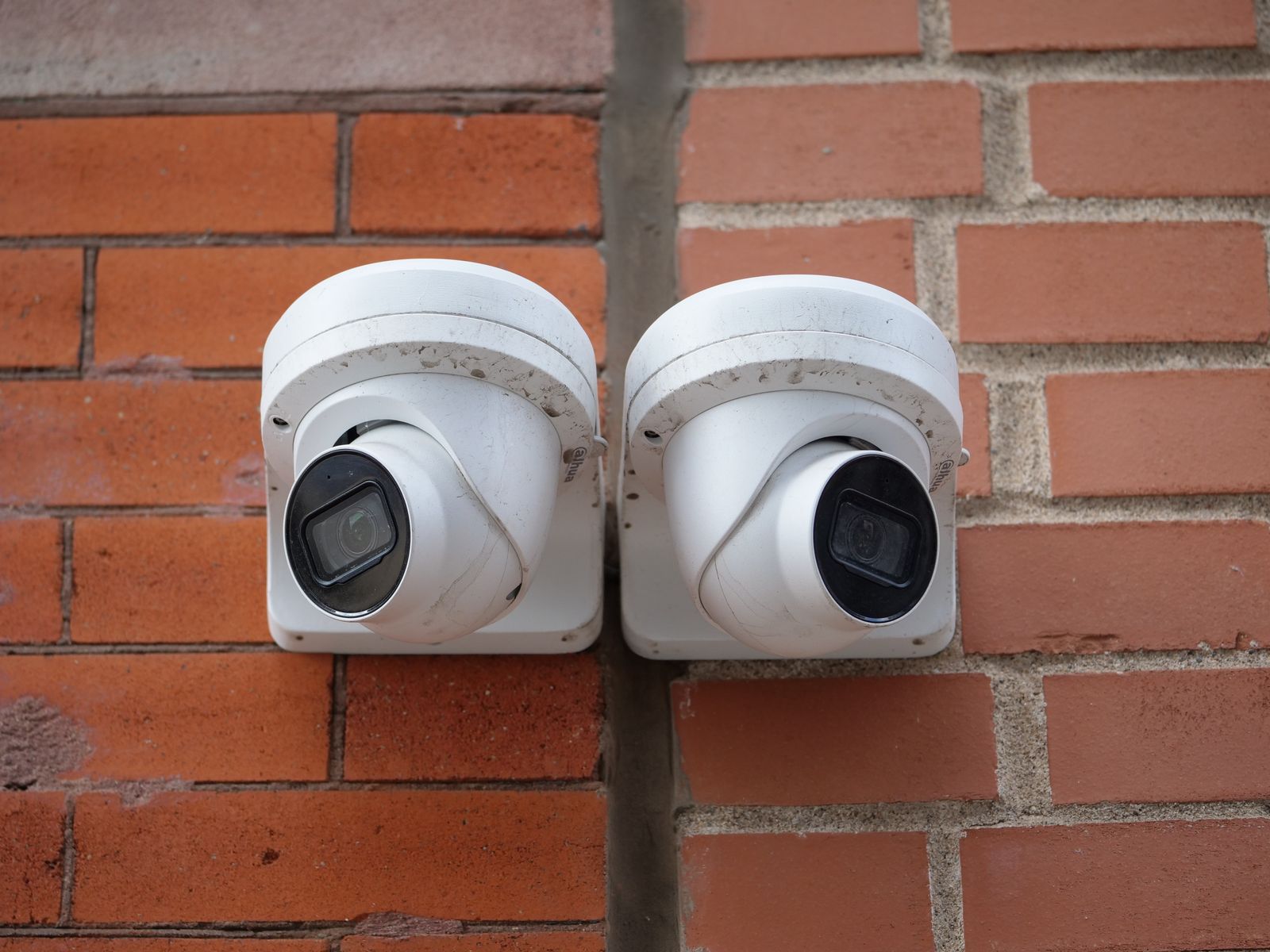
Photo by Giant Asparagus on Pexels
| Consideration | Fixed camera | PTZ camera | |---|---|---| | Area one unit can cover | One fixed scene | A wide area, swept in sections | | Records everything at once | Yes, within its frame | Only where it is currently aimed | | Detail at distance | Limited by the fixed lens | Zoom brings distant subjects closer | | Best for | Doors, gates, single driveways, tills | Yards, lots, corner lots, large frontages | | Cameras needed for a wide area | Several | Often one | | Setup effort | Aim once and done | Presets and patrol paths worth configuring | | Storage and battery load | Predictable, tied to one scene | Higher, because more activity is in range | | Blind-spot risk | Fixed and known | Moves with the camera head |
When a fixed camera is the right answer
Choose fixed when the thing you care about is in one place and will not move. A front door, a back gate, a loading door, a till, or a single-car driveway are all fixed-camera problems. There is no benefit to a motorized head watching a doorway that is four feet wide.
Fixed also wins on certainty. Because the frame never changes, you know exactly what is and is not recorded at every moment. There is no scenario where the camera happened to be pointed the other way. When the goal is evidentiary certainty over one specific approach, that predictability is worth more than flexibility. Driveway-specific placement and detection tuning is covered in this walkthrough on getting driveway motion detection right.
When a PTZ camera is the right answer
Choose PTZ when the area is larger than one lens can usefully frame, or when there is no single spot that sees everything.
That situation is more common than people assume. A corner lot has two street frontages. A yard has a gate, a shed, and a parking strip. A shop has a front entrance and a rear service door. Covering these with fixed cameras means multiple units, multiple mounting positions, and multiple runs of good sunlight for solar models, which is the constraint that usually decides the question.
PTZ is also the better answer when identification matters at distance. A fixed wide-angle lens covering a whole yard renders a person at the far fence as a small dark shape. Zoom is what turns that shape into clothing, a face, or a plate.
On solar specifically, there is a practical argument that gets overlooked: good mounting positions are scarce, because a solar camera needs both a useful viewing angle and real sun exposure. Being able to cover a whole yard from the one wall that gets midday sun is often the deciding factor. That reasoning is expanded for larger commercial sites in this piece on PTZ coverage advantages on bigger properties.
The blind-spot problem, and how to manage it
Photo by Jan van der Wolf on Pexels
The honest weakness of PTZ is that a wide sweep is not simultaneous coverage. If the camera is looking at the gate, it is not looking at the shed. Anyone who has watched a manual PTZ camera during a real incident knows the frustration of arriving in the app just after the moment that mattered.
Five habits that fix most of it:
Placement also has a legal dimension, and it matters more with PTZ precisely because the camera can be aimed. Laws on audio recording and on filming beyond your own property line differ by state, country, and sometimes municipality, and two-way audio can fall under separate consent rules. Keep presets and patrol paths inside the boundary of what you own or control, never aim or zoom a camera so it looks inside a neighbor's home or enclosed yard, and check the rules that apply at the installation site before saving positions.
How PTZ affects power and storage on a solar camera
Two effects, both manageable. Moving the head uses energy, so heavy manual steering costs more than leaving the camera on its home position. And a wide coverage area intercepts more motion, so a PTZ unit typically produces more recorded events per day than a fixed camera on a narrow scene, which consumes more storage and more upload time.
Neither is a reason to avoid PTZ. Both are reasons to configure detection zones carefully rather than leaving sensitivity wide open. Set zones around the paths people actually use, exclude the street and the tree line where practical, and the event count drops to something the battery and the storage plan can carry comfortably. Buyers comparing multi-camera fixed bundles against a single steerable unit will find that trade-off examined in this comparison of a fixed multi-pack against PTZ coverage.
FAQ
Does a PTZ camera follow people automatically? Some models offer automatic tracking, but it varies by product and should be confirmed rather than assumed. The dependable behavior to plan around is that motion detection triggers recording and the app allows steering and zooming during and after an event.
Is one PTZ camera really enough for a whole property? For a small yard or a single frontage, often yes. For a property with separated areas that cannot be seen from one position, no, because the camera cannot be in two places. The test is simple: stand at the mounting spot and see whether every area of concern is visible from there by rotating.
Do the moving parts make PTZ less reliable outdoors? There are more mechanisms than a fixed housing has, so it is fair to weigh that. In practice, the more common causes of trouble on any outdoor solar camera are a shaded panel and an over-triggered detection setting, not motor wear.
Can zoom read a license plate across a yard? Zoom improves the odds considerably compared with a fixed wide view, but plates at night add glare and motion to the problem. Treat plate capture as a goal that needs a dedicated close angle on the entry point, not something to expect from a general overview position.
Practical next step
Stand at the mounting position you are considering and slowly turn in a full circle. Write down every area you would want recorded. If they all fall inside one narrow frame, buy fixed. If they are spread across two or three directions, a single PTZ unit in that spot will do more for the site than the same money split across fixed cameras on walls with worse light.
Cover photo by Walter Cunha on Pexels.