SoloCam S340 Review Impacts Solar Security Standards
 Priya RamanSenior Analyst
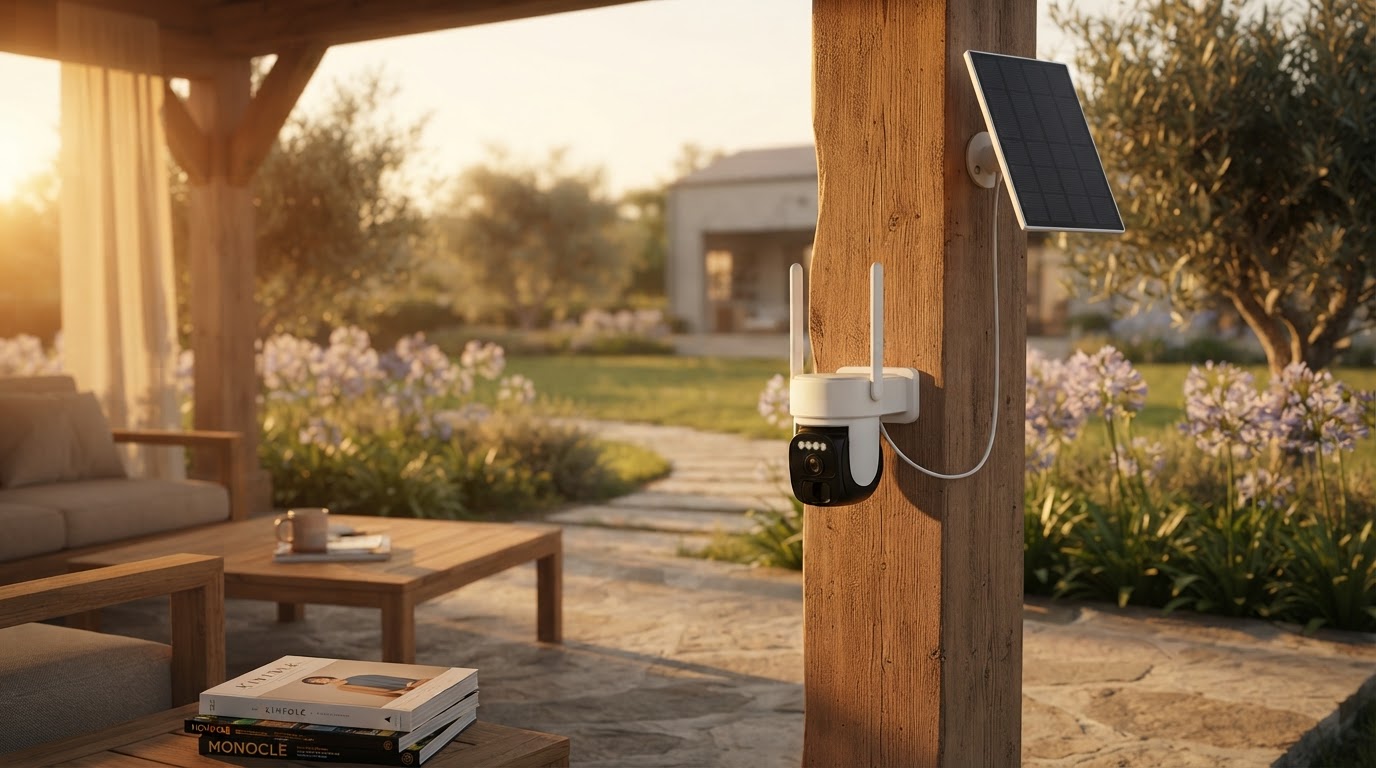
August 18, 2026 — Recent market evaluations of the eufy SoloCam S340 highlight a shift toward autonomous, dual-lens surveillance systems in the residential sector. The rise of 'set-it-and-forget-it' hardware reflects a growing demand for high-uptime security without the maintenance burden of manual charging. To evaluate these advancements, we can apply a 2x2 matrix comparing 'Power Autonomy' against 'Optical Versatility'.
Two axes matter here: the efficiency of the integrated solar panel and the range of the Pan-Tilt-Zoom (PTZ) mechanism. Once you see it this way, the distinction between entry-level fixed lenses and professional-grade rotating optics becomes clear. High-autonomy systems ensure the device remains active during low-light periods, while high-versatility systems eliminate blind spots through active tracking.
Photo by Giant Asparagus on Pexels
According to iPhone in Canada, the eufy SoloCam S340 is positioned at a mid-range MSRP of $259.99 CAD, though it frequently enters the market at lower promotional price points. The review emphasizes that this specific model functions as a self-sustaining unit, provided it receives adequate sunlight. This mirrors the functionality found in the Outdoor Solar Security Camera, which utilizes wireless WiFi connectivity and cloud storage to maintain data integrity without physical tethering.
Technical specifications published by iPhone in Canada indicate that the S340's dual-lens system offers a significant advantage for users requiring both wide-angle overviews and detailed telephoto zooms. This dual-lens approach is becoming a benchmark for wireless connectivity standards and effective area coverage. When selecting hardware, users should also consider color night vision capabilities and two-way audio features to ensure comprehensive site management.
Expert tip: When installing a solar-powered PTZ unit, prioritize the 'solar noon' orientation. Even with high-efficiency panels, a 15-degree deviation from the sun's peak path can result in a 20% drop in charging efficiency, potentially impacting the power-hungry motors used for pan and tilt functions during high-activity periods.
The decision rule: Choose dual-lens solar systems when the monitored area exceeds 40 feet in depth; otherwise, a high-bitrate single-lens Outdoor Solar Security Camera remains the more cost-effective solution for standard perimeters.
Shop Outdoor Solar Security Camera