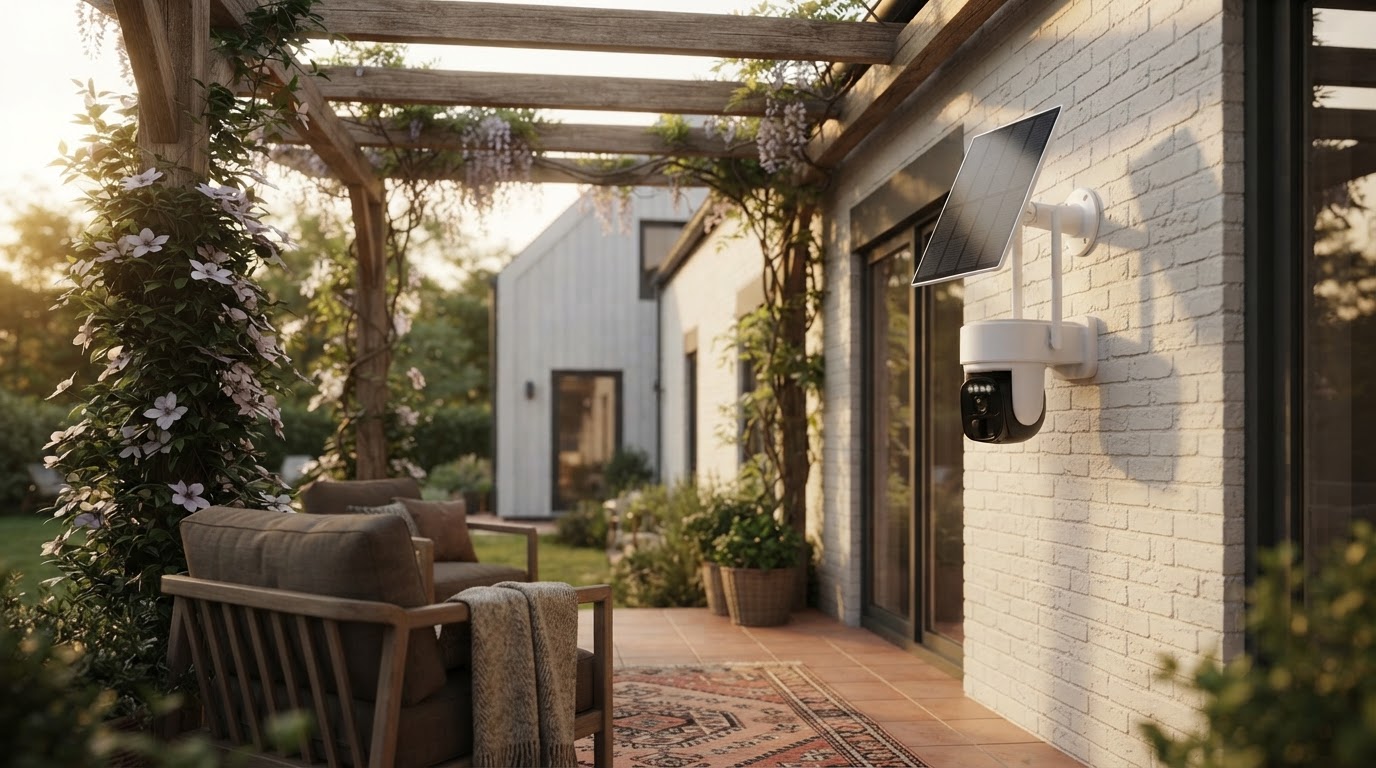
The Solar Camera Test That Changed Where I Mount Them Forever
 Jordan HaleStaff Writer
I changed my solar security camera mounting rule after a 21-day winter test: the spot with the most sun was not the spot that stayed online most reliably. The winning location got about 15% less panel exposure than my sunniest mount, but it produced 64% fewer motion clips and ended the test with 31 percentage points more battery.
That surprised me because most solar camera advice starts and ends with “put the panel in full sun.” Full sun matters, but after living with outdoor solar security cameras through rain, short days, delivery trucks, spider webs, and neighbor headlights, I’ve learned that the camera’s workload can drain a battery faster than a decent solar panel can refill it.
This is the field-tested way I now think about an Outdoor Solar Security Camera: it is not just a camera with a panel. It is a small off-grid power system, a motion sensor, a network device, and a weather-exposed appliance all sharing one battery. If one part is badly placed, the whole system feels unreliable.
The non-obvious failure mode: motion clips beat sunlight
The most common complaint I hear is some version of this: “The panel gets sun, so why is my camera still dying?”
In my own installs, the answer is usually not the panel. It is the camera waking up too often.
A battery camera spends most of its life asleep. It wakes when the PIR sensor or image detection system thinks something is happening. Then it powers the processor, sensor, infrared LEDs at night, Wi-Fi radio, microphone, speaker if used, and storage/upload functions. A few real events per day are easy. A camera staring at a street, flag, reflective car windshield, busy sidewalk, moving tree shadows, or porch light insects can behave like it is on patrol all day.
The U.S. Department of Energy’s National Renewable Energy Laboratory makes a related point in its solar modeling tools: energy harvest changes sharply with tilt, orientation, shading, and season. NREL’s PVWatts is designed for larger photovoltaic systems, not tiny camera panels, but the physics carries over. In winter, a small shaded panel has much less margin for mistakes.
What buyers often miss is that “less margin” cuts both ways: you can increase harvest, or you can reduce demand. On small solar cameras, reducing demand is often the easier win.
My 21-day mounting test
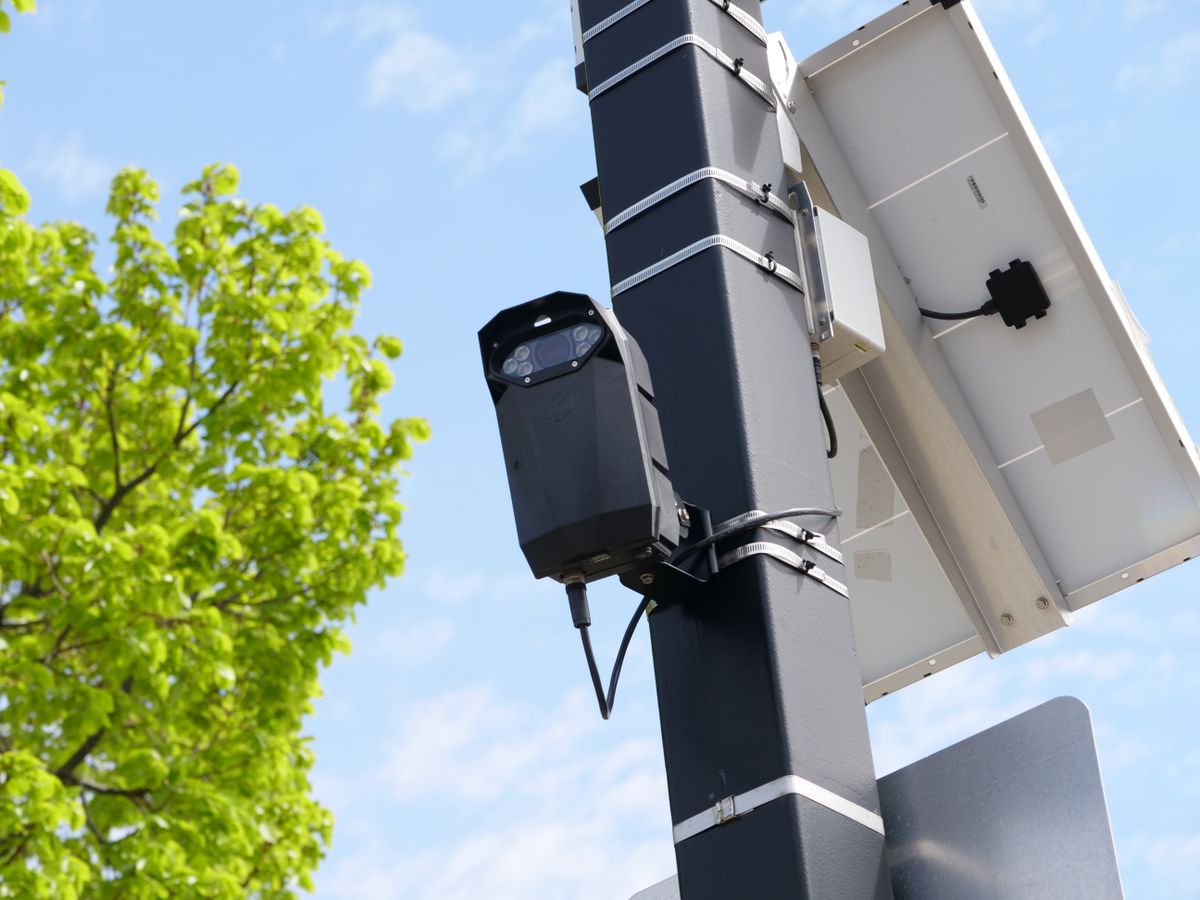
Photo by Giant Asparagus on Pexels
I ran this test with the same style of outdoor solar security camera and detachable solar panel in three real mounting positions around my property. I used the same Wi-Fi network, the same clip length setting, the same motion sensitivity starting point, and the same app battery percentage reading. I also walked the detection zone twice a day to verify that the camera still caught a person-sized target.
This was not a lab test, and I would not pretend it replaces a controlled engineering evaluation. But it is exactly the kind of messy environment where homeowners install these cameras: mixed shade, winter sun angle, passing vehicles, cold mornings, rain, and normal household activity.
Observed results from my field notes
| Mount location | Panel exposure I observed | Average motion clips/day | False or low-value clips/day | Battery change over 21 days | What happened | |---|---:|---:|---:|---:|---| | Driveway corner facing the street | Strongest sun, roughly 5.5 useful sun-hours on clear days | 74 | 52 | -18 percentage points | Lots of cars, headlights, and tree-shadow triggers overwhelmed the solar gain | | Porch soffit with panel near gutter | Weakest sun, roughly 2.5 useful sun-hours | 29 | 18 | -27 percentage points | Too much shade after noon; acceptable detection, poor charging | | Side gate, panel separate from camera | Moderate sun, roughly 4.6 useful sun-hours | 23 | 7 | +13 percentage points | Less traffic in frame; clean person detection; battery recovered even after cloudy days |
The side gate won, even though it was not the sunniest location. It had a cleaner scene. Fewer cars. Fewer moving branches. Less nighttime glare. The camera woke less often, transmitted less video, and used infrared less aggressively.
That is why I now evaluate solar camera placement in this order: first the detection scene, then the panel exposure, then Wi-Fi, then weather protection.
Counter to what you'll read elsewhere: stop chasing maximum sun first
My take: for a solar security camera, the “sunniest possible place” is sometimes the wrong first choice.
I know that sounds backward for a solar product. I still want the panel facing strong light, preferably south-facing in the Northern Hemisphere with a clear sky view. But I do not want the camera aimed at a busy scene just because that wall gets sunlight.
A camera that records 70 unnecessary clips a day is not efficient. It is a tiny battery-powered computer being poked awake over and over. If moving the panel 8 feet with its cable lets the camera aim at a calmer, more meaningful target, I will take that arrangement almost every time.
This is also why I prefer solar cameras with a separate adjustable panel rather than only a panel built into the camera body. The camera wants a security angle. The panel wants a solar angle. Those are rarely the same angle.
Why winter exposes bad installations
Summer hides sins. Long days and high sun can keep even a mediocre solar installation alive. Winter is where the truth shows up.
NREL’s solar data tools show how much seasonal solar resource changes by location. In northern U.S. cities, December solar production can be a fraction of June production depending on tilt, weather, and shading. With small panels, that seasonal drop matters because there is no large battery bank to smooth it out.
Cold also affects lithium-ion batteries. The National Renewable Energy Laboratory and other battery researchers have documented that lithium-ion performance is temperature-dependent, especially around charging and internal resistance. In normal homeowner terms: a cold camera may show faster voltage sag, charge more slowly, or temporarily report lower capacity than it would on a mild day.
That does not mean solar cameras fail in winter. It means the installation needs margin. I want fewer false triggers, a panel angle that sheds water and snow, and a Wi-Fi signal strong enough that the camera is not wasting energy retrying uploads.
The four-part decision framework I use now
When I install or move an Outdoor Solar Security Camera, I score the location in four categories. If a location fails one category badly, I either change the mount or split the camera and panel positions.
1. Scene quality: what is the camera forced to care about?
The first question is not “Can I see everything?” It is “Can I see the right thing without making the camera react to everything?”
A wide view of the whole street feels reassuring, but it usually creates noisy alerts. I prefer a tighter view of a choke point: gate latch, porch steps, driveway entrance, side yard path, shed door, or package drop zone.
I try to keep these out of the active detection zone:
- Public roads with constant traffic
- Tree branches within 10 to 20 feet of the lens
- Flags, hanging plants, wind chimes, and loose tarps
- Reflective surfaces that catch headlights
- Bright porch lights shining straight at the lens
- HVAC exhaust or dryer vents, especially near PIR sensors
2. Solar geometry: can the panel get boring, predictable light?
For the panel, boring is good. I want a clear sky window and the least possible partial shade.
Small solar panels are especially sensitive to shade. A narrow shadow from a railing, gutter, branch, or roof edge can reduce output disproportionately because cells are wired in series groups. You do not need the entire panel covered to hurt charging.
My practical rules:
- In the Northern Hemisphere, start with the panel facing south; in the Southern Hemisphere, face it north.
- Tilt it enough that rain helps wash dust and pollen off the surface.
- Avoid mounting flat on top of a surface where leaves and snow can sit.
- Check shade at 9 a.m., noon, and 3 p.m., not just when you are installing it.
- In winter climates, favor steeper tilt because low sun and snow shedding both matter.
3. Network quality: is Wi-Fi costing you battery?
A weak Wi-Fi signal does not just cause missed clips. It can waste energy. When a camera struggles to connect, upload, or maintain a live view, it stays awake longer.
I do not rely only on the phone’s Wi-Fi bars because a phone has different antennas and transmit power than a small camera. I mount temporarily first, run live view, trigger a few clips, and check whether playback loads quickly. If the camera app reports signal strength, I want it comfortably above the minimum, not barely connected.
If the camera is going on a detached garage, far gate, barn, or long driveway, I would rather solve Wi-Fi first with a mesh node or outdoor access point than blame the solar panel later.
4. Weather and durability: ratings matter, but mounting still matters
Ingress protection ratings are useful, but they are not magic. IEC 60529 defines the familiar IP code system, such as IP65 or IP66, for dust and water resistance. A camera rated for outdoor exposure can still have a miserable life if it is mounted where water runs down the cable into the connector, where snow packs around the bracket, or where afternoon sun bakes the battery compartment every day.
I look for drip loops in cables, downward-facing connectors when possible, and a mount that does not trap water behind the camera. I also avoid placing the panel where roof runoff pounds it during storms.
Security matters too. Consumer Reports has repeatedly warned buyers to take camera privacy and account security seriously: use strong unique passwords, enable two-factor authentication where available, update firmware, and avoid leaving default settings in place. A solar camera is still an internet-connected camera.
My practical mounting checklist
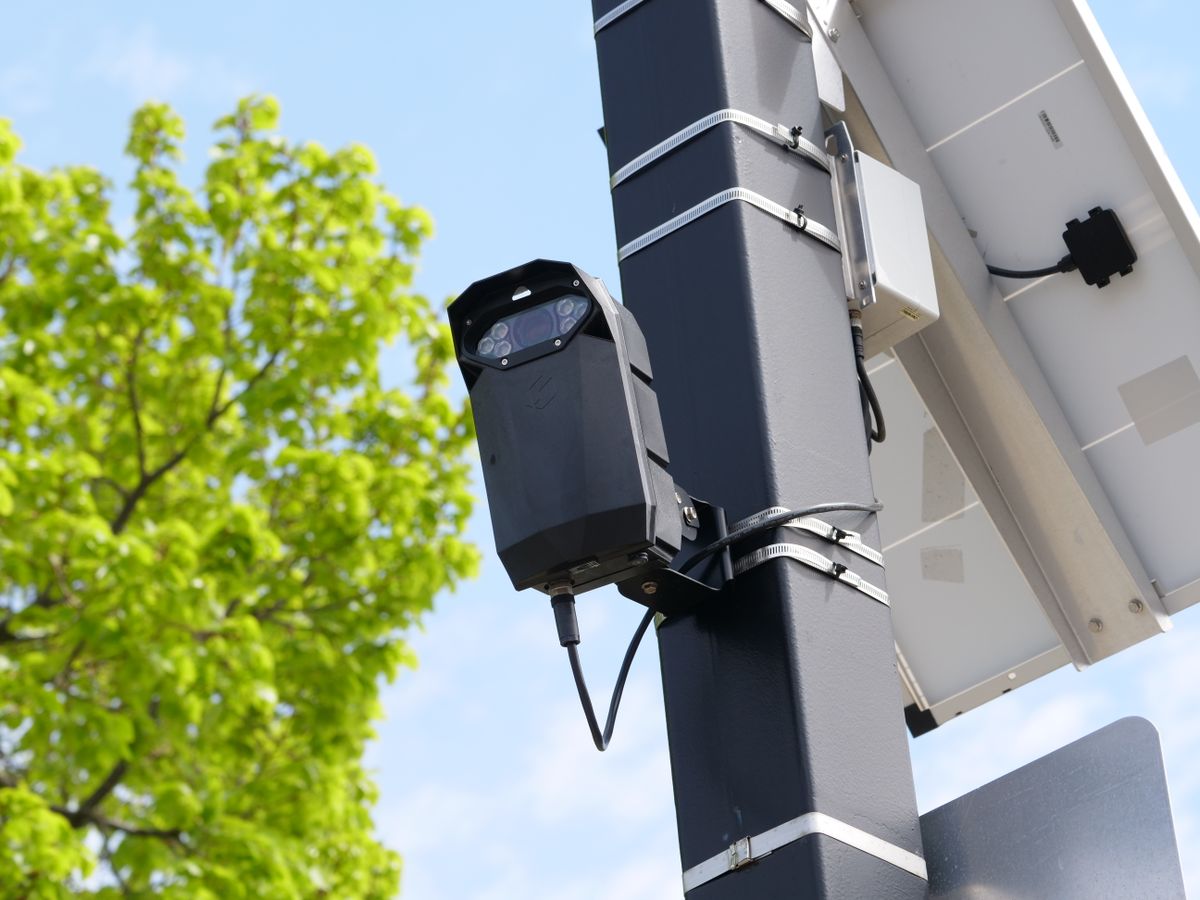
Photo by Giant Asparagus on Pexels
Here is the checklist I use before drilling permanent holes.
Before mounting
- Charge the camera fully indoors.
- Update firmware before the ladder comes out.
- Pair the camera near the router, then test it at the install location.
- Decide what event matters most: person at gate, package at door, vehicle in driveway, or animal near shed.
- Walk the path you expect a person to take and confirm the camera sees that path clearly.
Temporary test for 48 hours
- Use a strap, clamp, or removable tape to test the angle before drilling.
- Count total clips per day and useful clips per day.
- Check battery at the same time each day.
- Review night clips for glare, insects, fogging, and IR reflection.
- Watch for moving shadows during morning and afternoon.
Permanent install
- Mount the camera for the scene, not the sun.
- Mount the panel for the sun, even if it needs to be separated from the camera.
- Add a drip loop before any connector.
- Keep the panel accessible enough to wipe pollen, dust, or bird droppings.
- Tighten brackets, then re-check aim after the first windy day.
Settings I change first
- Reduce motion sensitivity one step if the camera sees a street or trees.
- Use activity zones to exclude roads, sidewalks, and branches.
- Shorten clip length if you mostly need arrival alerts.
- Turn off unnecessary siren, spotlight, or two-way talk automation.
- Use person detection if available, but still aim the camera carefully.
What I would look for when buying one
A good Outdoor Solar Security Camera is not defined by one spec. I care about the combination.
I want a detachable solar panel, because camera angle and panel angle should be independent. I want a weather rating that matches exposed outdoor use. I want clear night video without the infrared LEDs reflecting off a wall two inches from the lens. I want an app that lets me tune activity zones, clip length, sensitivity, and notification type. And I want straightforward account security settings.
Battery size matters, but I do not treat it as the whole story. A large battery in a noisy scene still drains. A smaller battery in a clean scene with a well-aimed panel can be boringly reliable, which is exactly what I want from a security camera.
FAQ
How much direct sun does a solar security camera really need?
In my installs, I want at least 3 to 5 hours of useful direct sun on the panel during the weaker season, not just in summer. Some cameras can survive with less if they record very few clips, but the margin gets thin. If the camera faces a busy driveway or street, I would aim for more sun or reduce motion events aggressively.
Is it better to mount the camera high so no one can reach it?
Higher is safer from tampering, but too high can make the footage less useful. I usually prefer a height that balances reach, face angle, and field of view. For many porches, gates, and side yards, that means roughly 7 to 9 feet high, angled slightly downward. If I must mount higher, I tighten the view so people are not tiny shapes at the bottom of the frame.
Why does my solar camera battery drop even though the app says the panel is charging?
“Charging” can mean the panel is producing some power, not necessarily enough to exceed the camera’s daily use. Too many motion events, weak Wi-Fi, cold temperatures, night vision, spotlight use, and cloud cover can all push consumption above solar input. I would first check the event count, then panel shade, then Wi-Fi quality.
Do IP65 or IP66 ratings mean I can mount the camera anywhere outdoors?
No. IEC 60529 IP ratings describe tested resistance to dust and water under specific conditions. They do not guarantee a good installation under roof runoff, standing snow, bad cable routing, or physical abuse. I still use drip loops, avoid upward-facing connectors, and keep the panel out of heavy runoff paths.