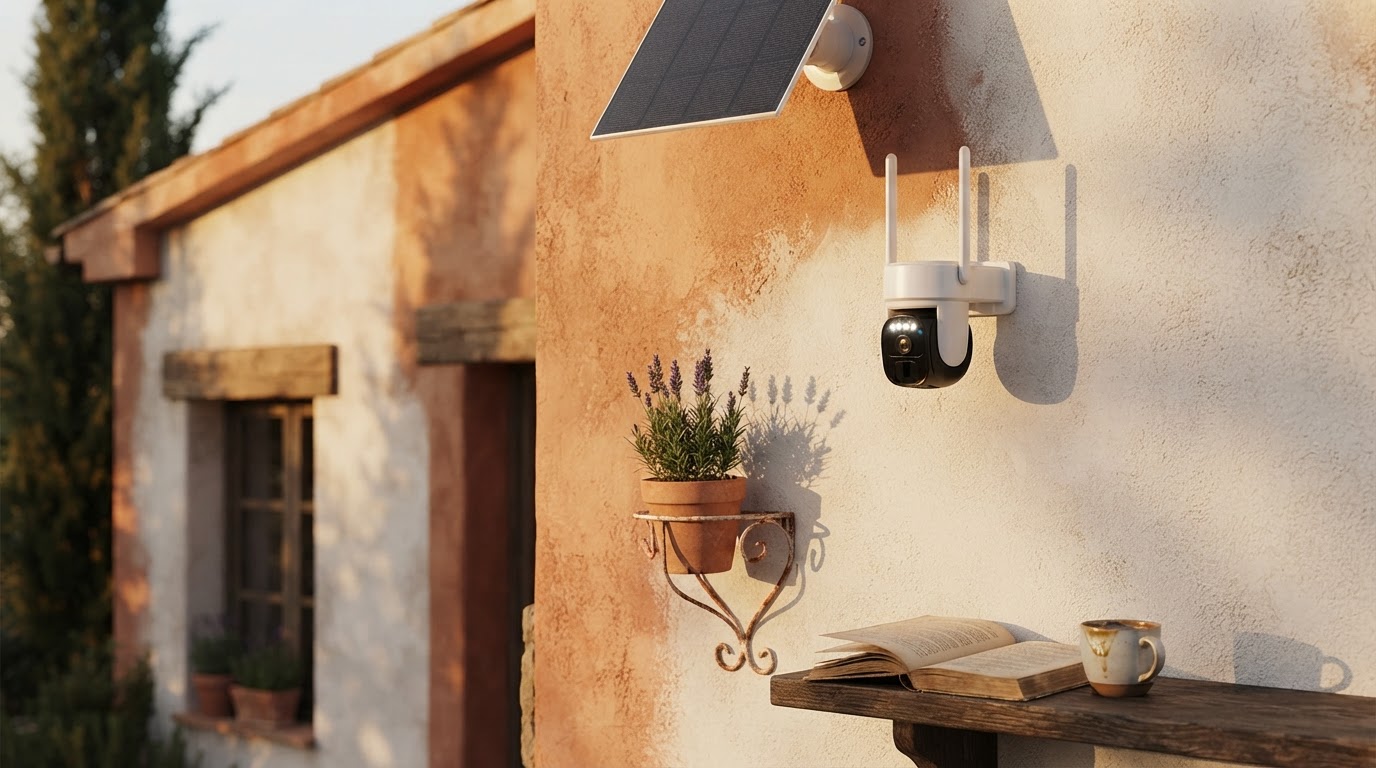
AlkiVision 521 Price Drop Challenges Outdoor Solar Security
 Maya ChenContributing Editor
The conventional wisdom says that a $40 price tag on a 2K wireless camera represents a breakthrough in accessibility for property owners. However, the economics of solar-powered hardware suggest that deep discounts often mask significant compromises in long-term reliability and sensor efficiency. While the market reacts to temporary price fluctuations, the actual cost of maintaining 24/7 uptime on a budget remains high.
November 17, 2026 — The AlkiVision 521 Solar-Powered 2K Wireless Outdoor Security Camera has reached a new price floor of $40 at Amazon, marking a significant departure from its standard MSRP. This reduction follows a broader trend of commoditization in the entry-level surveillance market, where integrated solar panels are now standard even on low-margin units.
According to Dealnews.com, this current promotion reflects a $26 discount from the regular $66 price point, which the outlet identifies as the best price Amazon has ever charged for this specific model. The device features an included solar panel designed to maintain the built-in battery, theoretically eliminating the need for manual recharging. Run the math: at $40, including the cost of shipping, the manufacturer is operating on razor-thin margins that rarely allow for high-capacity lithium-ion cells or high-efficiency photovoltaic materials. For those prioritizing consistent uptime, an Outdoor Solar Security Camera with robust PTZ (Pan-Tilt-Zoom) capabilities and weatherproof housing standards provides a more stable baseline than localized flash sales.
Here's the part nobody talks about: 2K resolution requires significant processing power and bandwidth, both of which drain batteries faster than standard 1080p units. When a camera is priced this low, the solar conversion rate often struggles to keep pace with high-traffic motion alerts. Users should evaluate their wireless WiFi connectivity and cloud storage options before assuming a one-time $40 investment covers all operational costs. Furthermore, while the AlkiVision 521 claims to simplify installation, the longevity of its color night vision sensors under constant UV exposure remains unproven at this price tier.
Expert tip: When installing budget solar units, use a third-party app to measure the exact lux hours your mounting location receives. If you get fewer than six hours of direct sunlight, the internal battery will likely deplete within 72 hours of active monitoring, regardless of the 'wireless' marketing claims.
I'll change my mind when long-term telemetry data proves that sub-$50 solar panels can maintain a 90% charge state through three consecutive days of overcast weather without sacrificing frame rates.